As the effects of climate change (or, as some call it, “climate weirding”) hit home, home is where we contend with it, up close and personal. How can we, as gardeners, create landscapes and gardens that withstand multiple stresses brought on by these changes and extremes? What can we do on our own home turf to mitigate damage in our yards – and beyond? What plants are likely to stay with us through thick and thin?
Here’s what we’ve been seeing at White Flower Farm in northwestern Connecticut over the past decade:
Stretches of hot weather that are longer, hotter (high 90’s) and more frequent, with little nighttime cooling to provide relief for plants or people. Plants from cool climates or higher altitudes, including many evergreens, faring poorly in the heat, especially when also experiencing drought.
Although sometimes followed by the opposite extreme, winters with little snow mean less snowmelt in spring to fill streams, replenish groundwater and aquifers. Many plants require consistently cold winters. Loss of insulating snowpack damages shallow-rooted plants in our home landscapes and surrounding forests. Dominant tree species – White Oaks, Sugar Maples, Yellow Birches and Beeches – are in decline. Disease-carrying ticks are on the increase as these insects survive milder winters. A reduction of growth in our hardwood forests reduces the ecosystem services forests provide (carbon, water, and nutrient storage, cooling and cleansing of air and water, and support for soil food webs, and insect, bird, and animal communities).
We’ve experienced 0-to-60-degree temperature swings in the space of 24 hours. This causes more winterkill of shrubs and loss of overwintering flower buds, which start to break dormancy, then freeze when temperatures drop again.
After a long trend of warmer winters and a shift to a warmer USDA Hardiness Zone, we are sometimes, as in 2026, faced with extreme cold and snow, like winters of old.
Damaging windstorms break or uproot trees and slow-moving storms drop record amounts of rain in a short time. We’re seeing catastrophic flash floods, especially in developed areas covered with impervious surfaces, and are learning a whole new storm vocabulary – macrobursts, microbursts, derechos.
Frequent rains in spring and early summer, when the ground is already wet and can’t absorb more, causes soil erosion and flooding. Plants suffer more fungal diseases when they never dry out. Too much rain has been followed by weeks and weeks with little or no precipitation. Soil dries out, plants suffer, water levels above and below ground drop.
Vines, perennials, biennials, and annuals displace native plant communities. Vines, with excessive growth due to increased atmospheric carbon dioxide, kill trees by girdling, smothering, and/or breaking them under their weight.
We’re seeing waves of infestation with some pests moving north from warmer climes, newly able to survive our winters. Multiple stressors, as outlined above, make plants more susceptible to infestation.
Along the coast, gardeners are dealing with episodes of flooding, saltwater inundation of groundwater, and increased damage from saltwater spray during storms.
Drought and heat combine to dry out plants, increasing flammability. Stands of trees killed by disease, insects or inability to adjust to warmer temperatures add fuel to the fires.
While this is a snapshot of what we are seeing in New England, our climate is relatively benign in comparison to other parts of the country. Every part of the nation is experiencing some or all of these interrelated climate change effects, often to greater extremes. The Fifth National Climate Assessment projects more wildfires, extreme heat and floods in the Northwest, extreme heat, drought, wildfires, and coastal flooding in the Southwest, heavy rain and longer dry spells in the Southeast, drying of the soil surface nearly everywhere, due to higher evaporation with warming temperatures – and more extreme weather events for us in the Northeast.
What Does “Resilience” Mean, Anyway?
A person who is resilient is tenacious and nimble, able to duck and roll with the punches, to withstand adversity, recover from injury, adapt to change and carry on. Like people, some plants are tougher or more adaptable than others. A resilient cultivated landscape has plants that can take heat and drought, survive periodic inundation, and minimize erosion. With unpredictable winters and wild temperature swings, it’s worth considering hardy plants that bloom on the current season’s new growth rather than producing buds in fall that must survive winter’s erratic temperatures. With record-breaking storms, we appreciate trees and shrubs that vigorously regenerate after heavy branches crash down on them.
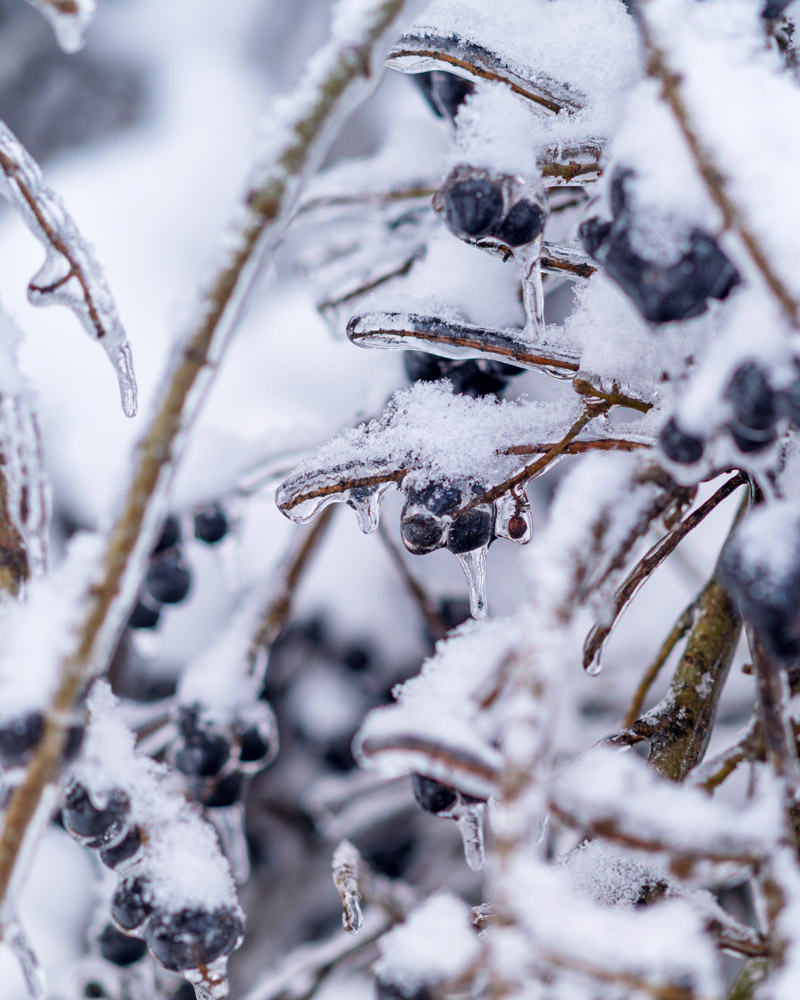
Our plant choices are important, but employing sustainable practices and emulating tightly integrated natural systems will go a long way toward creating landscapes that recover after disturbance or injury. We want landscapes that don’t merely survive extreme weather events but thrive, long-term. Our suggested garden plants and practices for resilient landscapes are broadly relevant to the entire eastern half of the continent and may also be appropriate for similarly temperate parts of other regions.
Practices for Resilient Gardens & Landscapes
Look beyond individual plants, to plant communities that thrive in your area. Tightly integrated, biologically diverse ecosystems continue to function despite setbacks to some of its members. In our cultivated landscapes, we can mimic these natural systems that function without human help – and lower our own efforts and inputs. In our part of the world, that often means multilayered forests with tall canopy trees, understory trees, understory shrubs and a ground layer of plants, with decomposing leaf litter below. In dry, fire-prone parts of the West, that model would be a recipe for disaster.
Plant trees, especially native varieties, the backbone of resilient landscapes. Even smaller understory trees shade your house, cool the atmosphere, reduce storm runoff, filter out pollutants, and store carbon. Think of trees as functional habitat, not just décor.
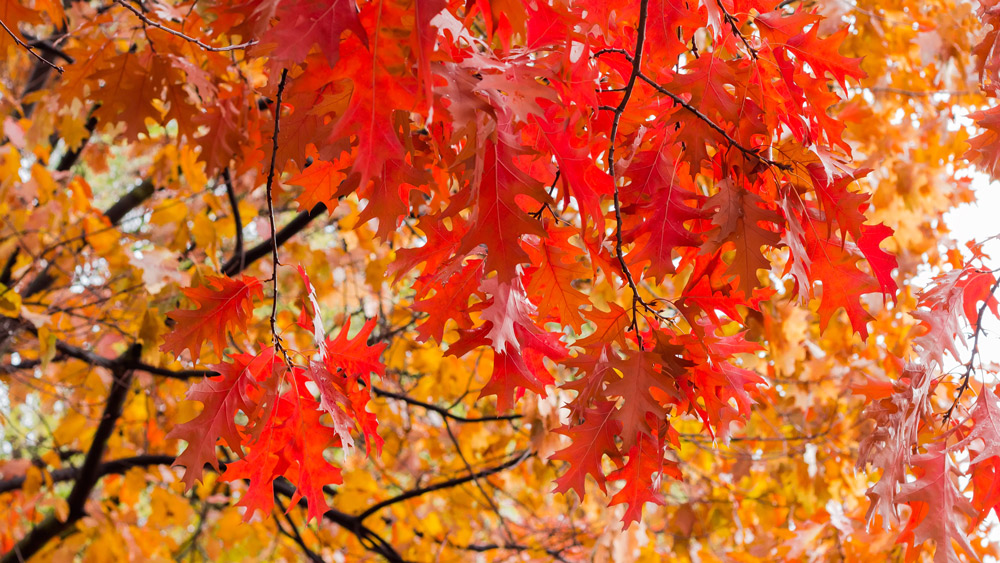
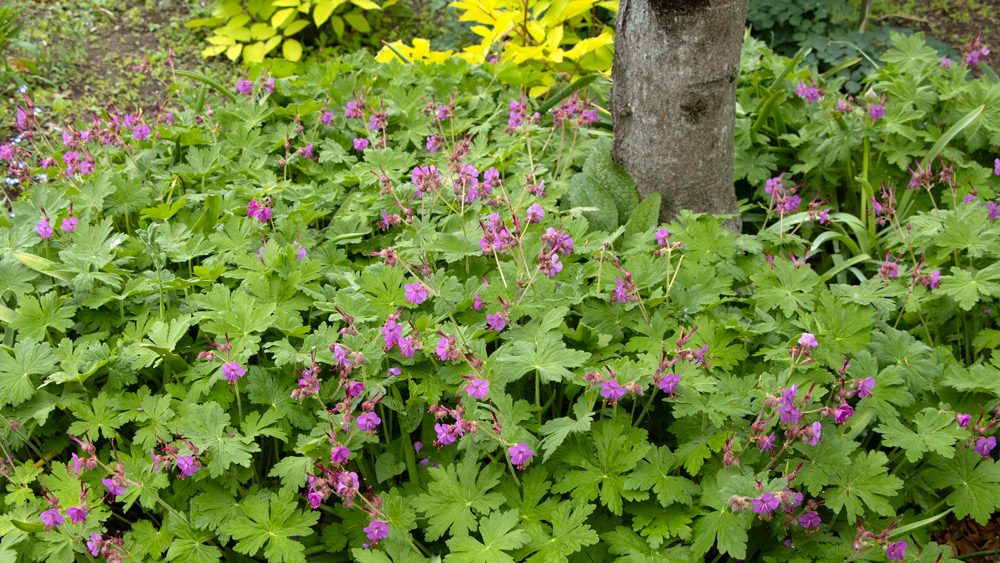
Put back the layers. If you already have tall shade trees, great! If not, smaller understory trees suitable for smaller lots can play the role of canopy trees. Plant shrubs and groundcovers below to break the force of the rain and provide wildlife habitat. Entangled roots and decomposing leaves create an absorbent “soil sponge” that holds water, releasing it as plants draw upon this reserve.
Reduce the lawn, bit by bit. Replace turf with ground-covering plants that add beauty, reduce maintenance (and fossil fuel use), hold the ground, limit disturbance, and support wildlife. Start with hard-to-maintain areas such as wet spots, rocky or steep areas that are difficult to mow or places where grass doesn’t thrive under trees. Let fallen leaves remain in place to decompose, returning nutrients to the soil.
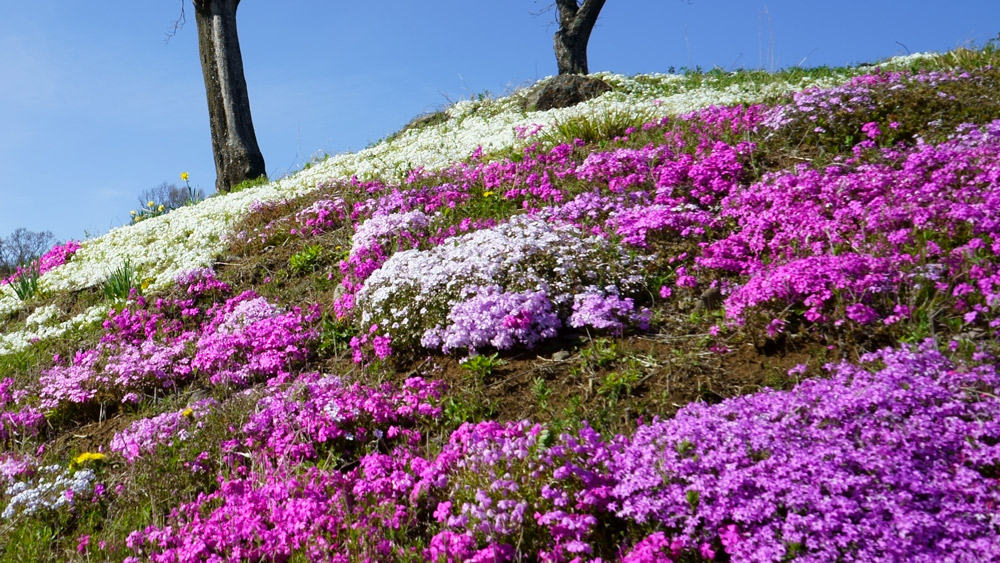
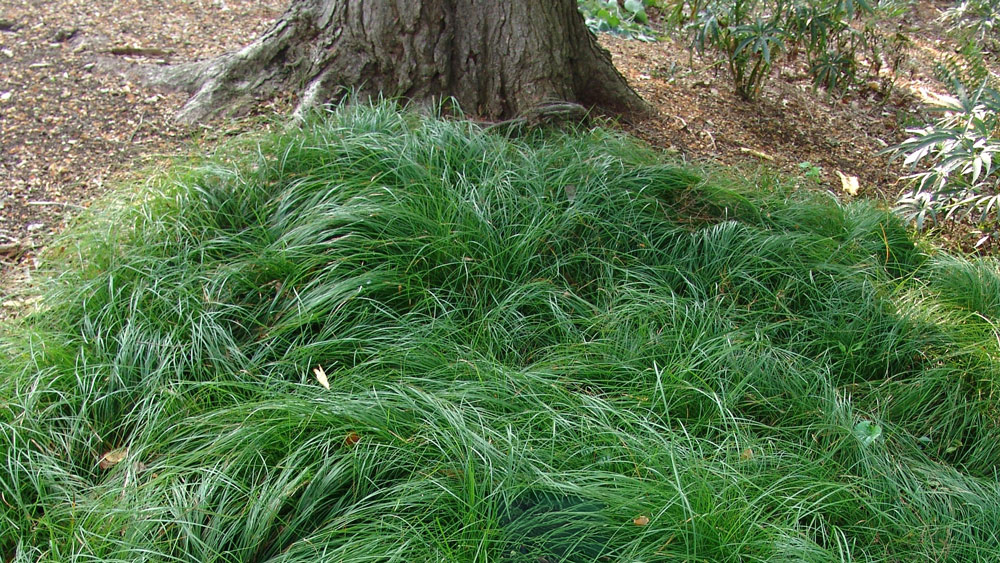
Cover the ground with perennial plants, preferably natives, that fill in and function as living mulch, rather than covering large areas with mulch products that must be transported and replenished. Covering ground with plants reduces soil temperature and creates habitat – besides being more attractive and sustainable than a sea of mulch.
Promote biodiversity and encourage self-sowing plants to fill in empty spaces that would otherwise sprout weeds.
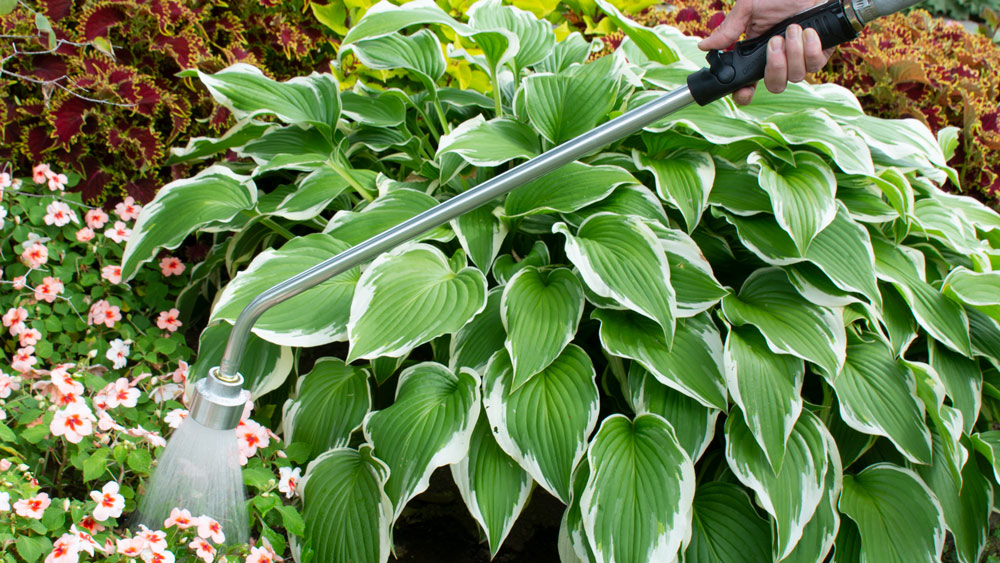
When you water, water deeply rather than frequently. Deep watering encourages roots to grow deep into soil, where moisture reserves are. This enables plants to better withstand drought. Frequent shallow watering encourages shallow roots that cannot draw on reserves during times of drought. Water the soil around the plant too, encouraging roots to grow out into surrounding soil.
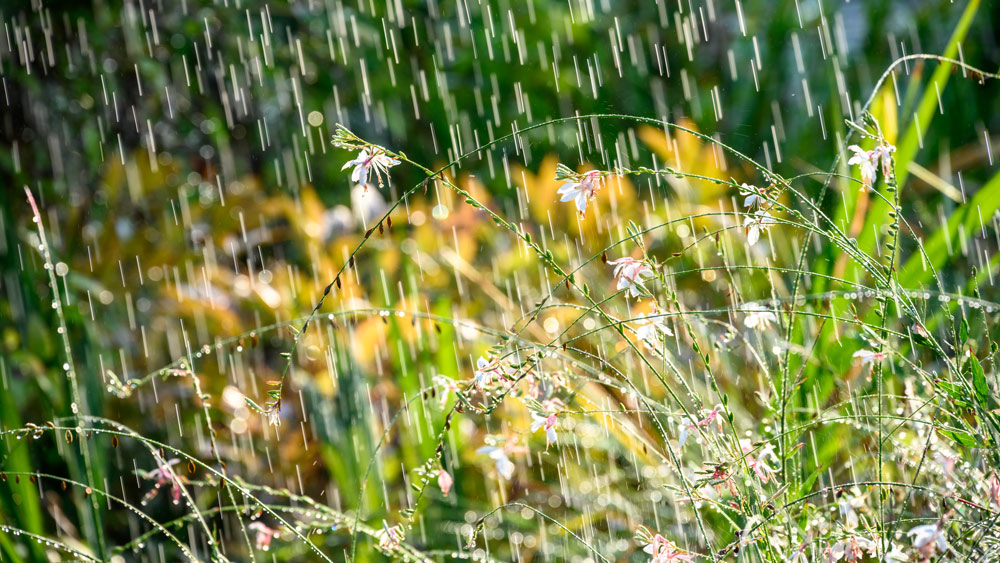
Rainwater is a precious resource. What can you do to slow down water that lands on your property, encouraging it to sink into the ground rather than running off? Capturing precipitation forestalls flooding and erosion while making moisture stored in the soil available to plants as they need it over time.
- Build moisture-retentive soils by leaving leaves to decompose in place where you can. Healthy, humus-rich soil holds water, reduces the need for fertilizers, and is cooler than bare soil.
- Contour soil to create little berms to slow runoff and dips to let water sink in; channel water away from structures and toward water-loving plants or places where it can sink in slowly.
- Create a rain garden.
- Bolster slopes with stones or logs to prevent erosion.
- Reduce impervious surfaces
- Plant deep-rooted perennials and shrubs that hold the soil in place, build new soil, and withstand drought. Tallgrass prairie plants like big bluestem (Andropogon gerardii) have 70% of their growth in roots, a third of which die off over the winter. These decomposing roots build soil, adding nutrients and water-holding capacity.
Climate-Resilient Plants
Wherever you live, spend some time in nature, just observing. We especially value local native plants because we can see that they’re adapted to fluctuations in local conditions. Natural areas provide a good education in what “wants” to grow in your climate and soil, and where they prefer to live. Your observations will help you make informed choices, saving time, money, and heartbreak. Use those native plants that persist in nature in your home landscape, paying attention to how certain plants tend to grow together.
Create your landscape with a foundation of plants that are resilient in your climate. Some plants make themselves at home in a wide range of places. But cool-climate Eastern woodland wildflowers that grow in moist, humus-rich soils, for instance, are not going to thrive in alkaline soils, fierce sun, heat, and dry winds on the Colorado plains – no matter how much you love them. Conversely, many plants that thrive in sharply drained, mineral-rich, humus-poor Western soils may sulk and rot where we live.
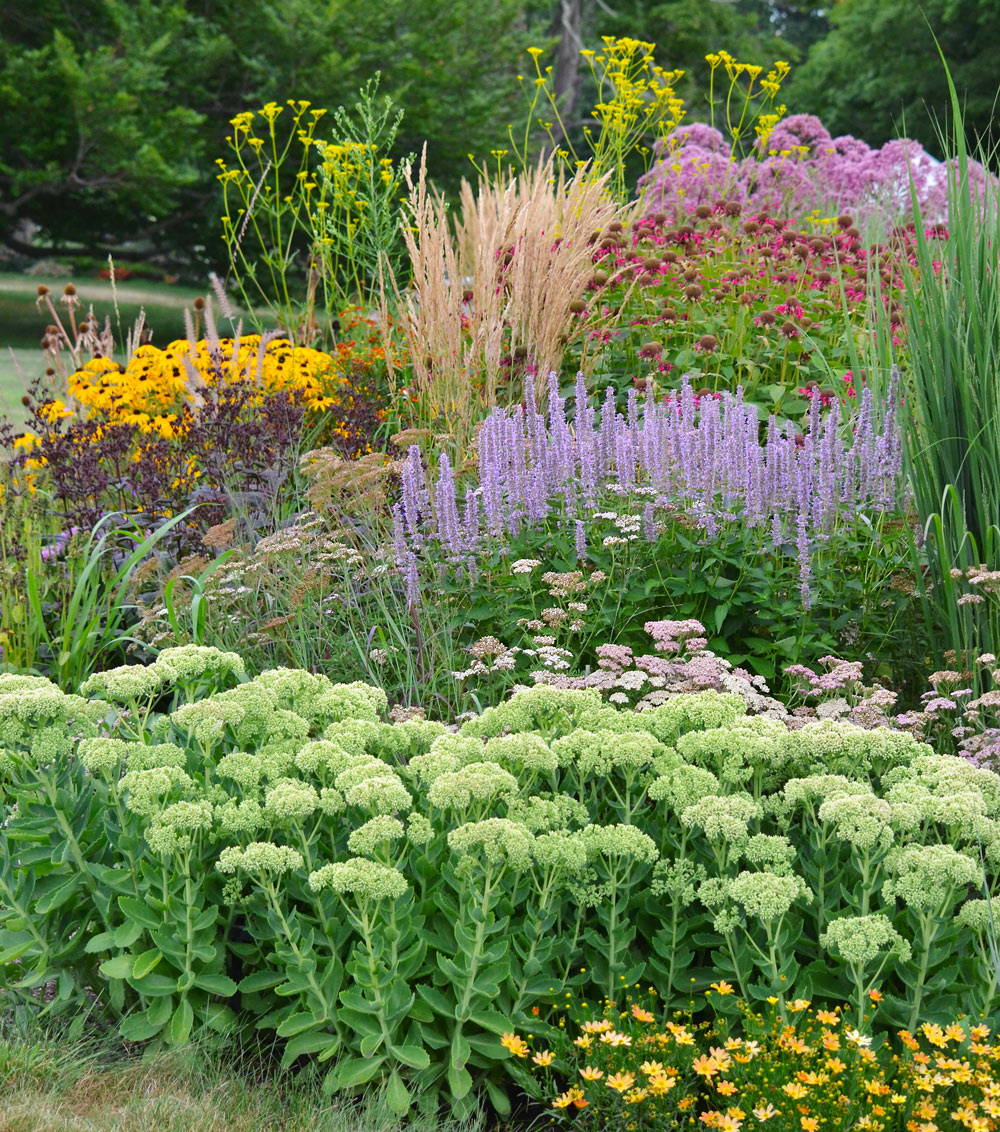
Right plant, right place: Resilient plant communities grow in all kinds of conditions in nature – nutrient-rich woodland soils, fast-draining shallow soils, sunbaked slopes, rock outcrops, and floodplains. Dry sandy soils favor perennials and grasses rather than trees and shrubs and shorter plants rather than tall ones, while humus-rich soils support more trees and shrubs. Stressed plants are more susceptible to disruptions, weather extremes, pests, and diseases. Evaluate your space, soil, drainage, moisture, light, and any stressors such as road salt, compacted or disturbed soil, or extreme pH.
White Flower Farm is located in beautiful, rural, northwestern Connecticut, so, surrounded by nature, we are especially cognizant of native plants around us. These plants persist in abundance and have shown themselves to be adapting well to our warming and unpredictable climate. We enjoy seeing them in our woodlands and roadsides and fortunately, many of them are excellent garden plants as well. We also increasingly value “near natives” – hardy, heat-adapted native plants from adjacent areas to our south.
See below for some recommended plants by region or climate condition. For more information on these topics and lots more plant suggestions, including those for plants that can take wet/dry fluctuations, heat and humidity, please visit Climate-Resilient Plants on the White Flower Farm website.
Adaptable Native Plants & Near-Natives From Within Our Ecoregion for the Northeast
Shrubs:
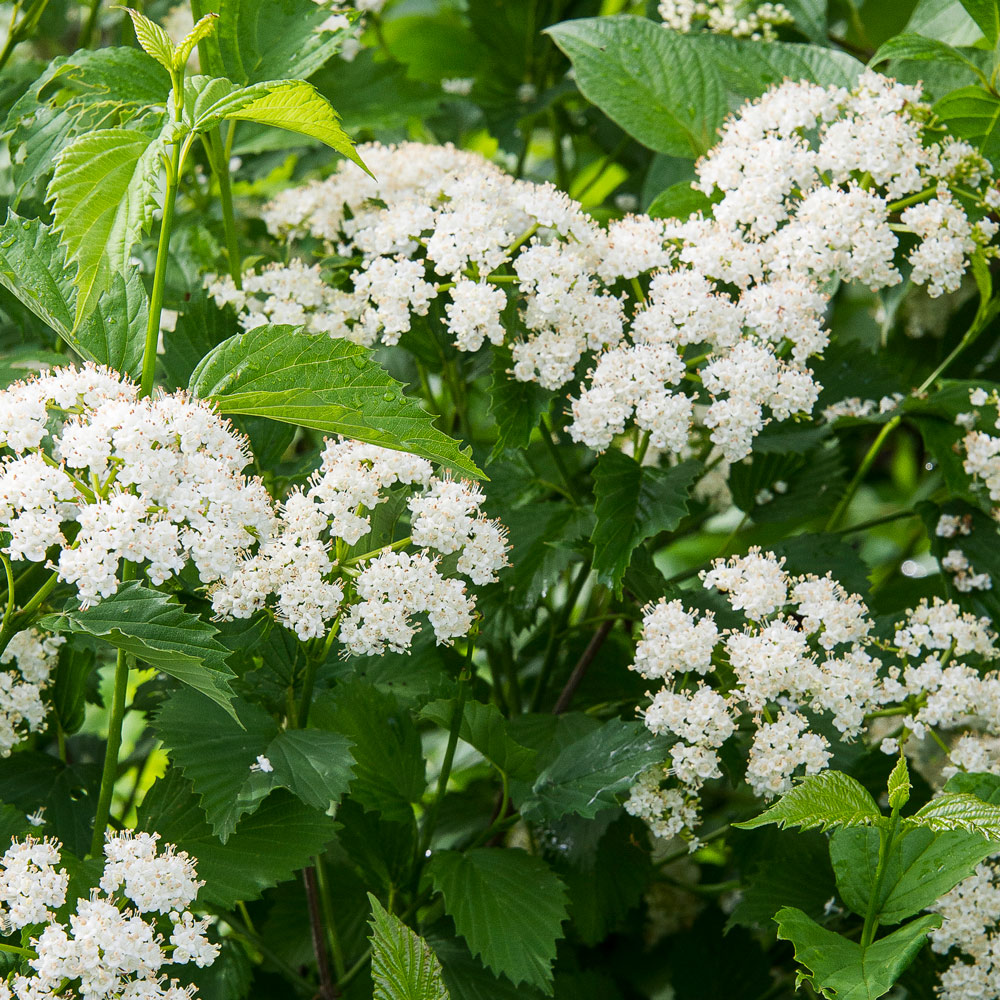
Arrowwood Viburnum (Viburnum dentatum)
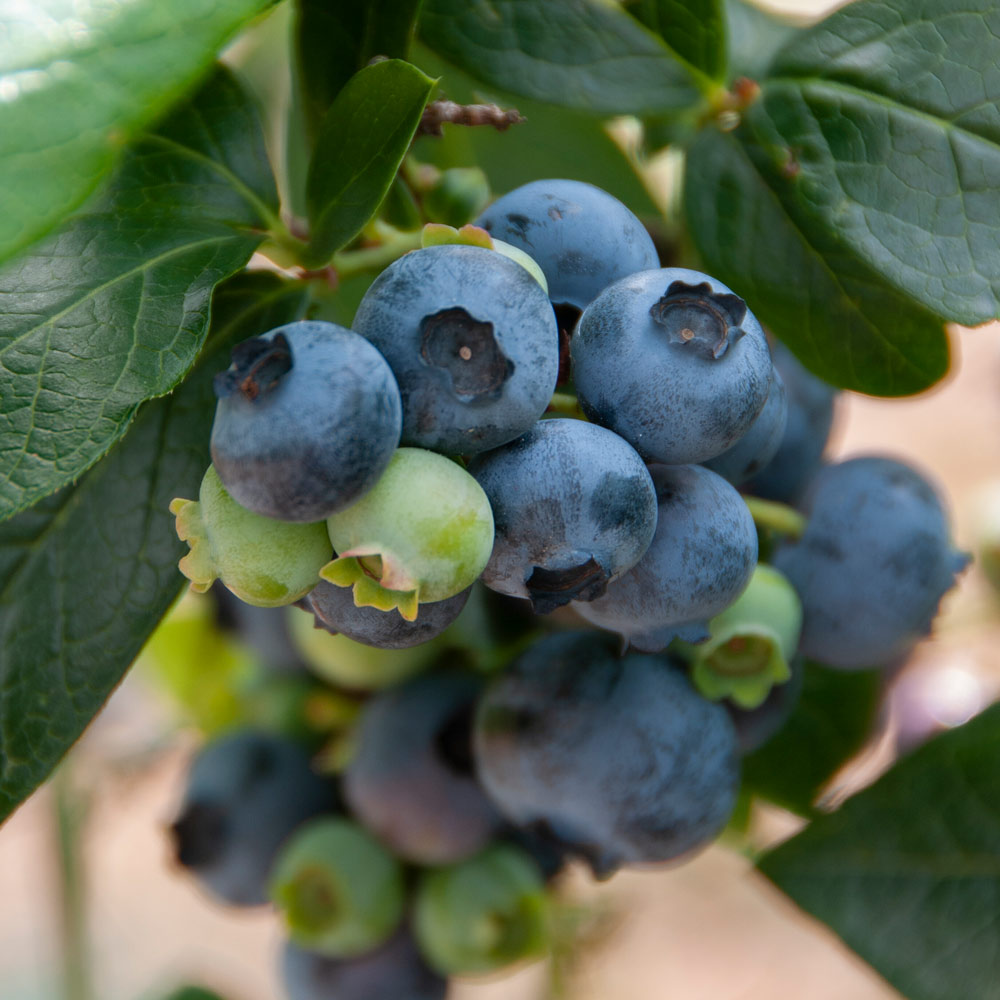
Blueberry (Vaccinium corymbosum)
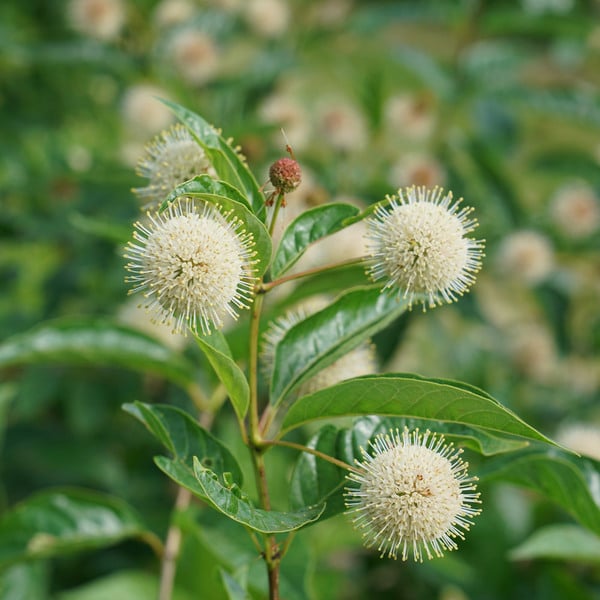
Buttonbush (Cephalanthus occidentalis Sugar Shack®)
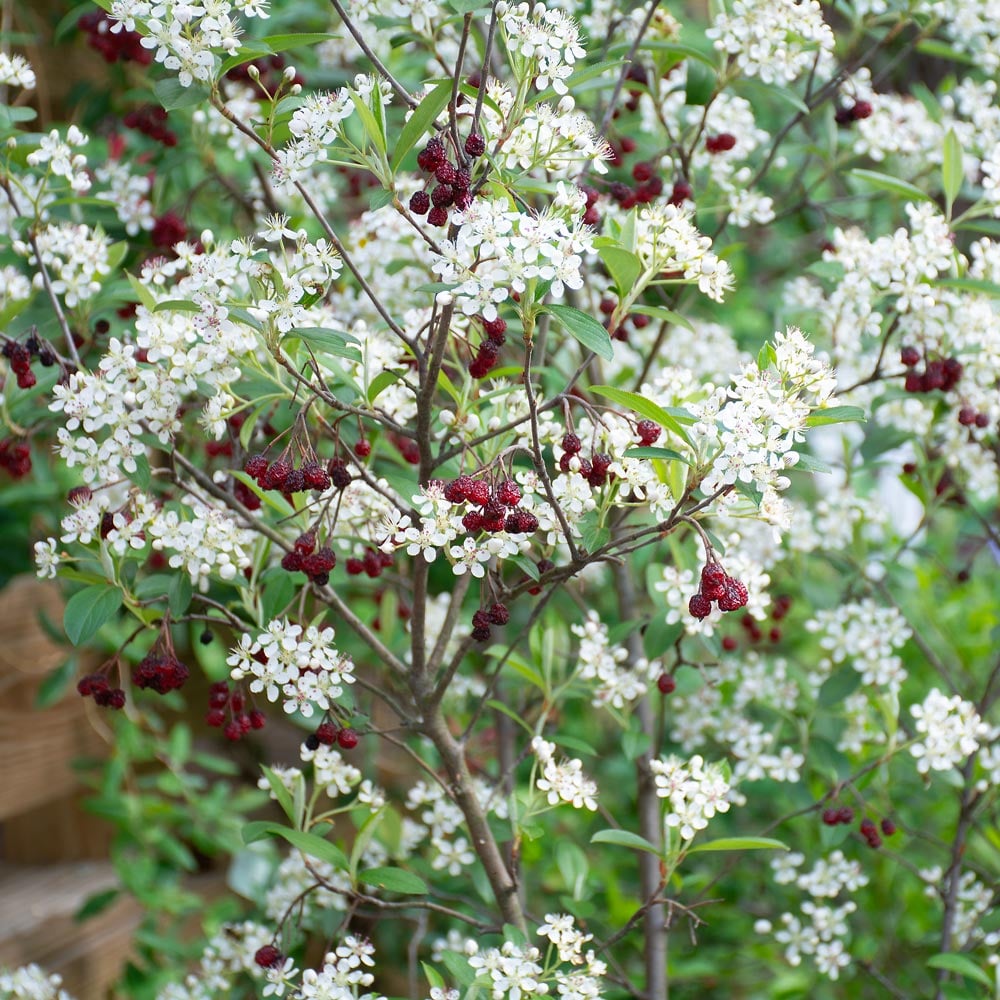
Chokeberry (Aronia arbutifolia ‘Brilliantissima’)
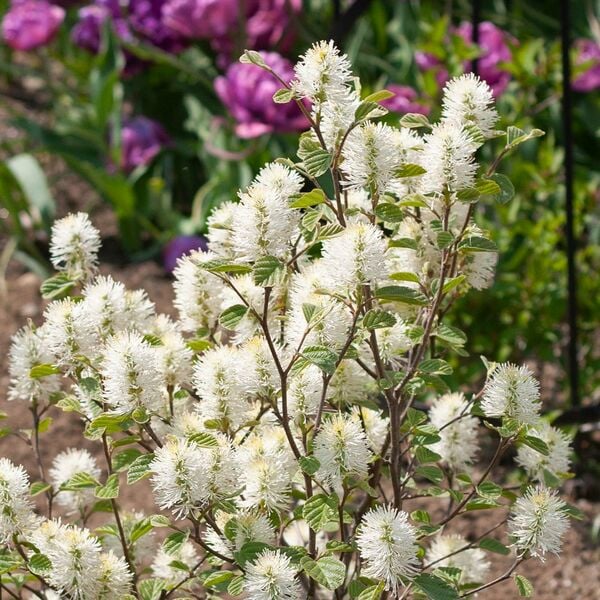
Fothergilla (Fothergilla)
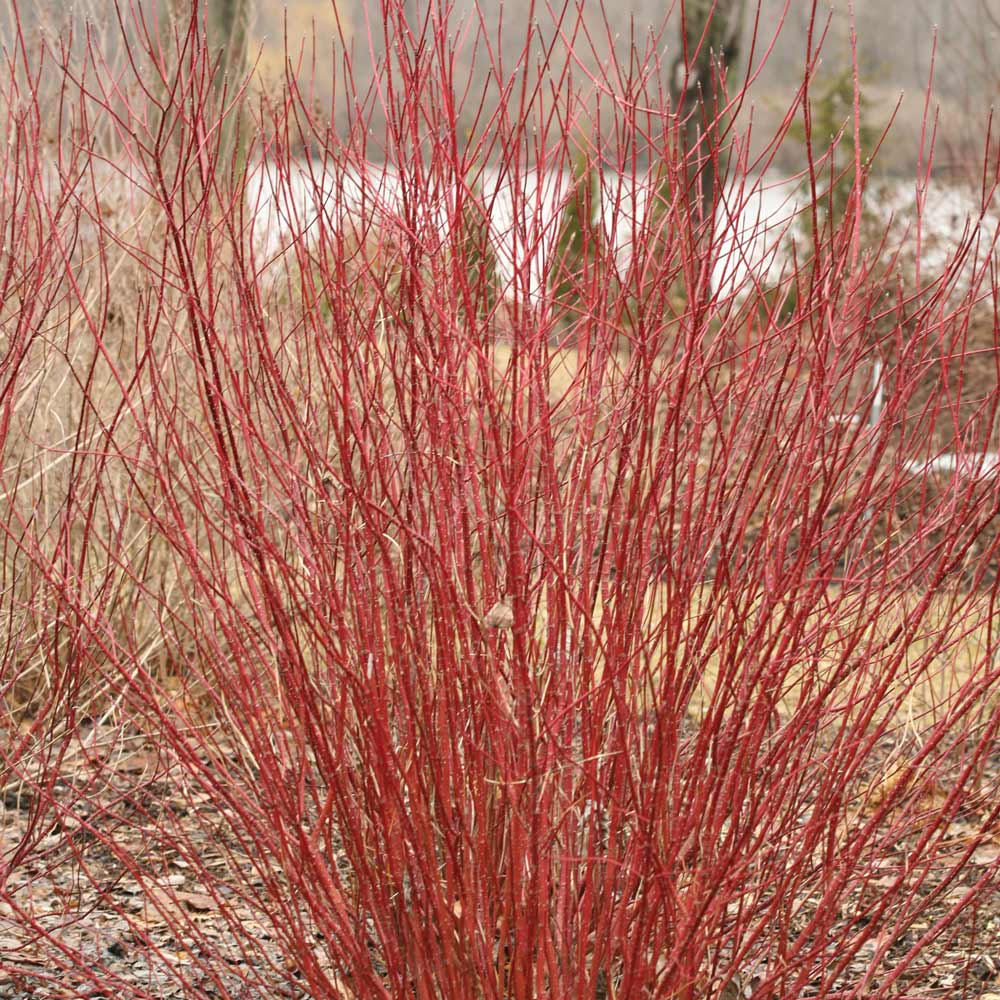
Red-twig Dogwood (Cornus stolonifera Arctic Fire® Red)
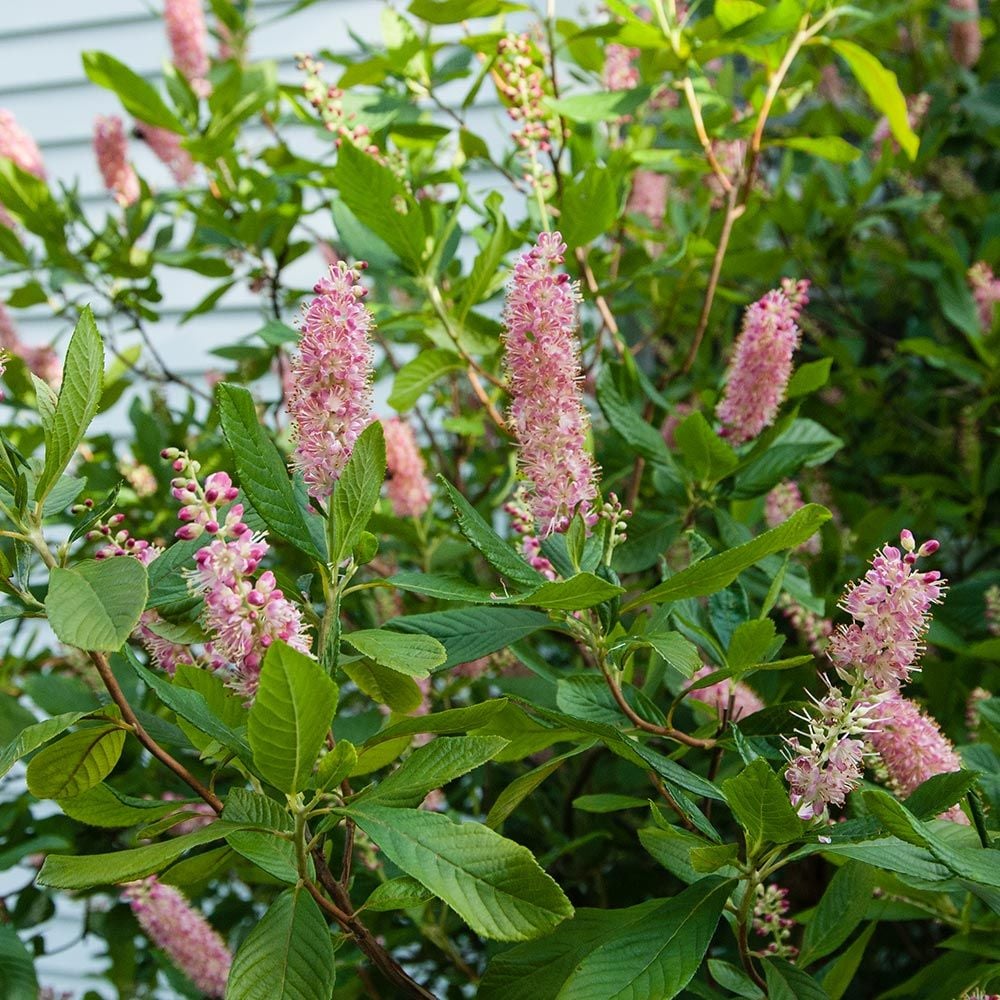
Sweet Pepperbush (Clethra alnifolia)
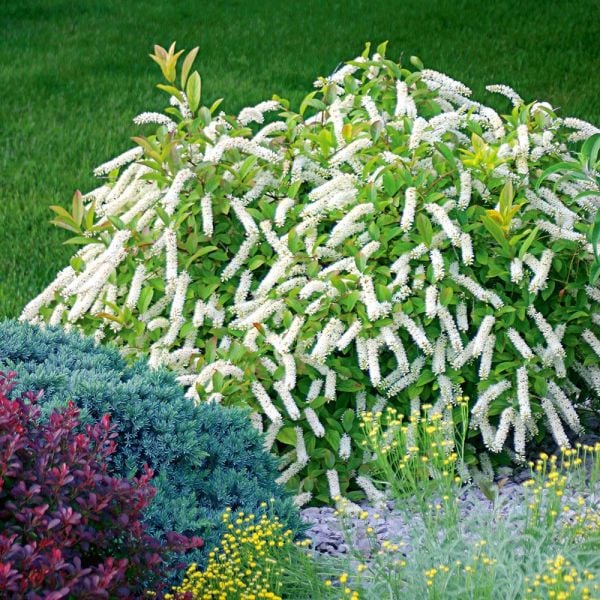
Virginia Sweetspire (Itea Virginica ‘Little Henry’)
Perennials:
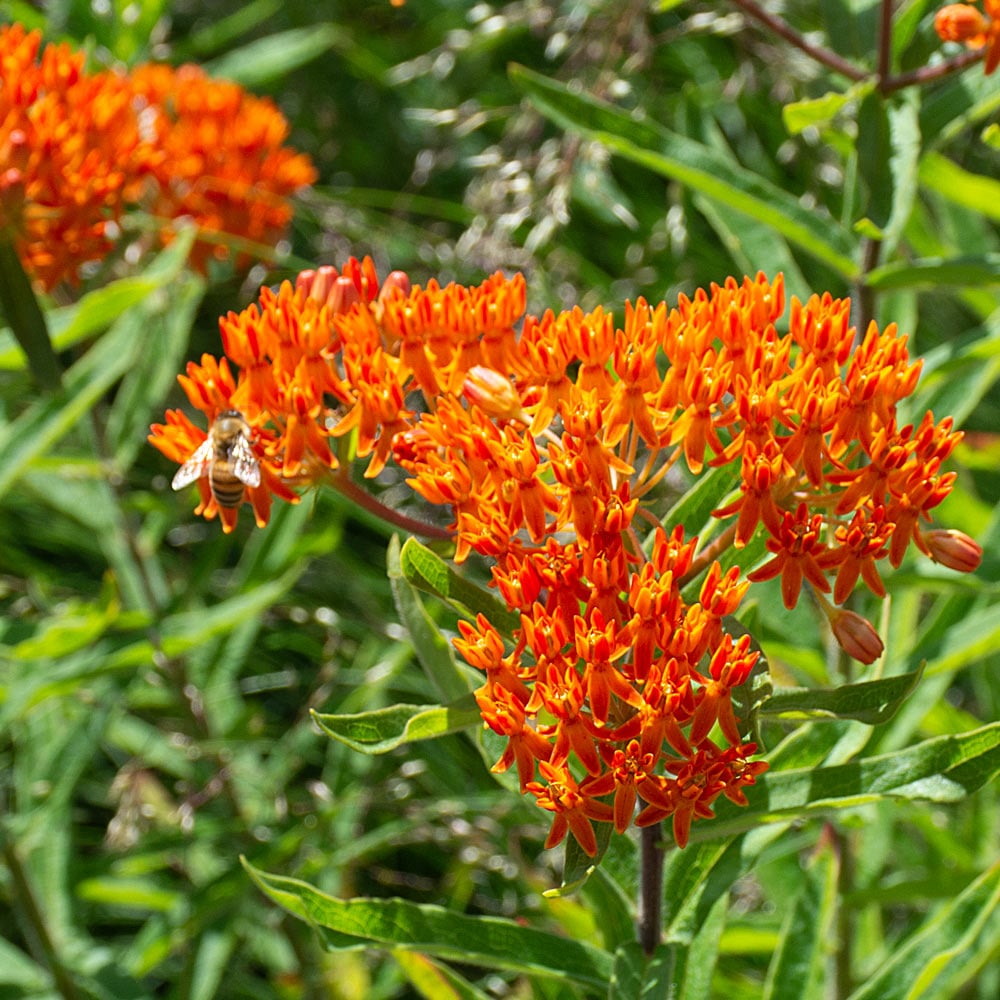
Butterfly Weed (Asclepias tuberosa)
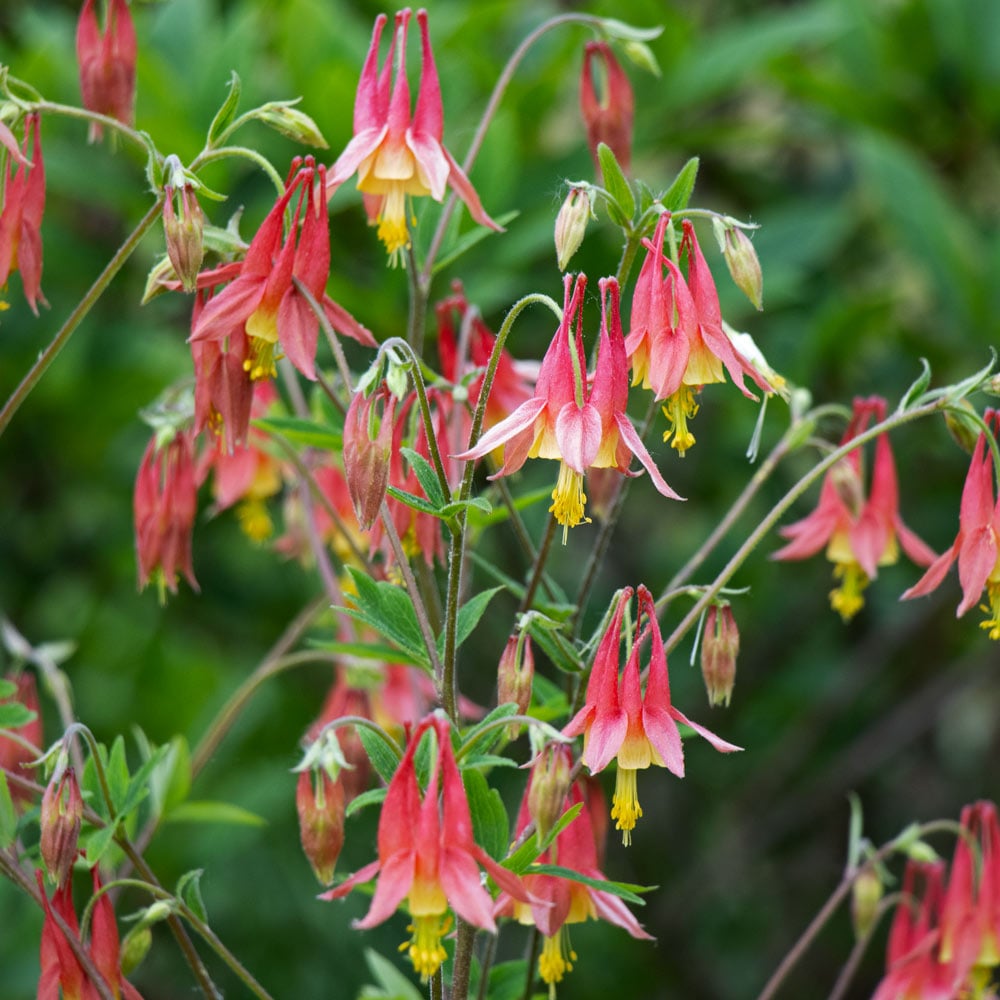
Canada Columbine (Aquilegia canadensis)
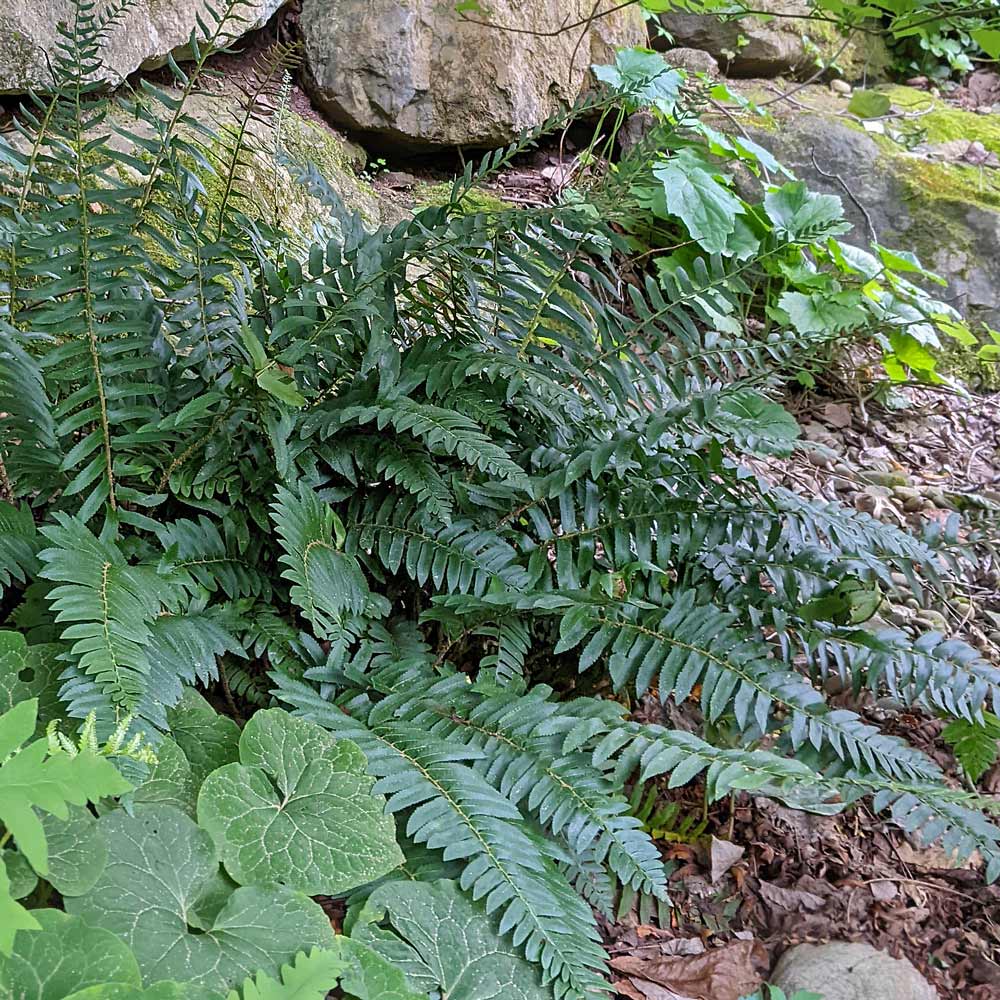
Christmas Fern (Polystichum acrostichoides)
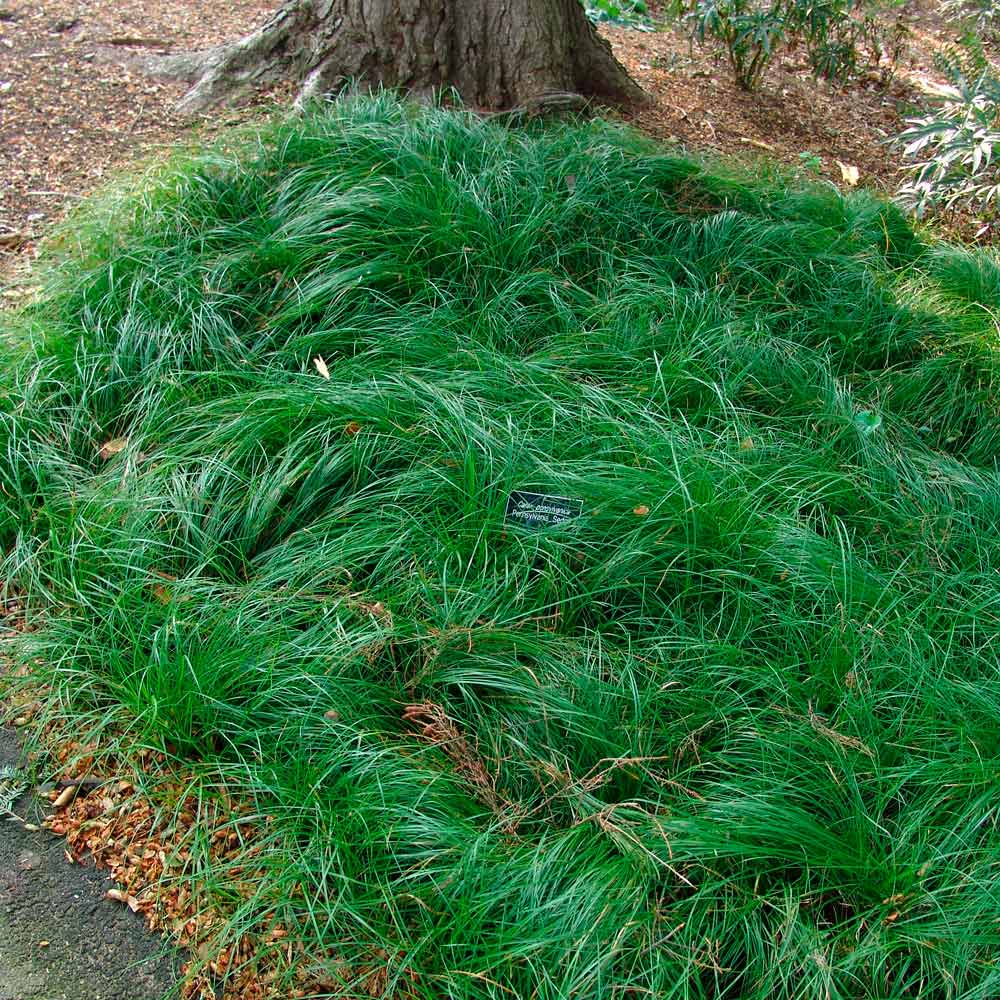
Pennsylvania Sedge (Carex pensylvanica)
Waterwise Plants That Tolerate Heat & Drought
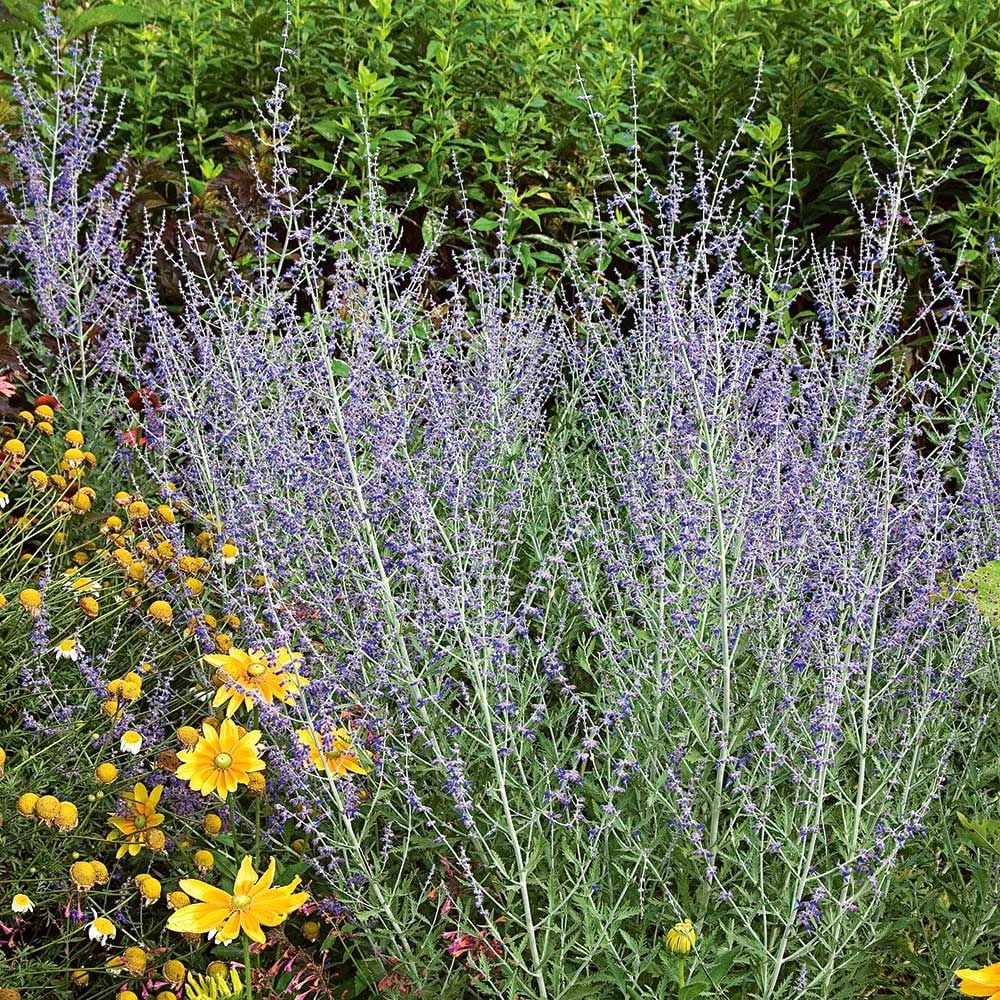
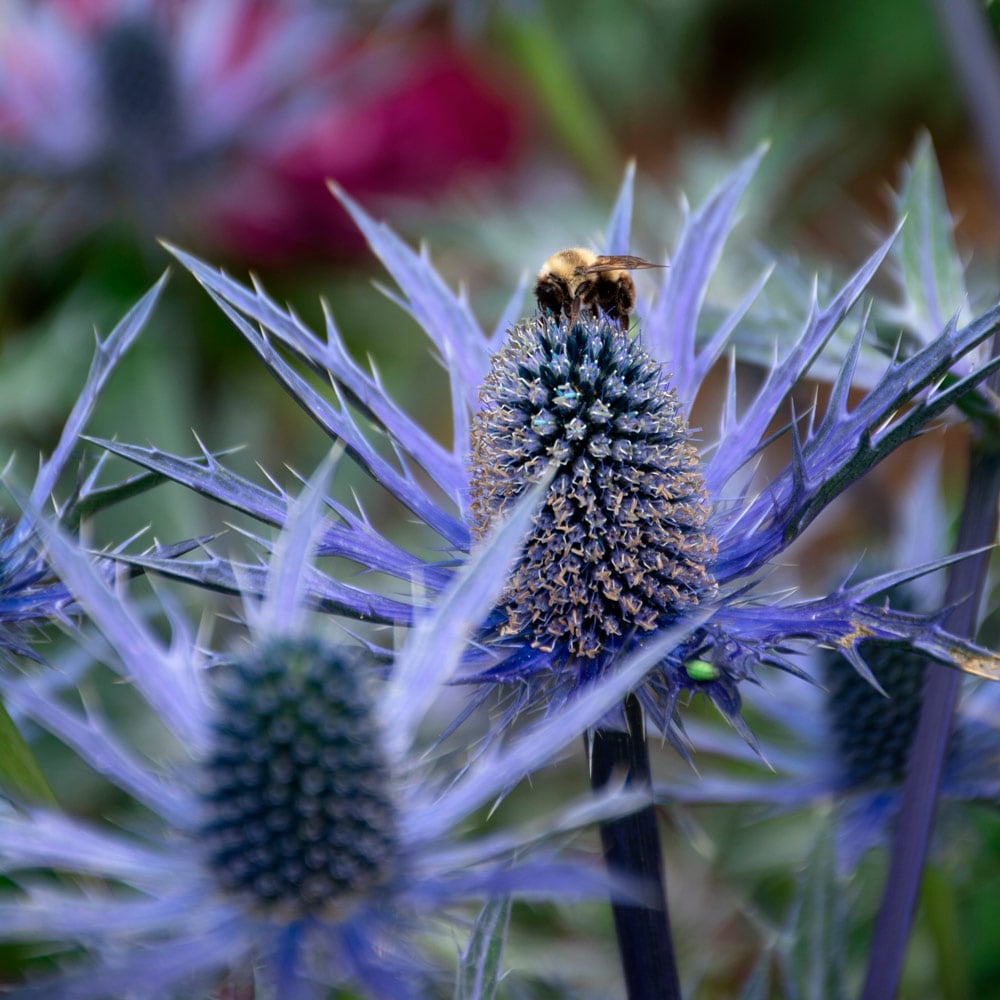
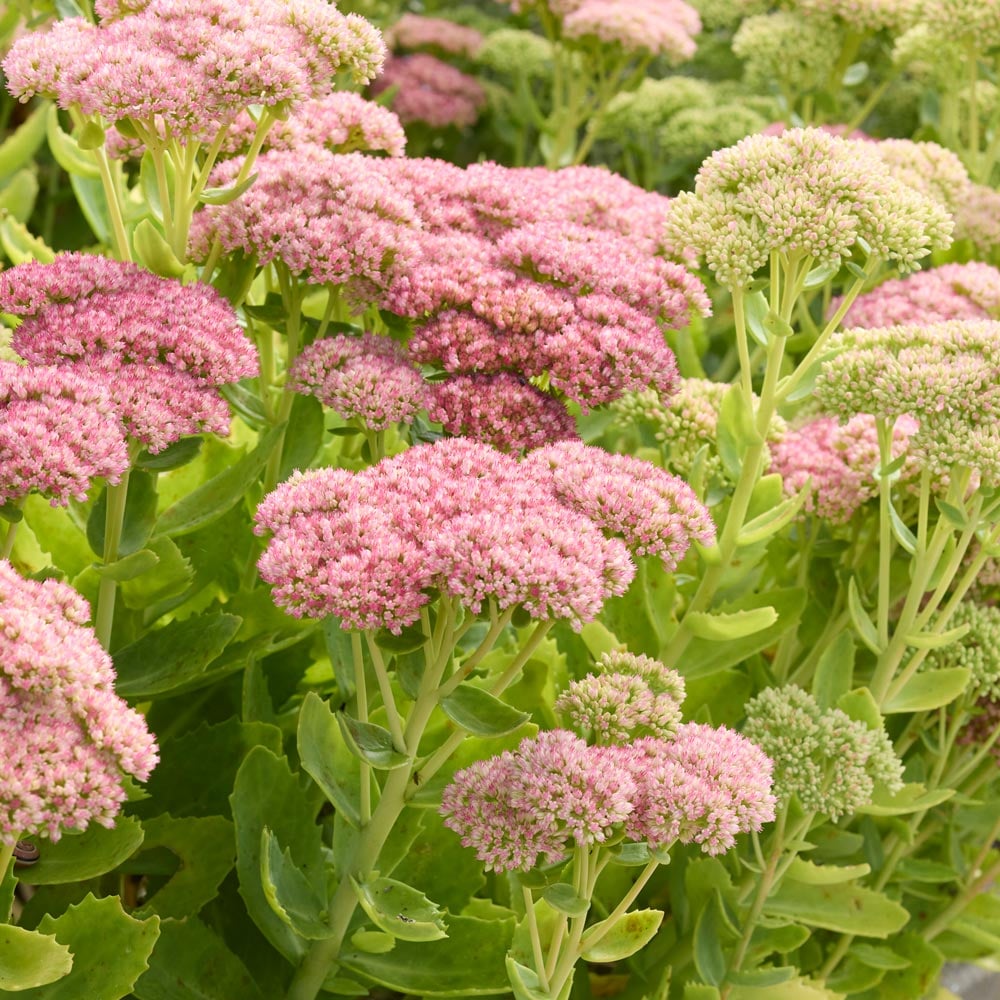
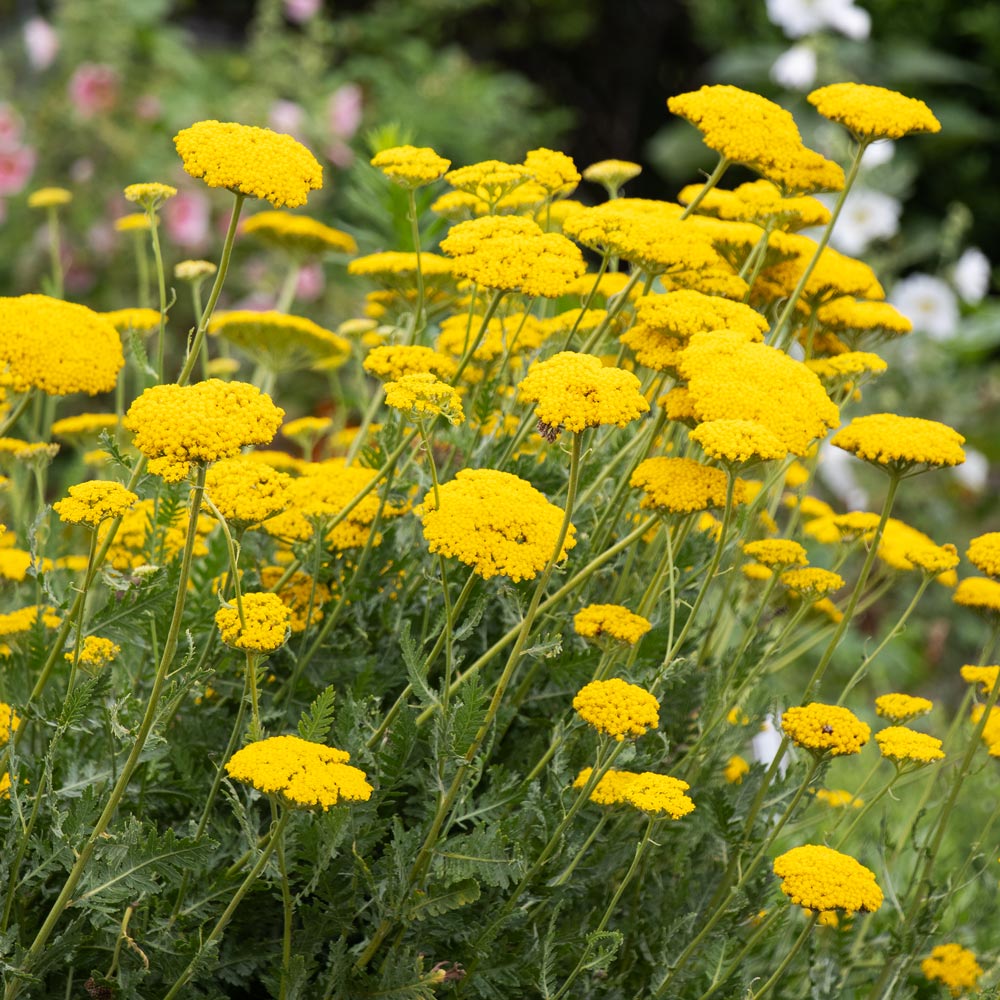
For well-draining to dry areas in your garden that may be subject to excessive heat, look for plants with the following adaptations, evolved to conserve water: Narrow blades (grasses) or leaves reduced in size, deep roots, leathery leaves, or those covered with light hairs or a waxy coating. Succulents have the ability to store water in leaves or stems; tubers, thick rhizomes, bulbs and corms store water and nutrients in their tissues. Once established, these plants won’t shrivel up and die if it doesn’t rain every week and require little extra water except during extreme drought.
Shrub:
Perennials:
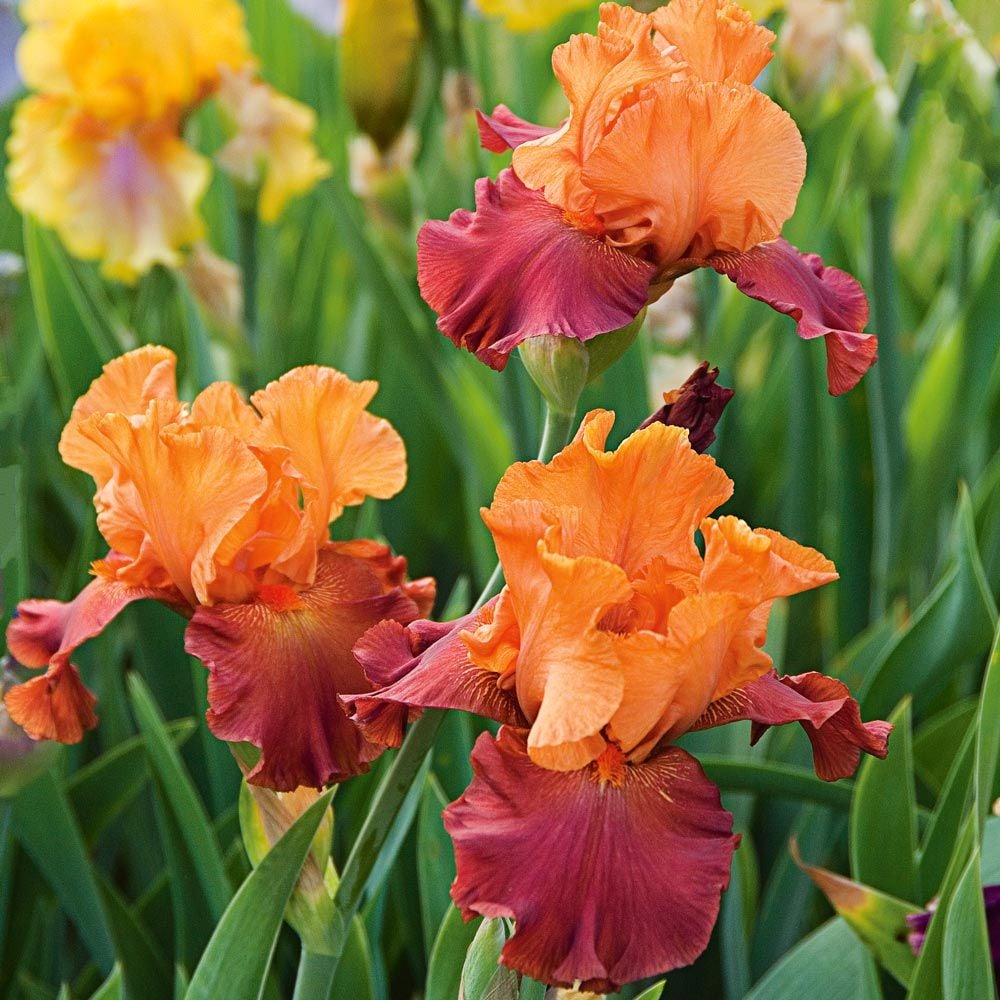
Bearded Iris (Iris germanica)
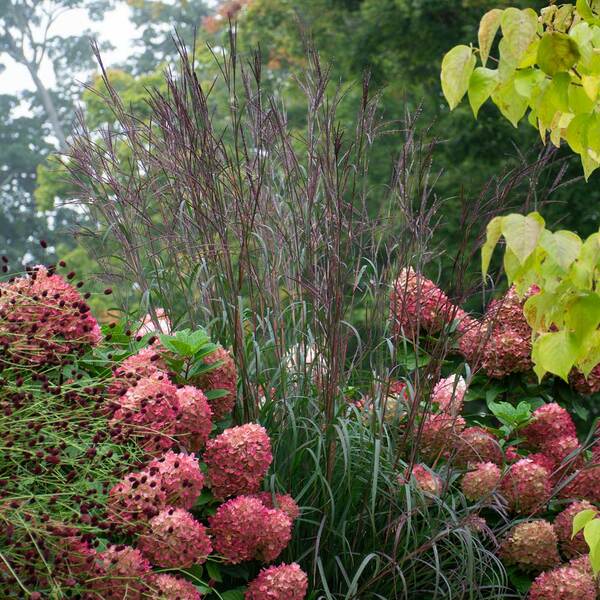
Big Bluestem (Andropogon gerardii ‘Blackhawks’)
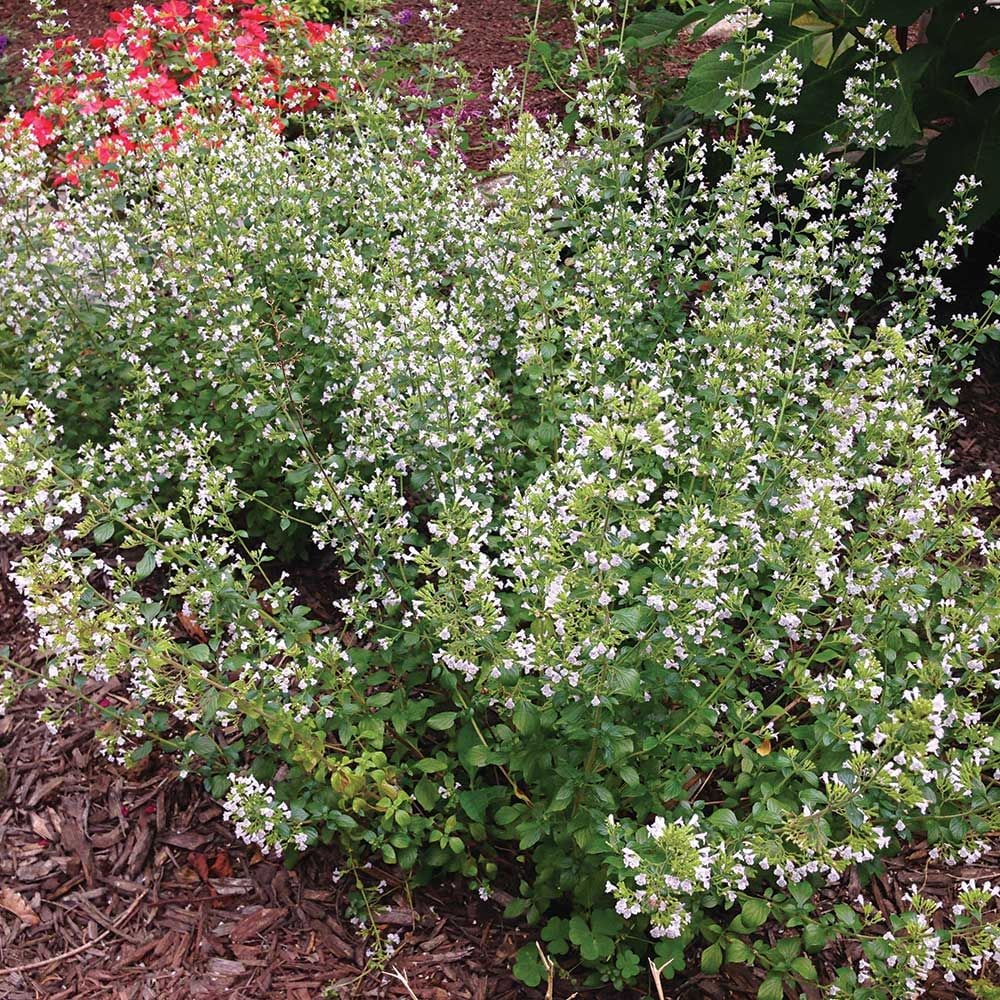
Calamint (Calamintha)
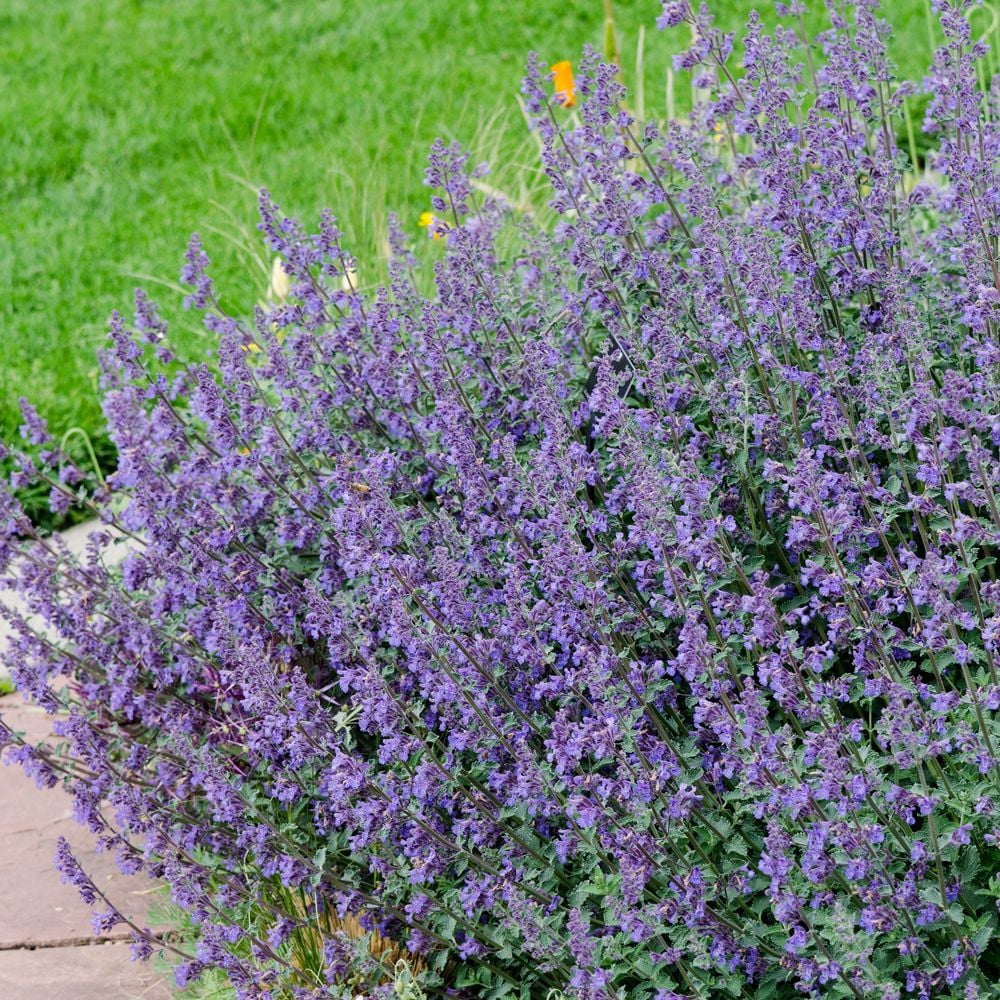
Catmint (Nepeta)
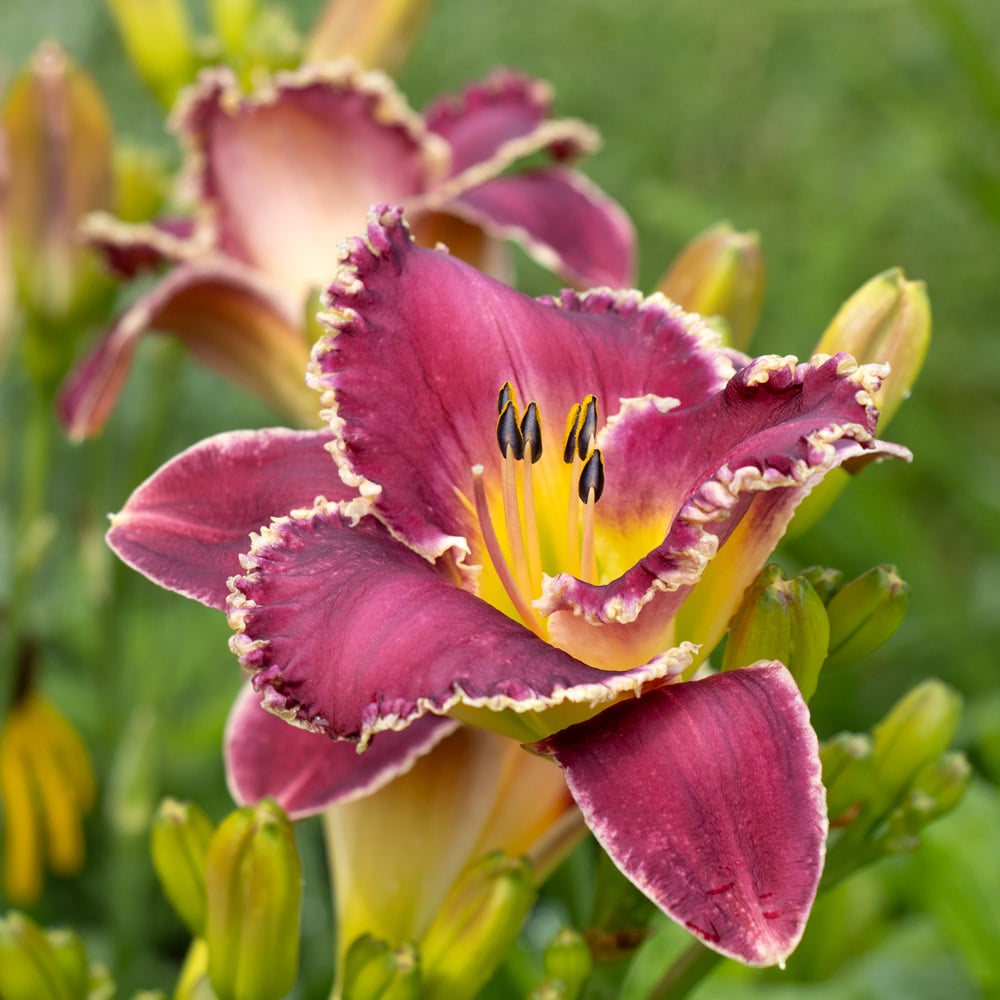
Daylilies (Hemerocallis)
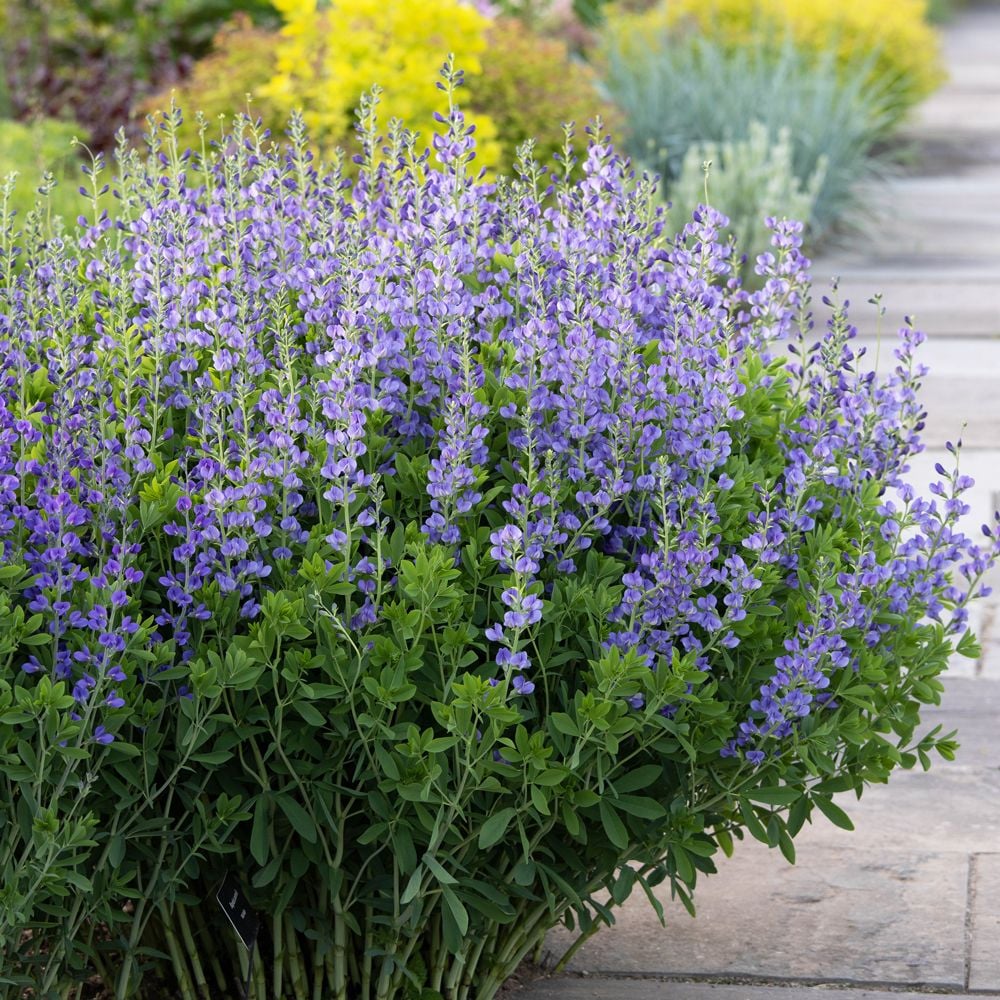
False Indigo (Baptisia)
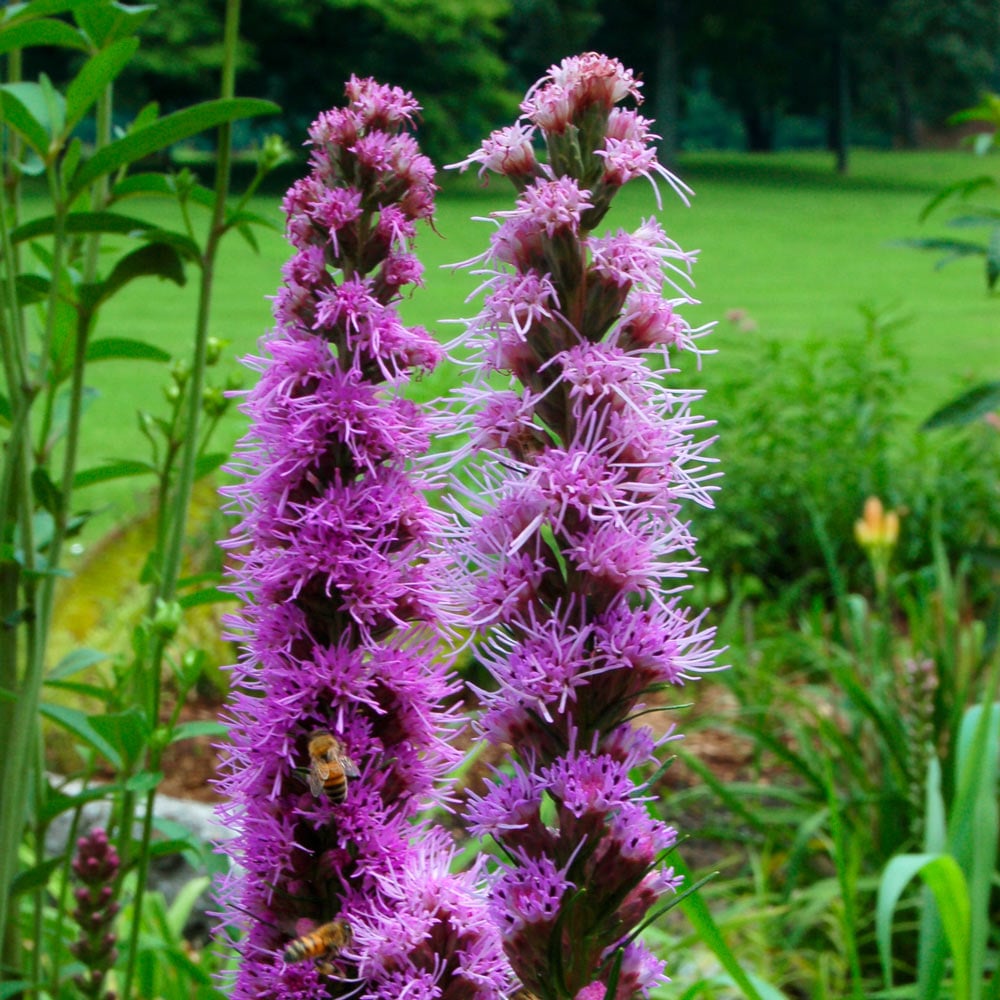
Gayfeather (Liatris)
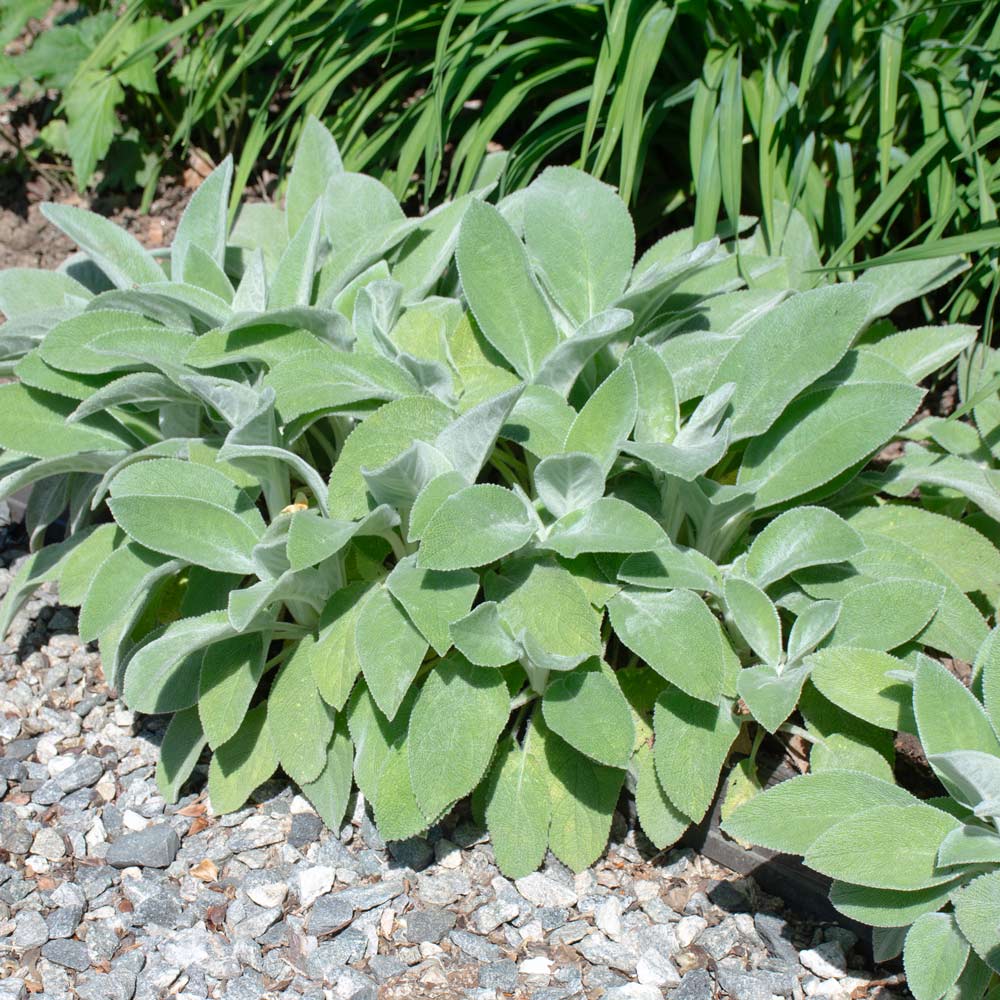
Lamb’s Ears (Stachys byzantina)
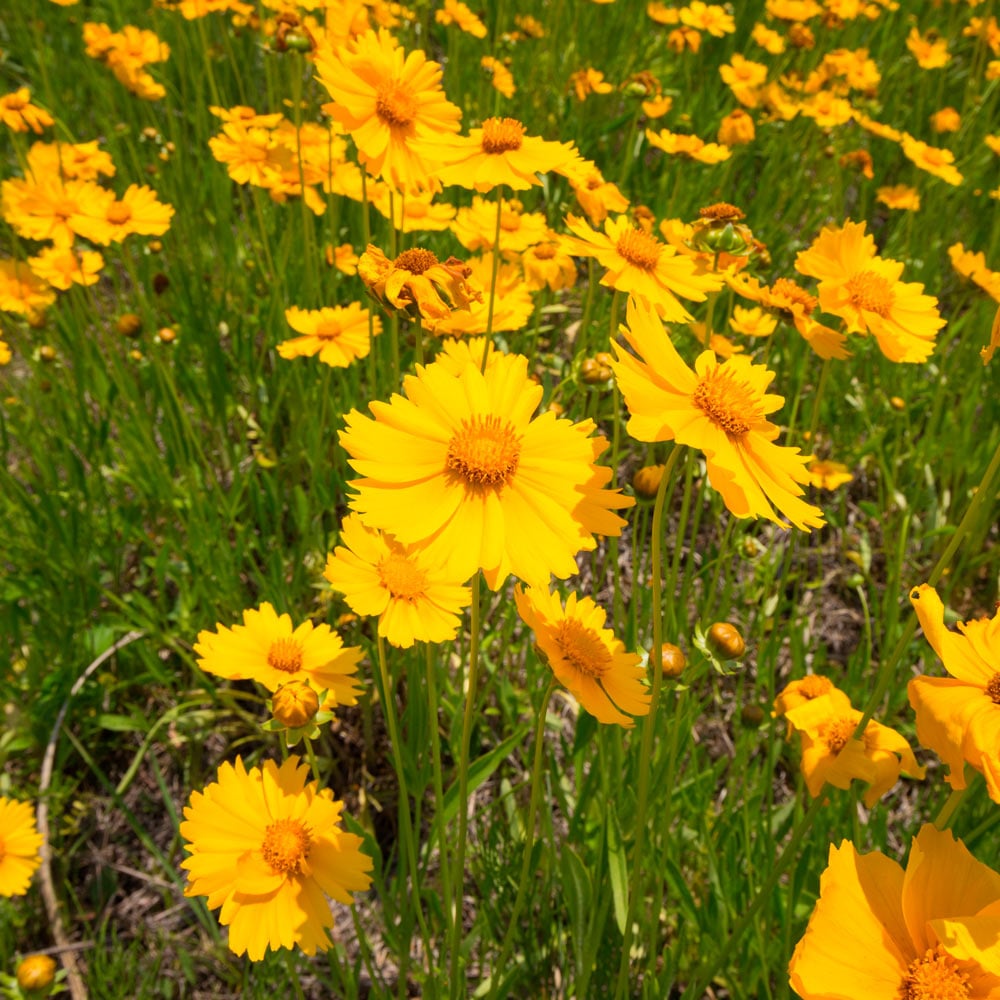
Lanceleaf Coreopsis (Coreopsis lanceolata)
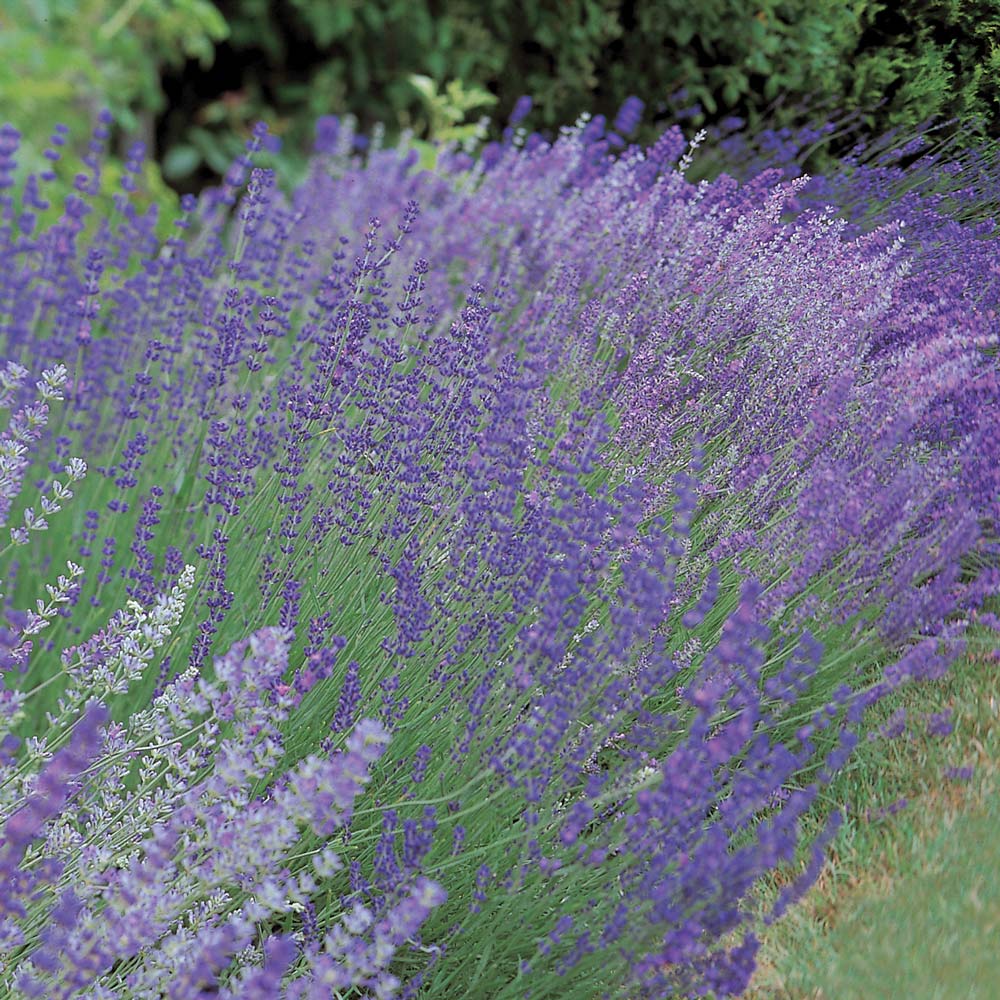
Lavender (Lavandula)
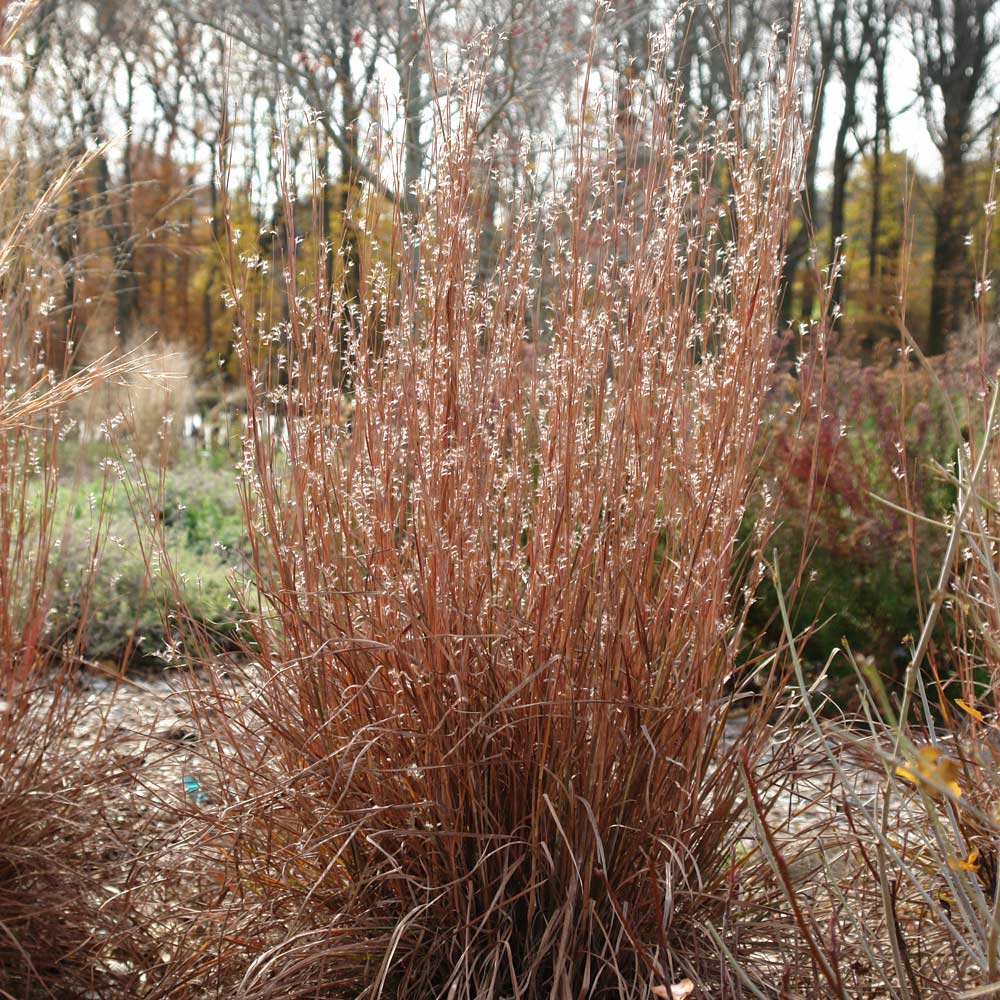
Little Bluestem (Schizachyrium scoparium ‘Standing Ovation’)
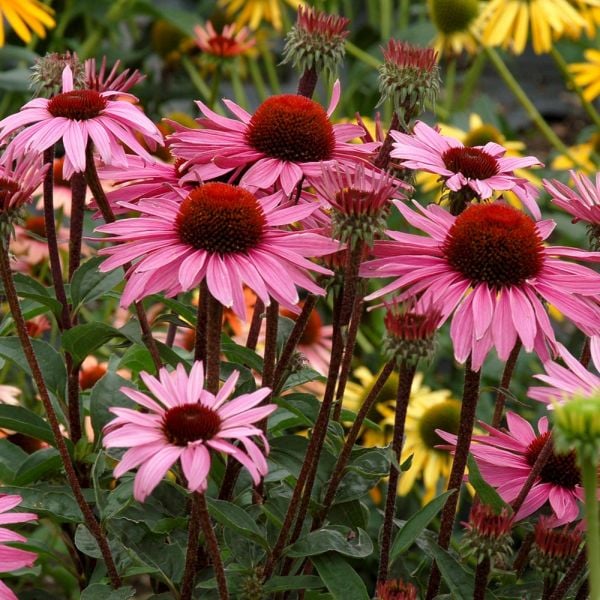
Purple Coneflower (Echinacea)
Plants That Tolerate Periodic Flooding & Damp Soils
Some plants do best with what gardeners call “wet feet.” Use them along streambanks, pond edges, and in areas that experience periodic flooding or remain damp for long periods. Roots of these plants help stabilize soils in erosion-prone areas.
Shrubs:
Buttonbush (Cephalanthus occidentalis Sugar Shack®)
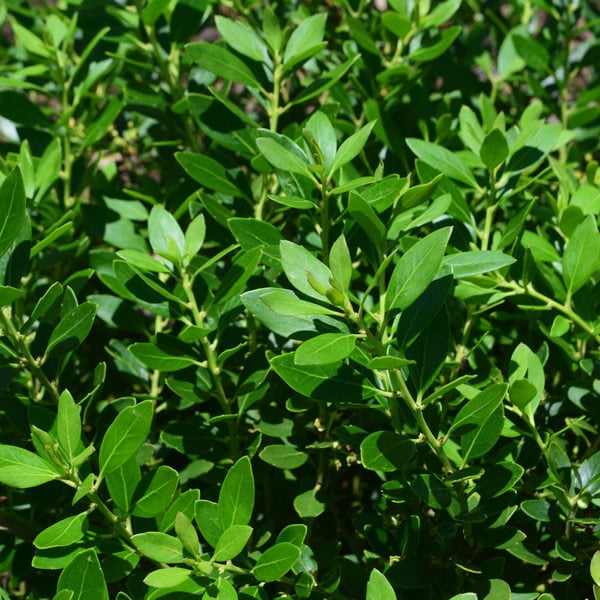
Inkberry Holly (Ilex glabra)
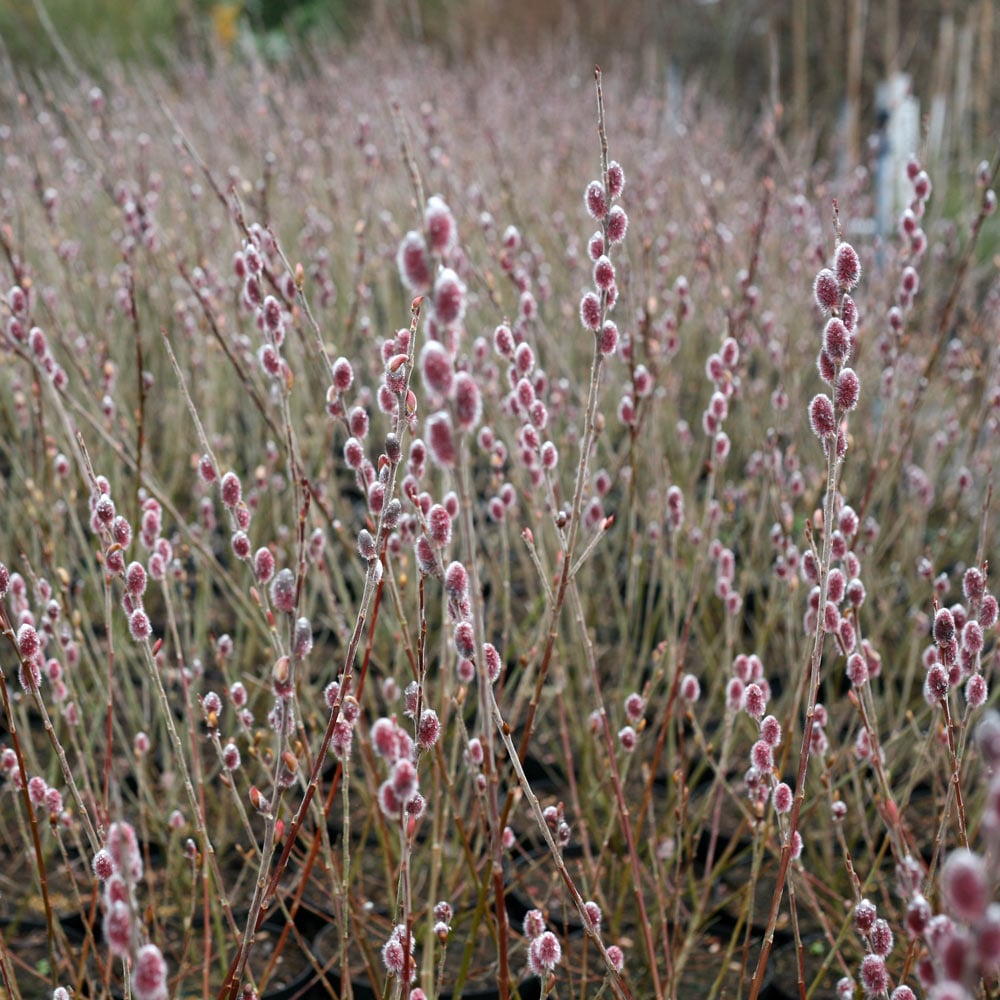
Pussy Willow (Salix gracilistyla ‘Mt. Asama’)
Red-twig Dogwood (Cornus stolonifera Arctic Fire® Red)
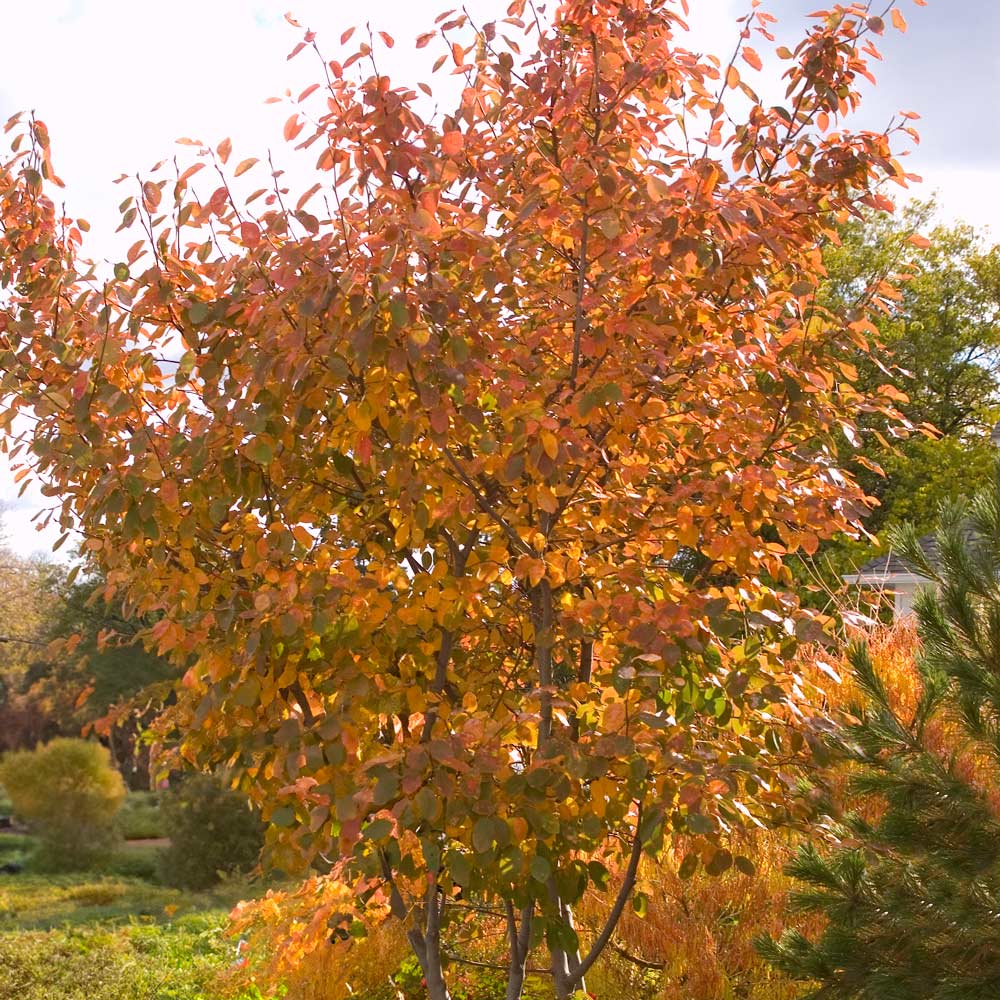
Serviceberry (Amelanchier x grandiflora ‘Autumn Brilliance’)
Sweet Pepperbush (Clethra alnifolia)
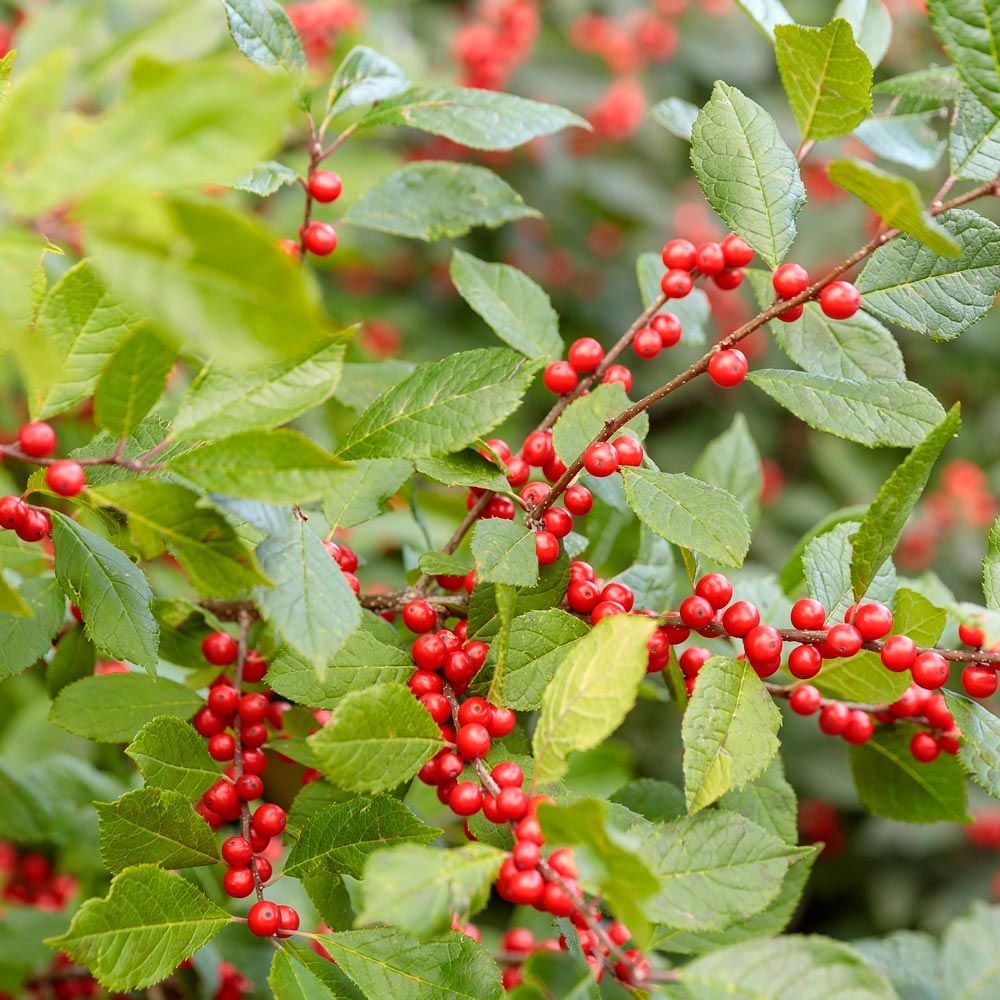
Winterberry Holly (Ilex verticillata)
Perennials:
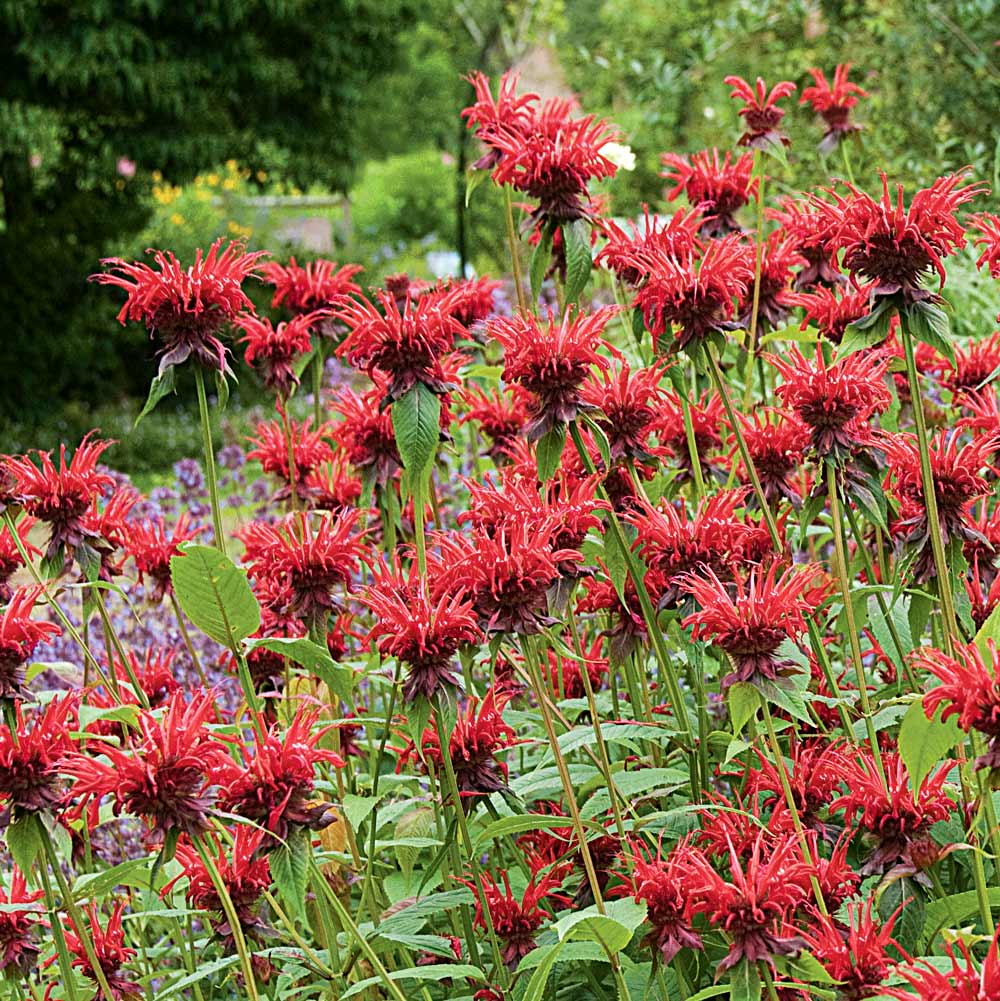
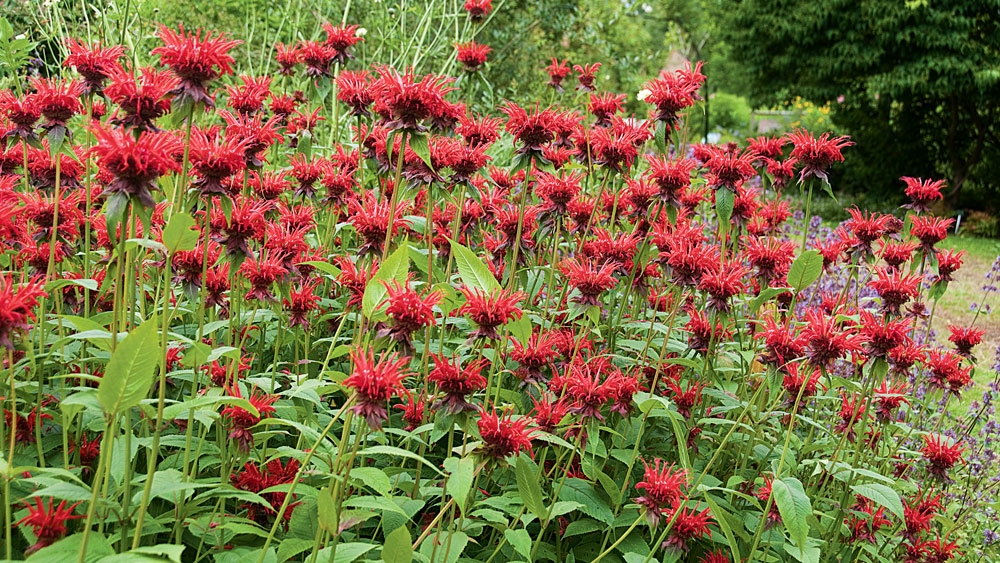
Bee Balm (Monarda didyma)
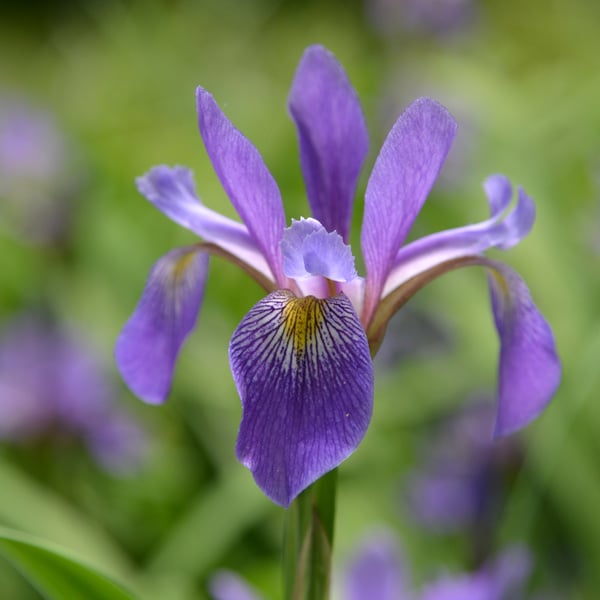
Blue Flag Iris (Iris versicolor)
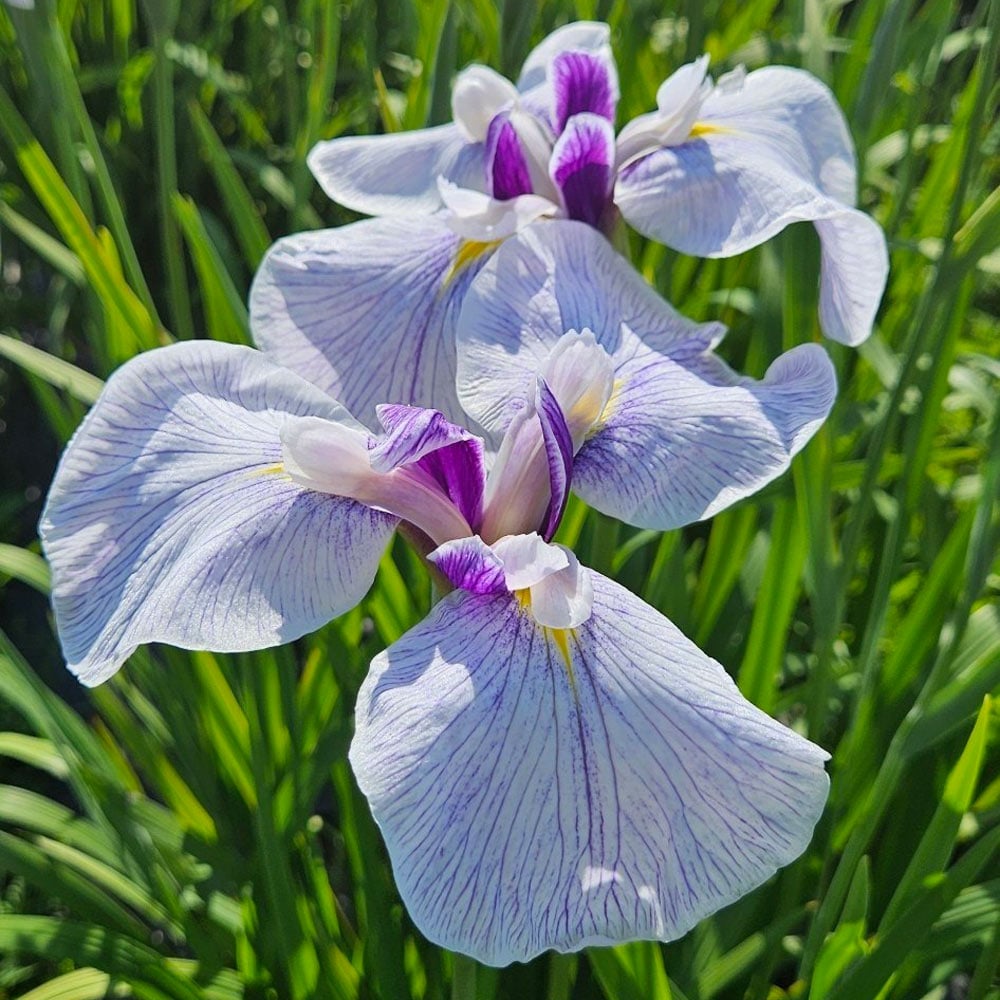
Japanese Iris (Iris ensata)
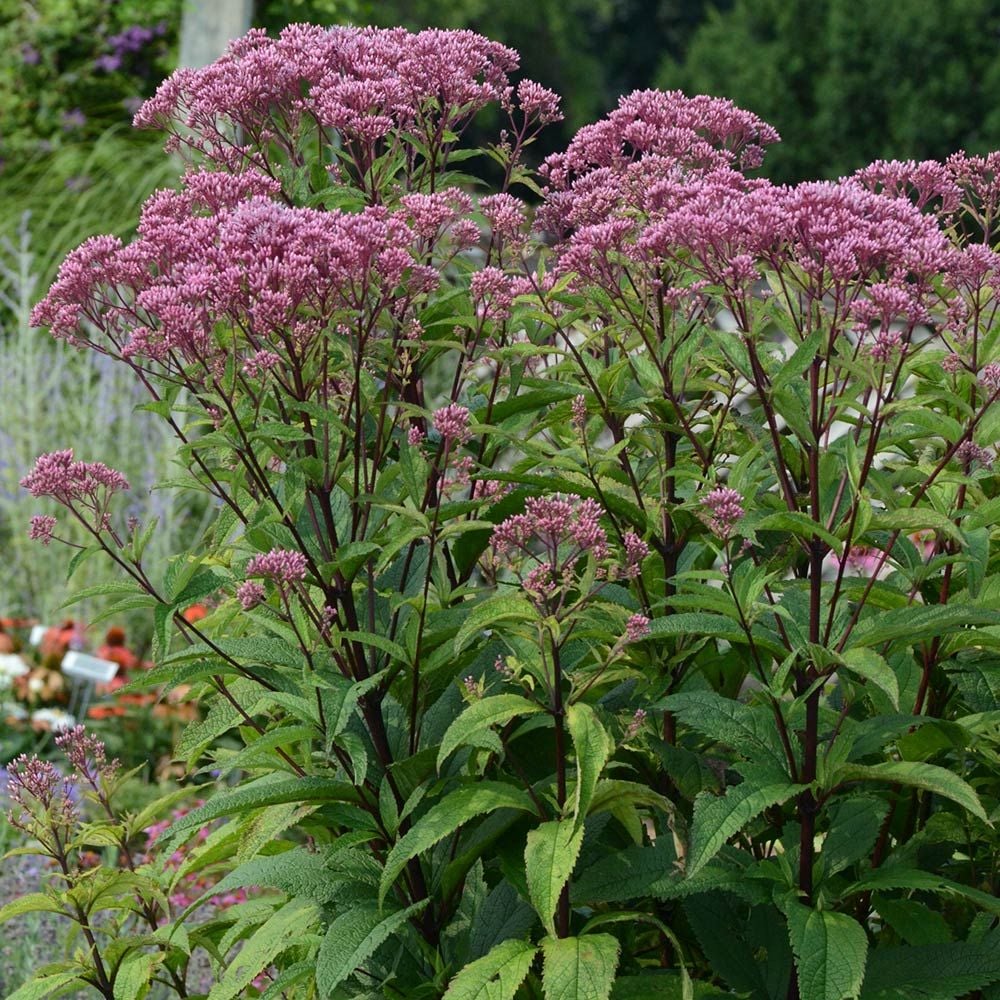
Joe Pye Weed (Eutrochium dubium ‘Baby Joe’)
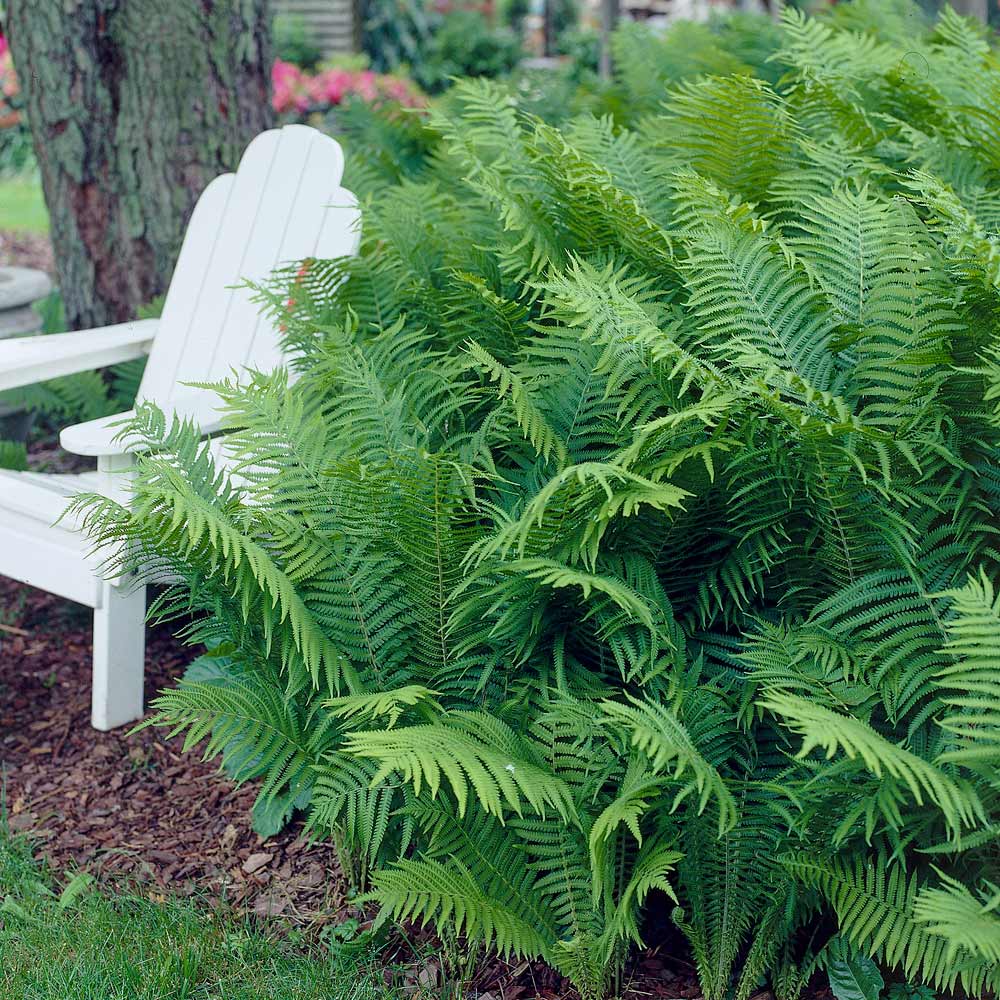
Ostrich Fern (Matteuccia struthiopteris)
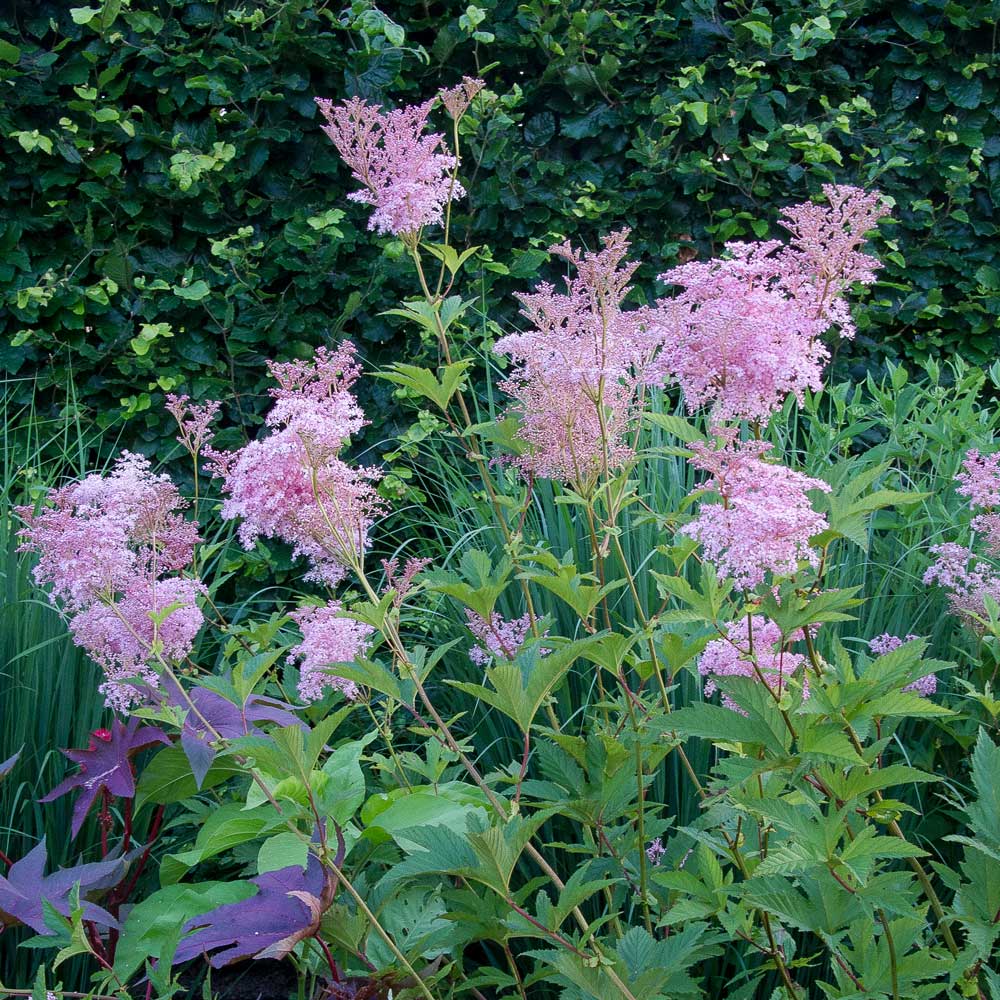
Queen of the Prairie (Filipendula rubra ‘Venusta’)
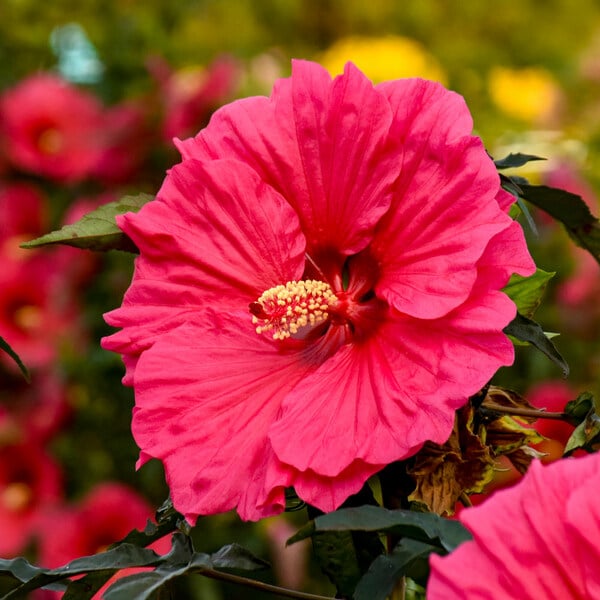
Rose Mallow (Hibiscus)
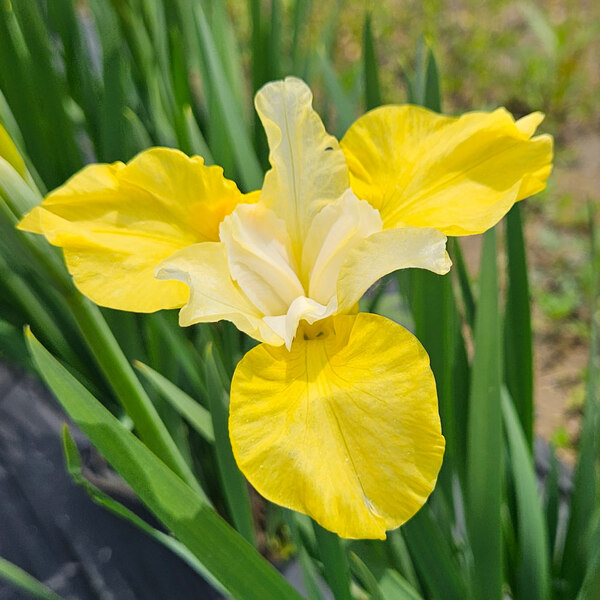
Siberian Iris (Iris sibirica)
Plants Tolerant of Salt Spray
For roadsides and yards in coastal areas that are subject to salt spray during storms:
Shrubs:
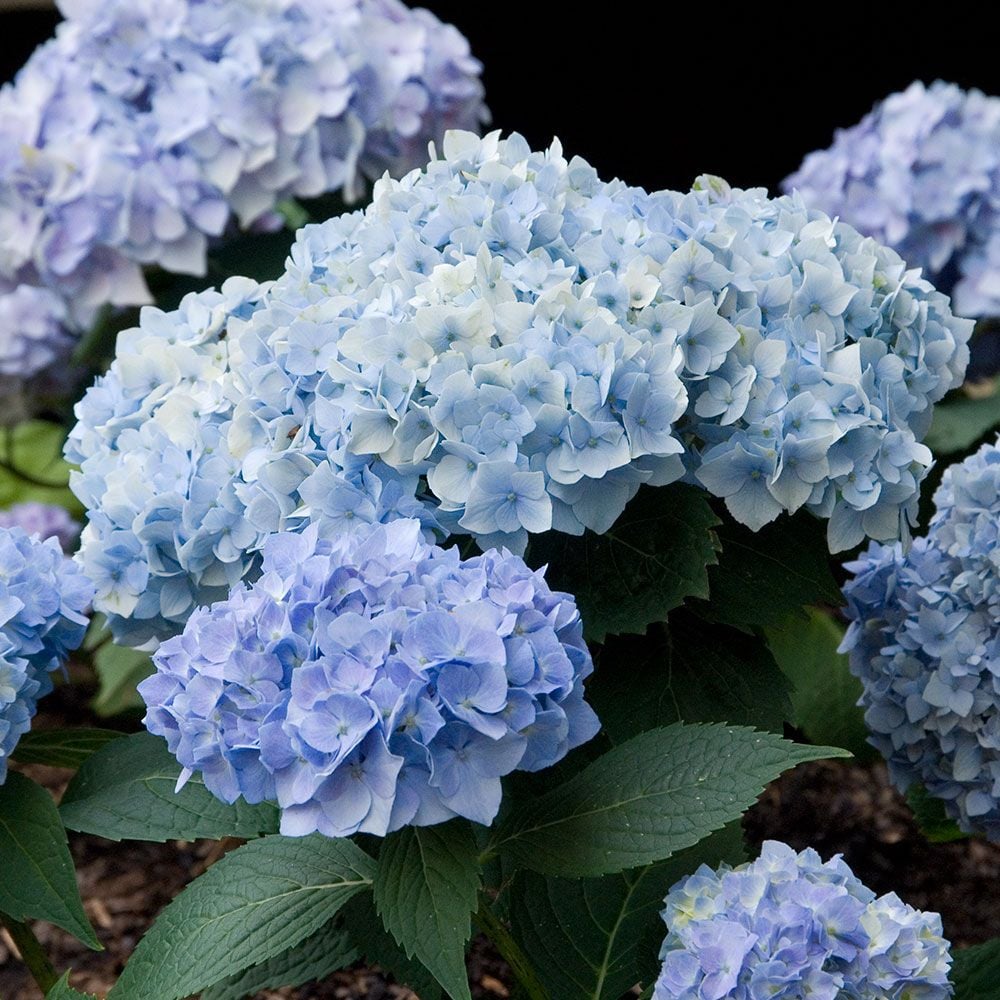
Bigleaf Hydrangea (Hydrangea macrophylla)
Blueberry (Vaccinium corymbosum)
Chokeberry (Aronia arbutifolia ‘Brilliantissima’)
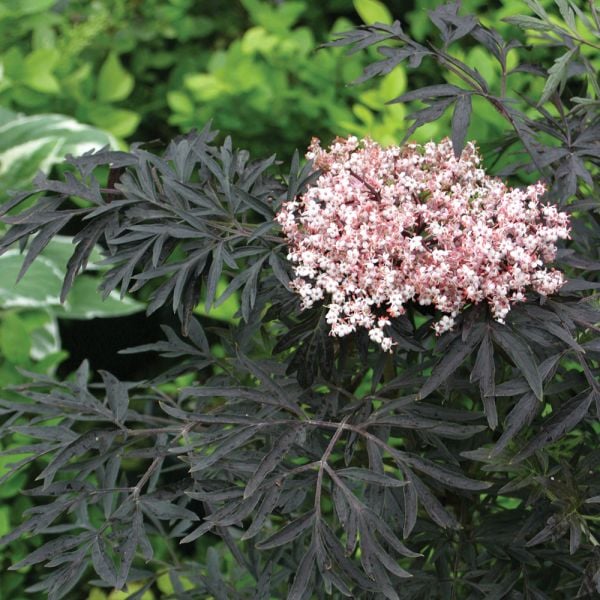
Elderberry (Sambucus nigra f. prophyrophylla ‘Black Lace’)
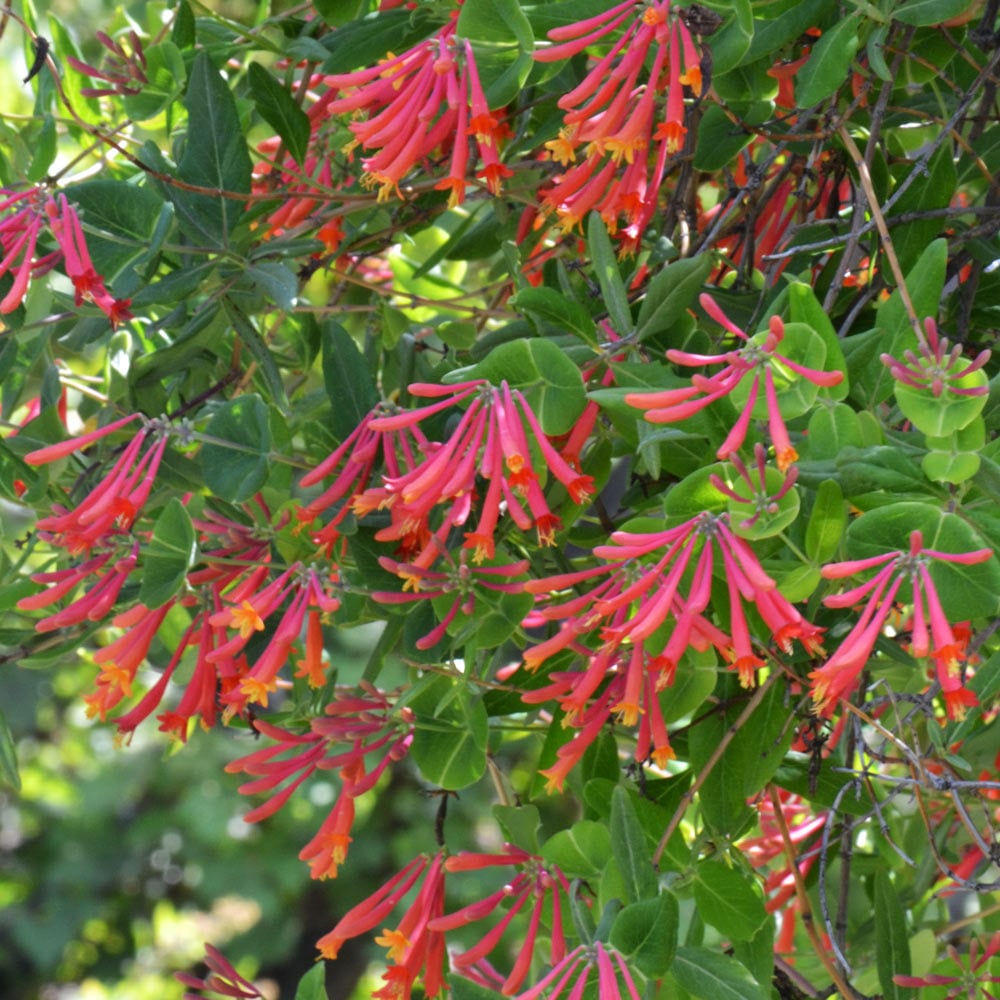
Honeysuckle (Lonicera sempervirens)
Inkberry Holly (Ilex glabra)
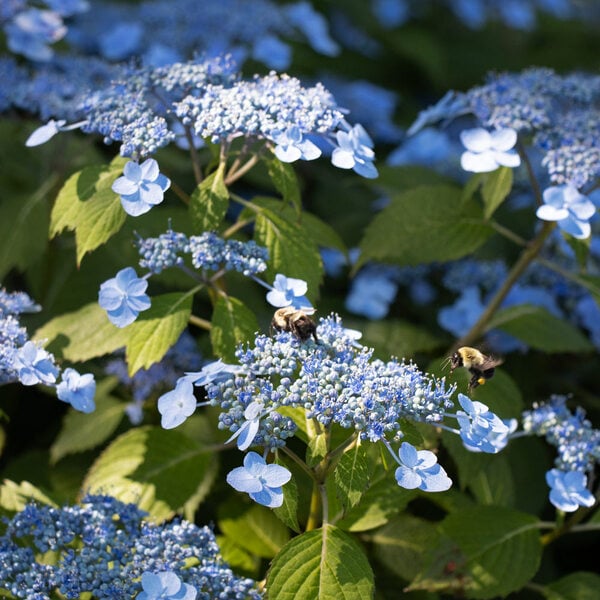
Mountain Hydrangea (Hydrangea serrata)
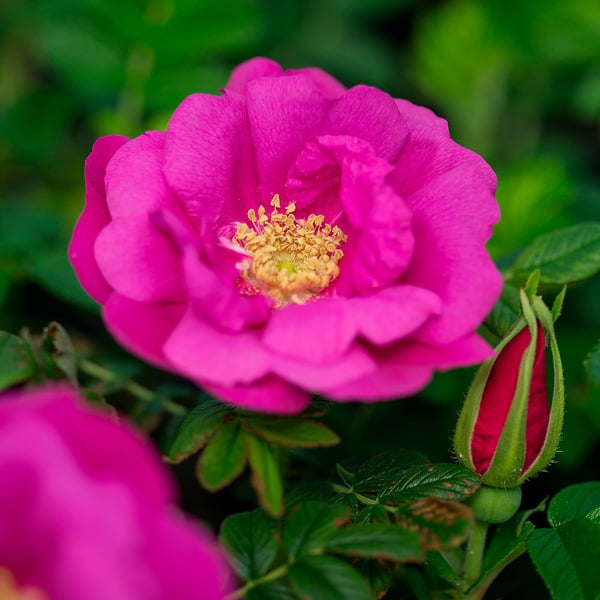
Rugosa Rose (Rosa rugosa)
Perennials:
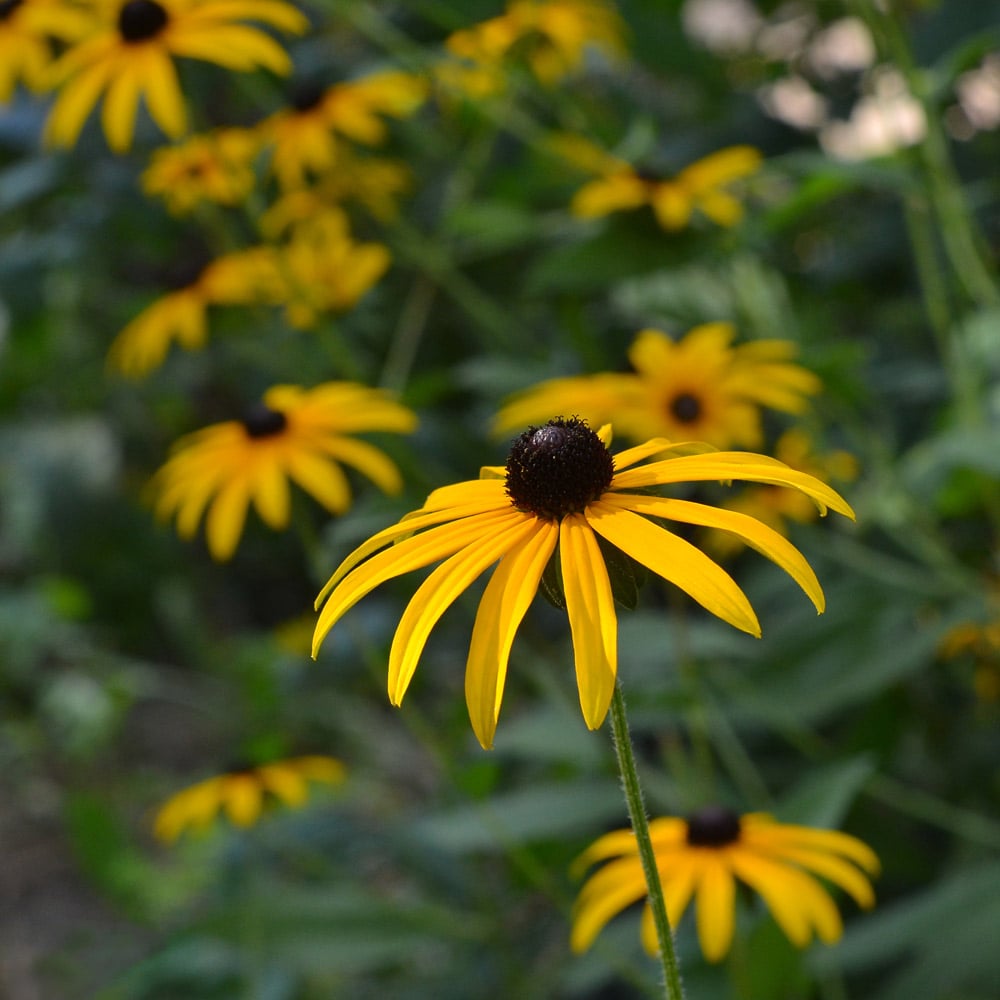
Trees & Shrubs That Regrow If Damaged
Many woody plants that grow under taller trees seem to have evolved the ability to grow back when damaged by falling limbs, a useful ability for shrubs planted in woodland gardens. Suckering shrubs that resprout readily are good choices for driveway or roadside plantings. If damaged by vehicles or crushed by snow, or if their height reduces visibility and they must be heavily pruned, they will regenerate even if cut down to the ground – the epitome of resilience.
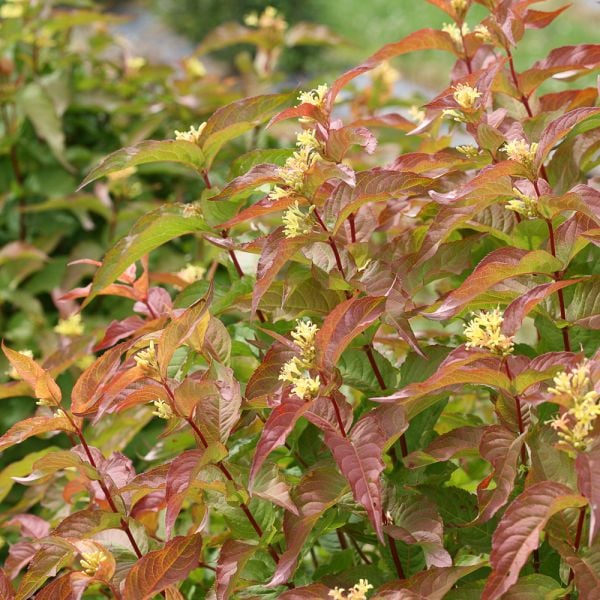
Bush Honeysuckle (Diervilla)
Chokeberry (Aronia arbutifolia ‘Brilliantissima’)
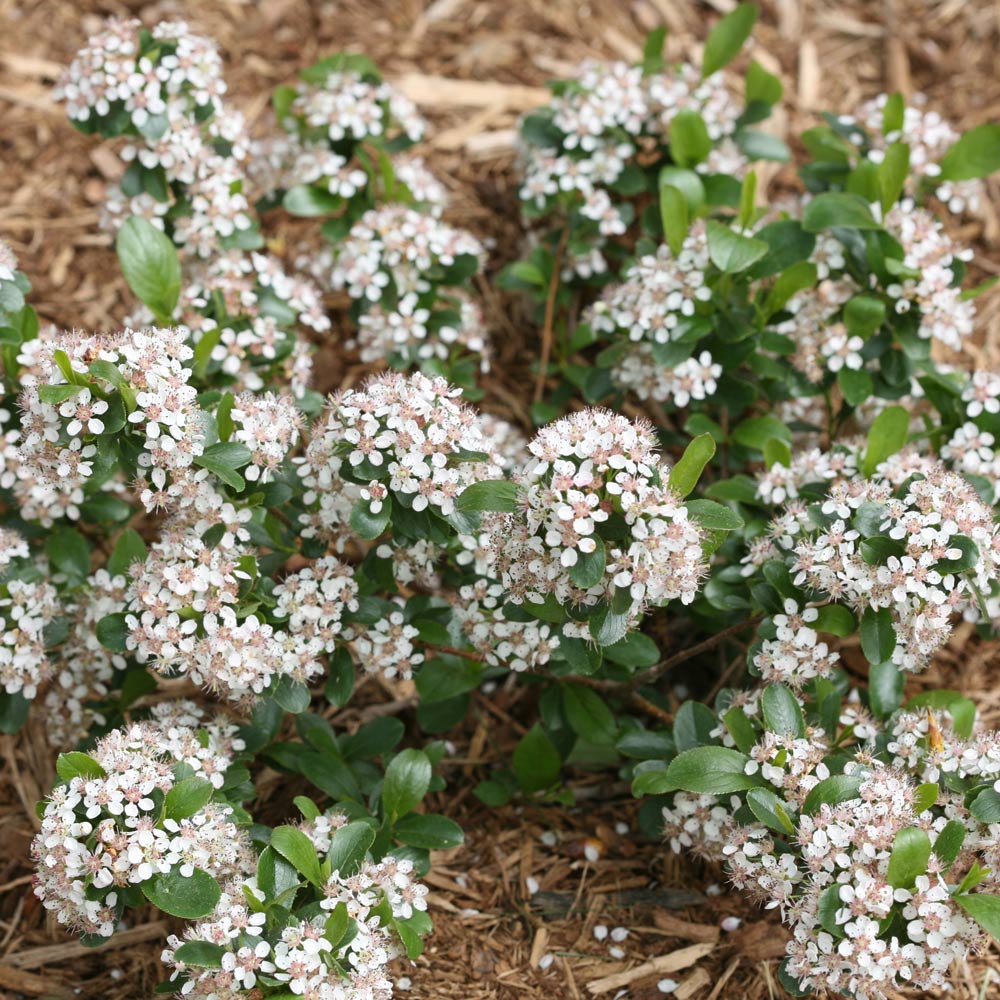
Chokeberry (Aronia melanocarpa ‘Lowscape Mound’)
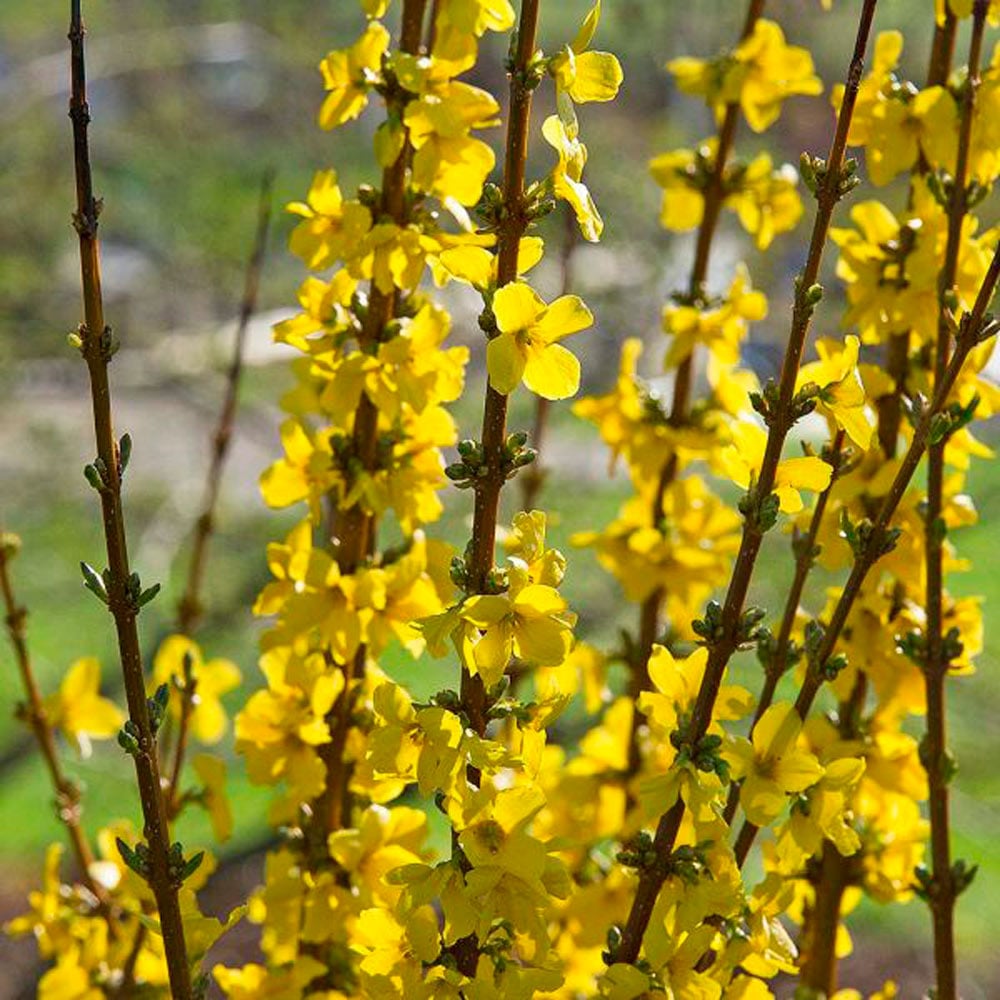
Forsythia (Forsythia)
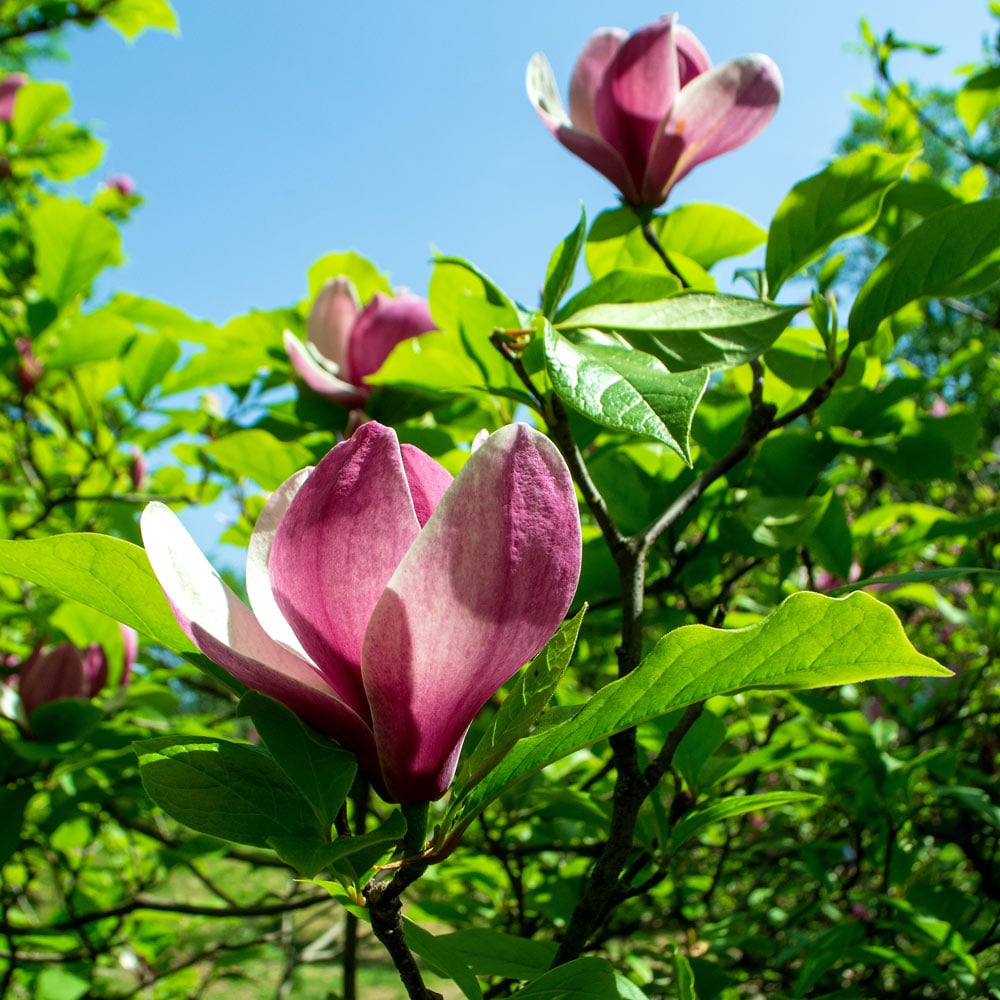
Magnolia (Magnolia)
Rugosa Rose (Rosa rugosa)
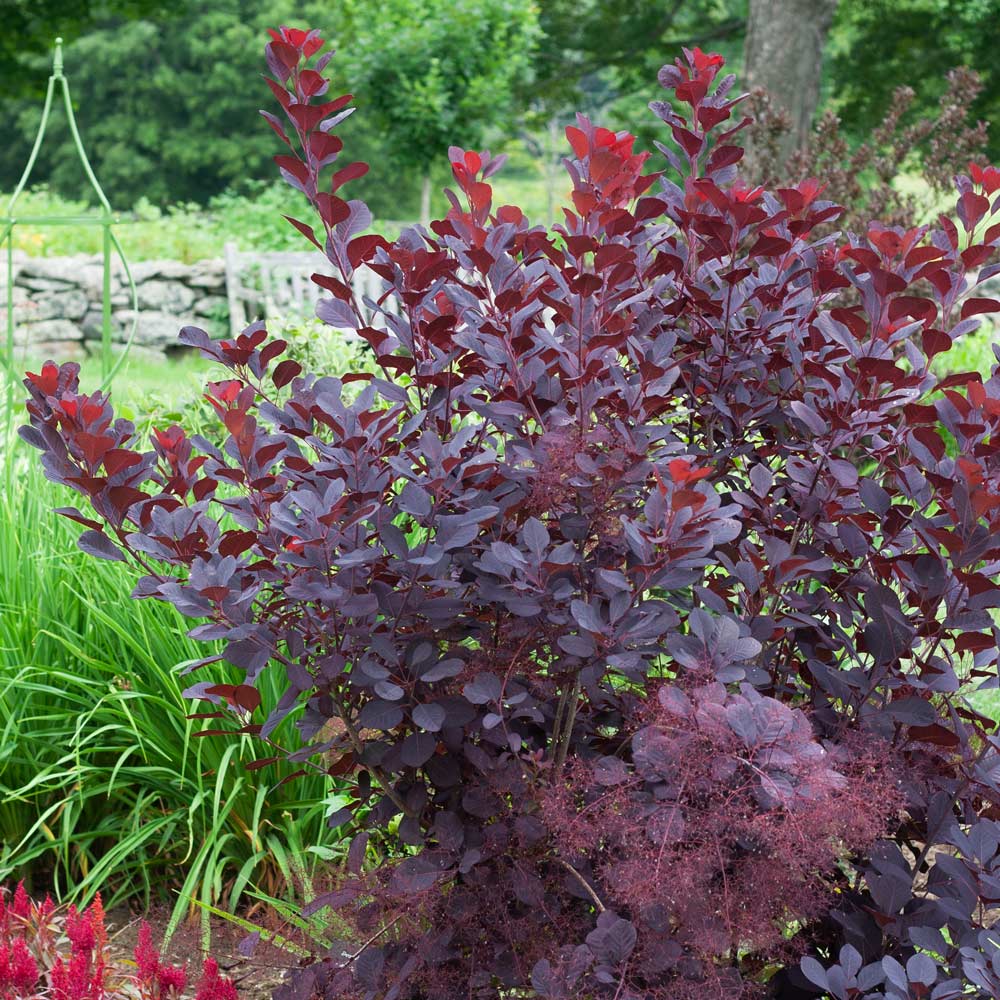
Smokebush (Cotinus coggygria ‘Winecraft Black’)
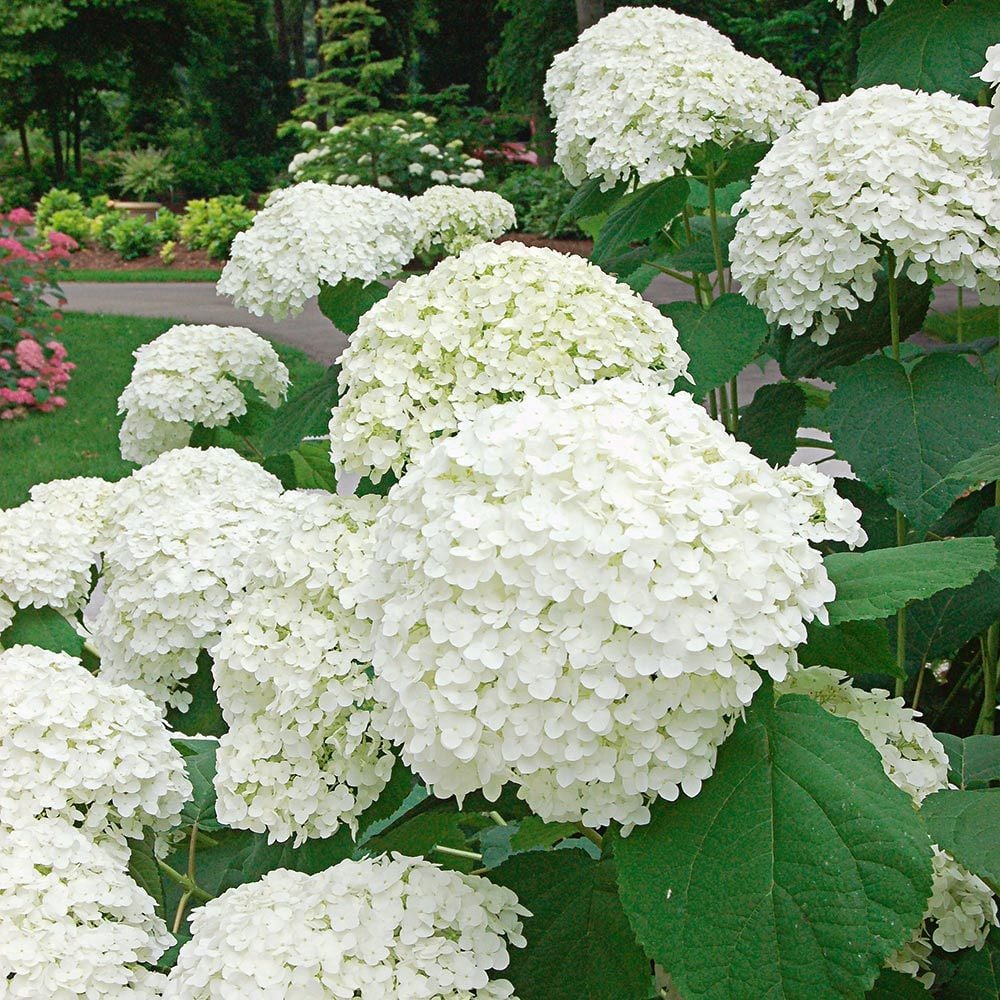
Smooth Hydrangea (Hydrangea arborescens)
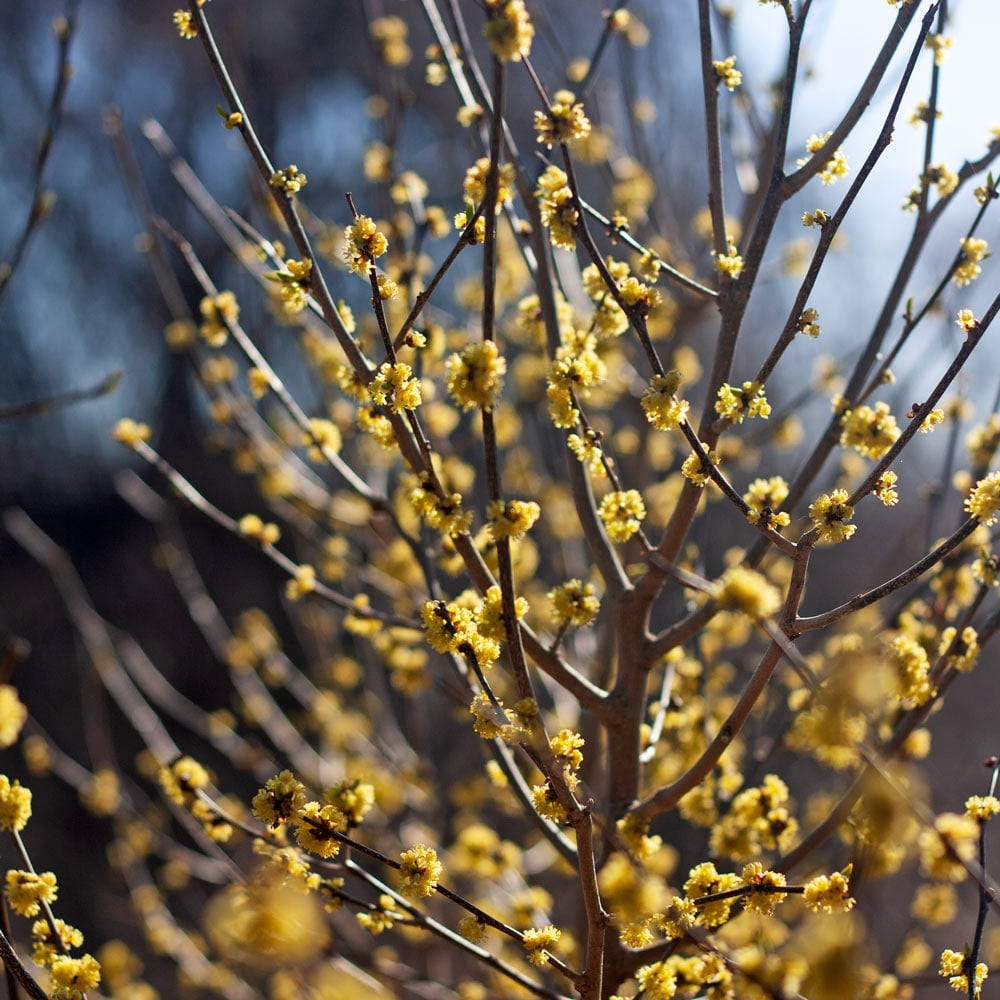
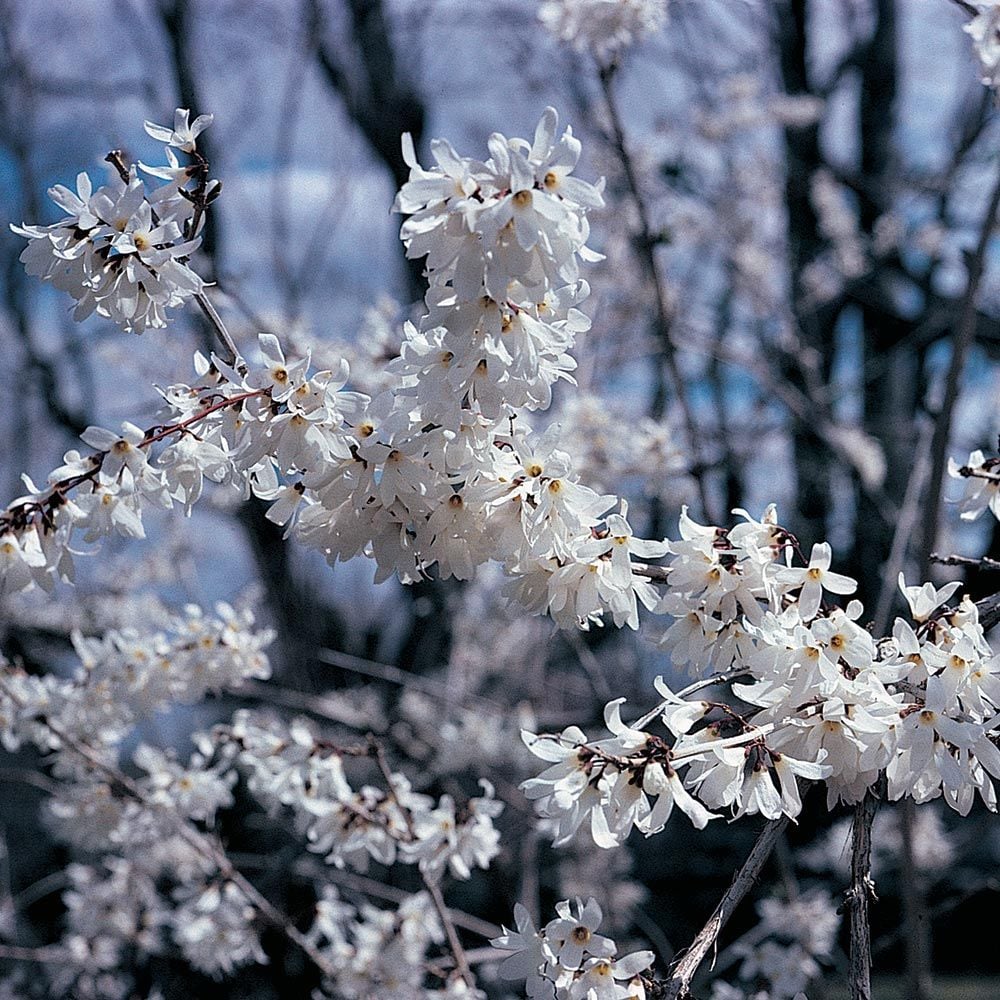
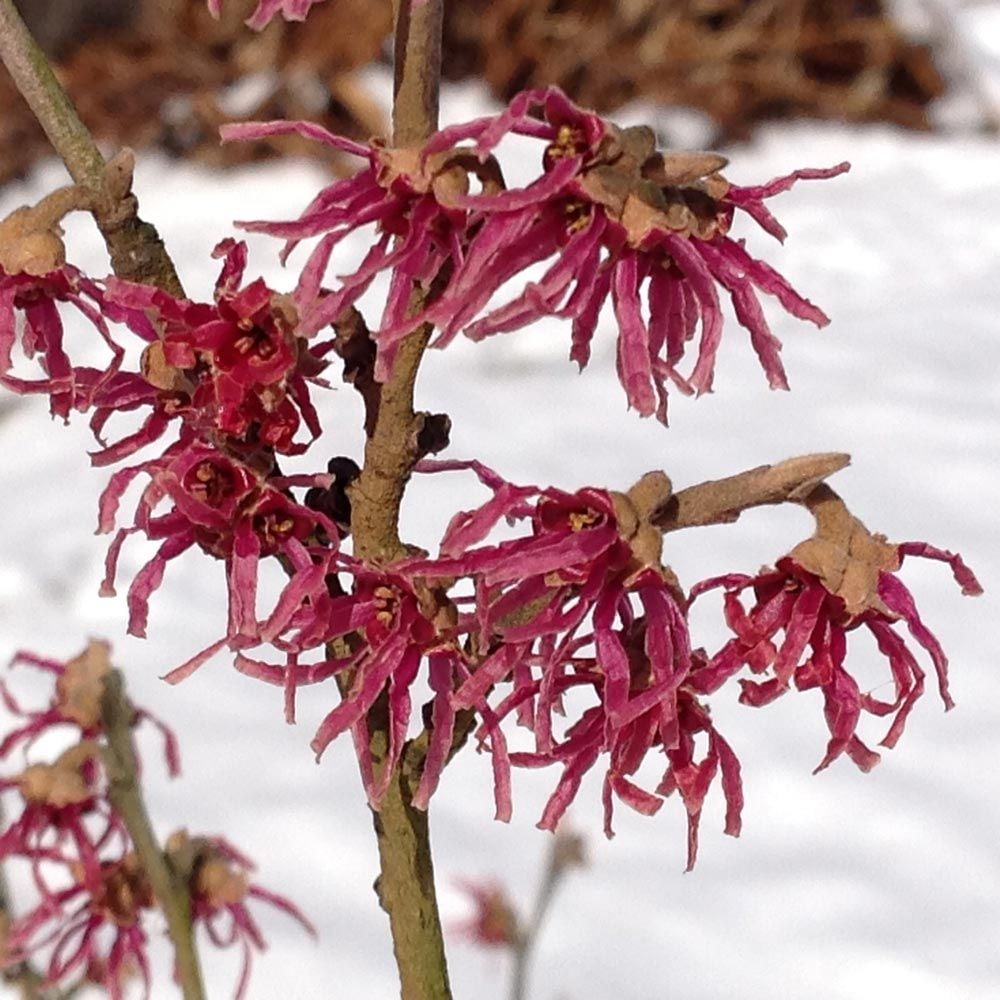
Trees & Shrubs That Bloom on the Current Season’s New Growth
Flower buds form as new growth resumes in the spring, so they do not need to survive winter’s erratic weather (or nibbling deer).
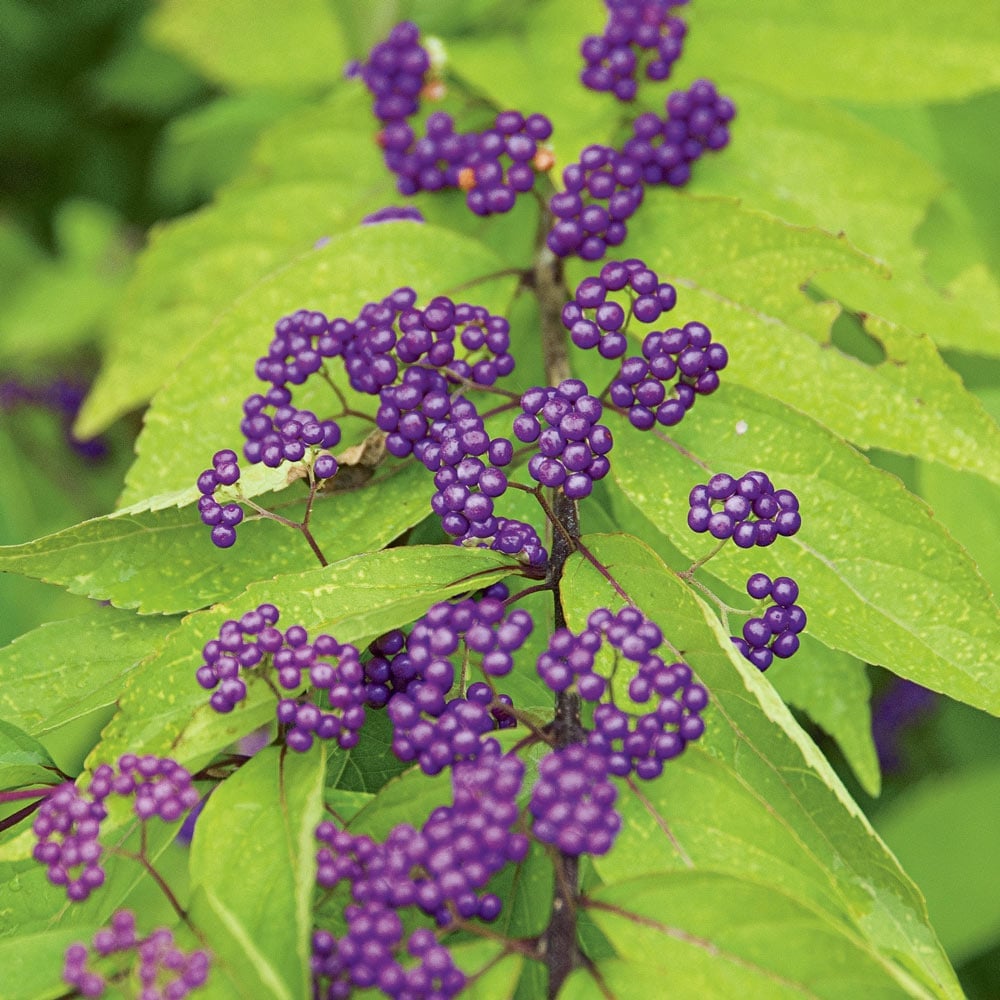
Beautyberry (Callicarpa)
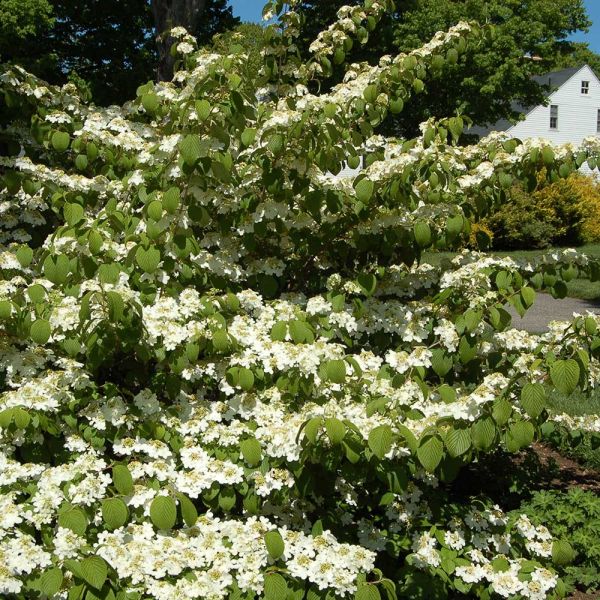
Doublefile Viburnum (Viburnum plicatum)
Elderberry (Sambucus nigra f. prophyrophylla ‘Black Lace’)
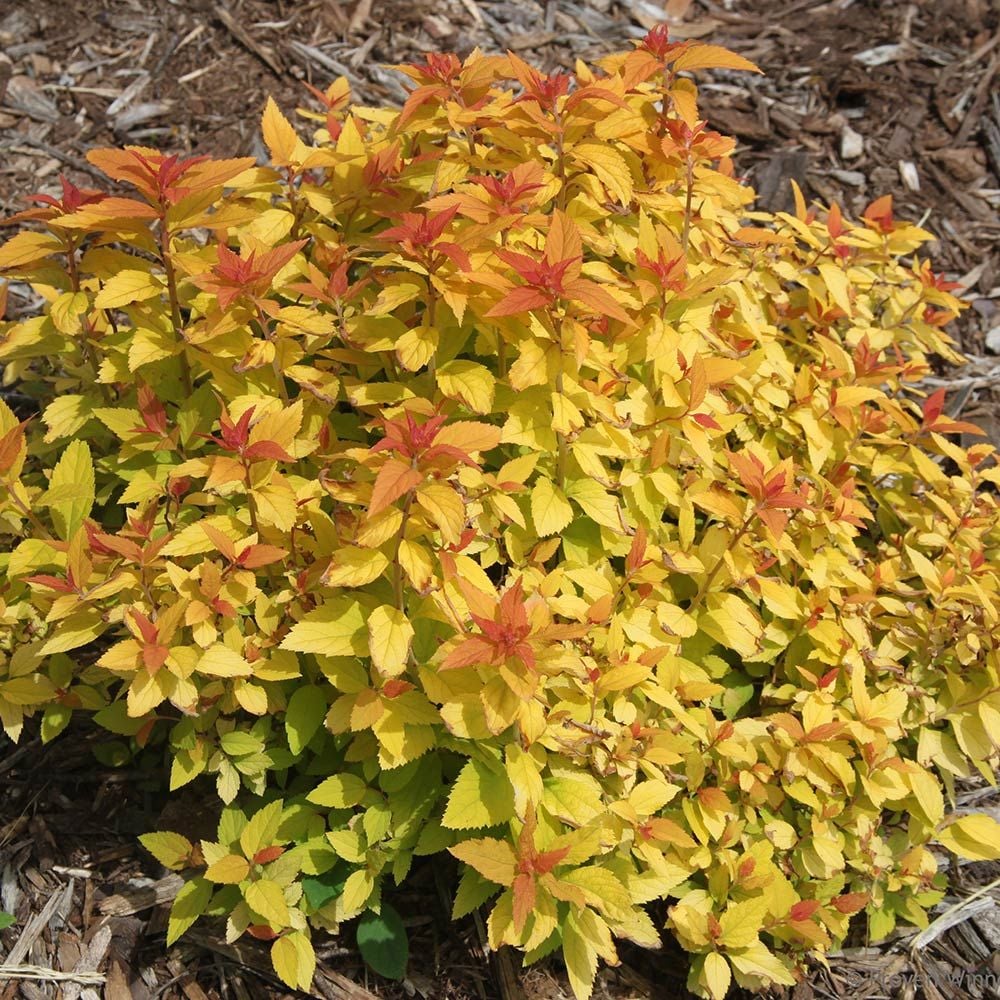
Japanese Spirea (Spiraea japonica)
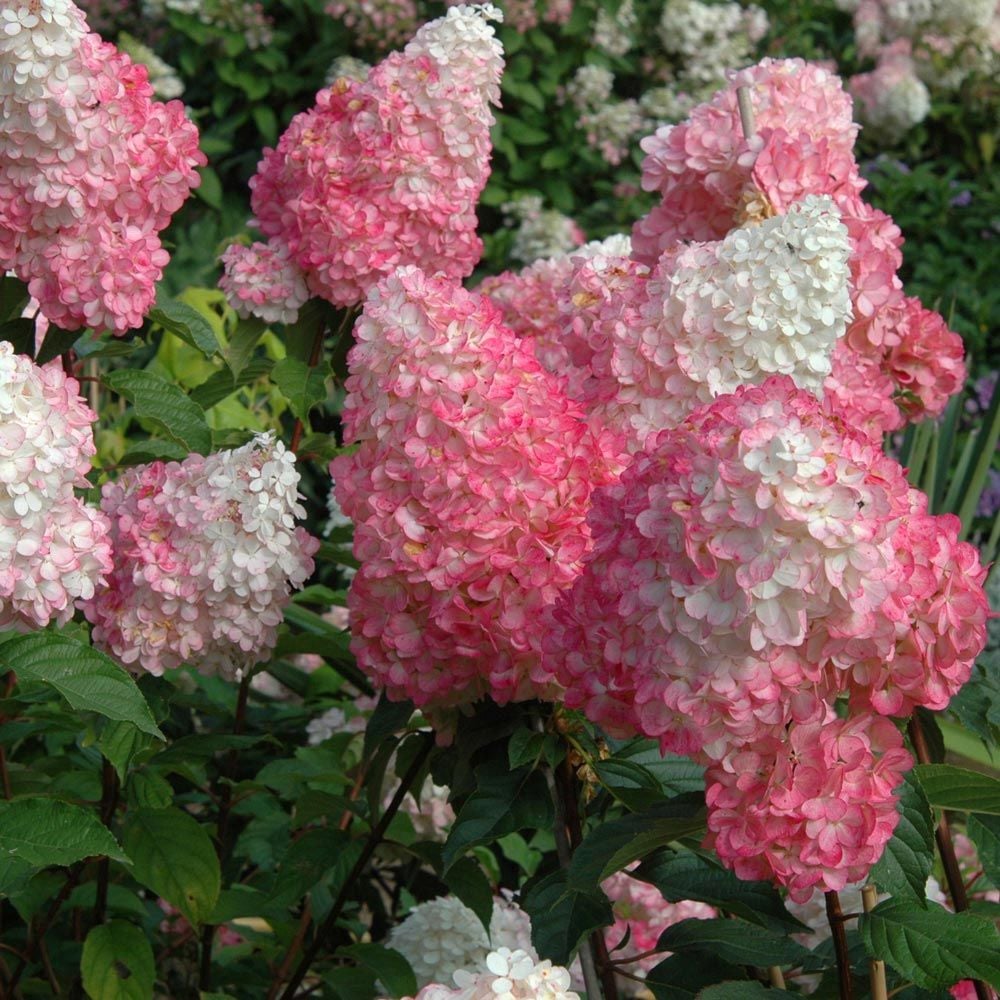
Panicle Hydrangea (Hydrangea paniculata)
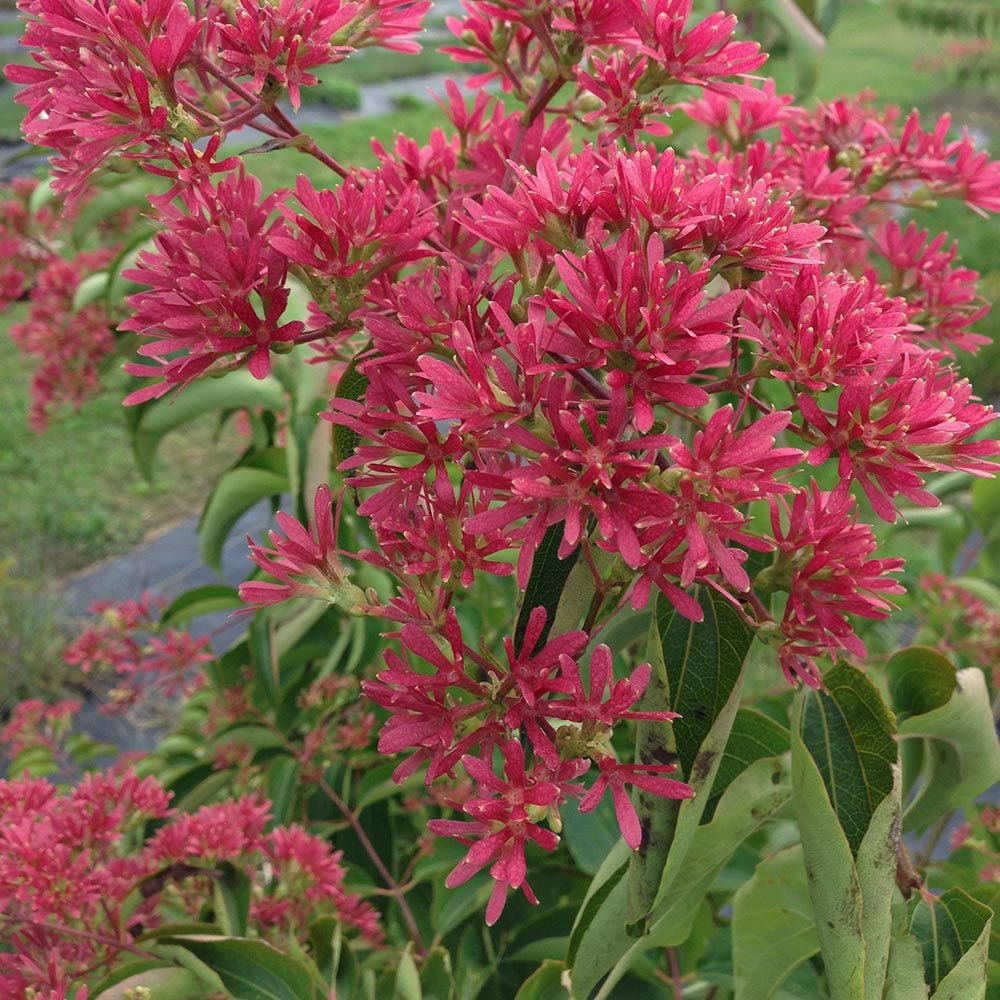
Seven-son Flower (Heptacodium miconioides Temple of Bloom®)
Smooth Hydrangea (Hydrangea arborescens)
Sweet Pepperbush (Clethra alnifolia)