Product Details
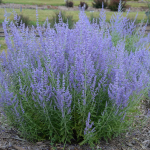
As summer perennials begin to fade, Vernonia 'Southern Cross' offers vibrant purple color, the loose flat-topped clusters appearing on upright stems atop a cushion of soft, needle-shaped foliage. After bloom, this Ironweed's seed heads persist, adding interest to winter gardens.
Vernonia is a large genus of perennials, shrubs, and trees in the Asteraceae (Aster) family. Originating in the Americas, Africa, Southeast Asia, and Australia, they have a long history of use as food and medicine. Of the 30-plus herbaceous perennial species and subspecies native to the American East, Midwest, and Mexico, a few are excellent, ecologically beneficial, garden plants. Commonly called Ironweed, doubtlessly for its strong constitution and rigid stems, native Vernonias grow in some tough conditions. They tower over prairies and wet meadows, inhabit gravel bars in streams, sprout from rocky crevices in drainage areas, and thrive in roadside ditches. Tolerant of both dry conditions and periodic inundation, compact Vernonia cultivars are ideal for planting in low-maintenance rain gardens, meadows, native plant gardens, and perennial borders. Loose, feathery flower clusters packed with vivid magenta or purple, tubular disk florets are late-season pollinator powerhouses; foliage is a larval food source and seeds from rust-colored seedheads provide nourishment for birds.
For information on growing and care, click Growing Guide.
Shipping
HOW PLANTS ARE SHIPPED
The size of the plants we ship has been selected to reduce the shock of transplanting. For some, this means a large, bareroot crown. Others cannot travel bareroot or transplant best if grown in containers. We ship these perennials and annuals in 1 pint pots, except as noted. We must point out that many perennials will not bloom the first year after planting, but will the following year, amply rewarding your patience. We ship bulbs as dormant, bare bulbs, sometimes with some wood shavings or moss. Shrubs, Roses, vines, and other woody plants may be shipped bareroot or in pots. The size of the pot is noted in the quick facts for each item.
WHEN WE SHIP
We ship our bulbs and plants at the right time for planting in your area, except as noted, with orders dispatched on a first-come, first-served basis by climate zone. We also ship a wide range of containers and planters, tools, supplies, fertilizers, garden wear, garden decor items, as well as indoor decorations like wreaths and dried bouquets when available. Estimated dates for shipping are indicated in the green Shipping Details box for each item. Please supply a street address for delivery. Kindly contact us with two weeks notice, if you'll be away at the expected time of delivery.
OUR GUARANTEE
We guarantee to ship plants that are in prime condition for growing. If your order is damaged or fails to meet your expectations, we will cheerfully replace or refund it. Please contact our Customer Service Department at 1-800-503-9624 or email us at [email protected]. Please include your order number or customer number when contacting us.
Reviews
Average Customer Rating:
 (1 Review)
Write a Review
(1 Review)
Write a Review
Sort by:
The BEST 
A viewer from Connecticut USA
After this, we'll be adding more ironweed varieties around the various garden beds.
Thanks, White Flower Farm!
2 of 2 people found this review helpful. Do you? yes no Certified buyer
Growing guide
Latin Name Pronunciation: ver-no' nee-ah
Vernonia is a large genus of perennials, shrubs, and trees in the Asteraceae (Aster) family. Thirty-plus native North American species and subspecies with great ecological value are tolerant of both dry conditions and periodic inundation. Compact Vernonia lettermannii cultivars and hybrids are ideal for low-maintenance landscapes and pollinator gardens.
Light: Best in full sun (or partial shade in the South).
Soil: Grows naturally in gravelly or sandy poor soil, adapts well to average, moderately well-drained garden soil.
Watering: Once established, little supplemental water is needed, except in severe drought, as plants tolerate both drought and periodic water inundation and may splay open late in the season if kept continuously wet.
Fertilizing: An occasional light application of compost is beneficial, but fertilizer is not recommended, as Vernonia does best without excess fertility.
Seasonal Care: Vernonia is late to emerge in spring, so mark its location well when planting. Cut plants back by half in early summer to promote strong dense growth. Allow plants to stand through the winter – they remain attractive and sustain seed-eating birds – and cut back to the ground in early spring.
Pests/Diseases: Garden cultivars are unlikely to be affected by pests or diseases. Mature plants have somewhat bitter leaves that are relatively unappealing to deer.