Product Details
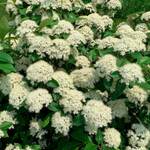
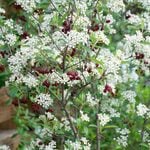
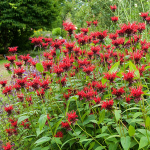
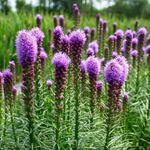
If you’re new to gardening or want to “get your feet wet” with native plants that don’t look too wild, our horticultural experts have created Start a Garden: Native Plants for Sun to get you started. This collection contains 5 hardy, easy-care varieties (11 plants total) of garden-worthy perennials (plants that return year after year) native to portions of Eastern North America. These plants thrive in full sun (6 hours or more of direct sun per day) in average soil. Designed to look pretty over a long season, with distinctive foliage and long blooming times, these adaptable plants do more than just please the eye. Plant them and you can expect visits from butterflies, bees and other pollinators, hummingbirds, and songbirds. Quantities of each variety listed below, 11 plants total. Covers approximately 36 sq ft. Planting diagram included.
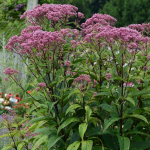
- 2 Eutrochium purpureum Euphoria™ Ruby (formerly classified as Eupatorium purpureum) (PP 31,668) (Joe Pye Weed)
- 3 Penstemon digitalis (Beard Tongue)
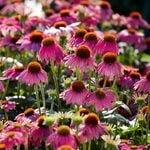
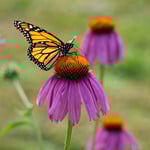
- 2 Echinacea purpurea PowWow® Wild Berry (Purple Coneflower)
- 2 Phlox 'Bedazzled Lavender' (PP 31,168) (Moss Phlox)
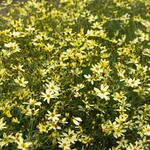
- 2 Coreopsis verticillata Crème Caramel™ (PP 22,565) (Threadleaf Tickseed)
Before purchase, you’ll need to know your USDA Plant Hardiness Zone. This will determine whether or not the plants in this collection are hardy in your area and able to tolerate regional extremes of heat and cold. Click here to learn more about hardiness zones and to find yours. If your zone is between 5-8, this garden is for you.
What can you expect?
Low-growing (6-8”) Moss Phlox Phlox 'Bedazzled Lavender' is the earliest to bloom. Narrow dark green foliage may retain color into winter. But in spring (April-May in our gardens), foliage nearly disappears beneath a dazzling display of fragrant lavender flowers. The deeply notched, star-shaped blossoms of this hybrid attract early-season bees and butterflies.
In spring, Beard Tongue (Penstemon digitalis) brings graceful, vertical interest and pollinator power with upright spikes of tubular, white to pale pink flowers rising above tidy clumps of glossy, dark green to burgundy-tinged foliage. Beloved by bees and hummingbirds, yet largely ignored by deer, P. digitalis offers both beauty and resilience with minimal maintenance.
As summer weather arrives, the sprightly green threadleaf foliage of Coreopsis verticillata Crème Caramel™, growing 18-24” tall, is studded with green-gold pearl-like buds. Dozens of small, Daisy-like flowers open from June well into September. Crème Caramel’s unusual terracotta color is deeper in cooler temperatures, paler as temperatures rise. Tiny seeds that follow feed small songbirds in autumn and winter.
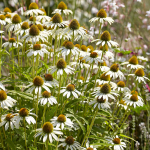
High summer brings a punch of color, with Purple Coneflower Echinacea purpurea PowWow® Wild Berry’s bold 3-4” Daisy-like blossoms atop 20-24” stems. Skirts of rosy-pink petals surround an orange-tipped central cone throughout July and August. Each “flower” is actually hundreds of tiny nectar- and pollen-rich individual flowers packed into the cone, with petal-like ray flowers. Bees and butterflies busily feed on these tiny flowers, which, once pollinated, forms a seed – and a feast for local and migrating birds in winter.
Many of our native plants were called weeds before their virtues were fully appreciated, including our beloved Joe Pye Weed (Eutrochium species, formerly Eupatorium). Eutrochium purpureum Euphoria™ Ruby is a compact variety that is well-suited to life in a tended garden. Standing 24-32” tall, textured green leaves with serrated edges are arranged in whorls of 3 around sturdy upright stems. In July-August, rosy-purple buds arranged on thin branched stems open into airy clusters of small, fluffy, dusky pink flowers. Nectar-rich flowers are a magnet for butterflies, bees, and other beneficial insects. Fluffy seed-heads continue the show into winter while providing tiny seeds for small songbirds.
Plants in your Start a Garden collection will arrive in one of two forms: potted and/or bareroot. Bareroots may sound intimidating, but they’re not. In fact, they’re remarkably easy to plant. Visit the Growing Guide (see tab above) to learn more now or consult the Quick Start Guide you will receive when your new garden arrives.
Enjoy a garden of beautiful and native perennial plants. We hope it’s the start of many great gardening adventures.
For more information on growing and care, click Growing Guide.
Shipping
Shipping
HOW PLANTS ARE SHIPPED
The size of the plants we ship has been selected to reduce the shock of transplanting. For some, this means a large, bareroot crown. Others cannot travel bareroot or transplant best if grown in containers. We ship these perennials and annuals in 1 pint pots, except as noted. We must point out that many perennials will not bloom the first year after planting, but will the following year, amply rewarding your patience. We ship bulbs as dormant, bare bulbs, sometimes with some wood shavings or moss. Shrubs, Roses, vines, and other woody plants may be shipped bareroot or in pots. The size of the pot is noted in the quick facts for each item.
WHEN WE SHIP
We ship our bulbs and plants at the right time for planting in your area, except as noted, with orders dispatched on a first-come, first-served basis by climate zone. We also ship a wide range of containers and planters, tools, supplies, fertilizers, garden wear, garden decor items, as well as indoor decorations like wreaths and dried bouquets when available. Estimated dates for shipping are indicated in the green Shipping Details box for each item. Please supply a street address for delivery. Kindly contact us with two weeks notice, if you'll be away at the expected time of delivery.
OUR GUARANTEE
We guarantee to ship plants that are in prime condition for growing. If your order is damaged or fails to meet your expectations, we will cheerfully replace or refund it. Please contact our Customer Service Department at 1-800-503-9624 or email us at [email protected]. Please include your order number or customer number when contacting us.
Reviews
Reviews
There are no reviews yet. Be first to Write a Review.
Growing guide
Growing guide
Print Grow Guide
Welcome to the world of gardening & our Start a Garden series
Growing Your Start a Garden: Native Plants for Sun
The Start a Garden: Native Plants for Sun collection contains 11 different native perennials (plants that return year after year) that thrive in full sun (defined as 6 hours or more of direct sun per day). The plants are all native to eastern North America, which means they occur naturally in our area of the world and have co-evolved with local insects, birds and other wildlife. Once established in a prepared garden bed with well-drained, reasonably moist, moderately fertile soil, they are relatively resistant to drought and heat. (Attentive watering is needed to get them going). Deer generally avoid these plants, although where deer population is high, repellants will discourage nibbling.
This collection of plants is attractive to hummingbirds, songbirds, bees, butterflies, and other pollinators. These hardy, vigorous plants were chosen by our horticultural experts to provide ease of care and a long season of colorful blooming beauty in Zone 5-8 gardens. They are ideal for beginners.
As you begin your first garden adventure, keep in mind that freshly planted perennials need time to settle in and establish roots. In their first season, they will divert much of their energy to this task. As a result, your plants may or may not flower in their first year. Waiting for plants to settle in and grow is a process by which many gardeners begin to develop one of the most important traits a green thumb can possess: patience. Giving a plant the time it requires to settle in will produce rewards in subsequent seasons. Experienced gardeners know that in a first year, a perennial “sleeps.” In the second year, it “creeps.” And by the third year, it “leaps.” Watch over time as your perennials gain in size, forming broader clumps, and increasing their flower show. As a general rule, it takes three years for a plant to reach its mature size.
This guide includes the following sections:
- Knowing & Growing Your Plants
- About Bareroot Plants
- Laying Out Your Garden
- Caring for Your Garden
- Companions
- Calendar of Care
- Phlox 'Bedazzled Lavender' (PP 31,168) (Common name: Moss Phlox)
This carpeting Phlox forms a dense, weed-smothering ground cover, filling spaces between taller plants and acting like a living mulch. Perfect for the front of the bed, plants can also drape gracefully over a wall or spill onto a path or terrace in picturesque fashion, softening the look of stone, concrete, and straight edges. After its long spring season of bloom has finished, shear plants back to half their height to preserve a compact, neat form.
- Penstemon digitalis (Common name: Beard Tongue)
This is a plant with year-round interest. The tufts of basal leaves that emerge in spring usually remain present throughout the winter. You can cut the leaves down in late winter if you wish, but it’s fine, even beneficial, to just let them decompose in place; fresh new foliage will soon cover the old, tattered leaves. Stiff stems with smaller leaves rise up from the base, producing many tubular flowers favored by bumblebees and hummingbirds. We like the dark brown pointed seed capsules that form after pollination, so we leave the stems standing for winter interest. If stems fall over or you wish to encourage seedlings (which may vary in coloration), snip the stems off all the way down to the base. Capsules are easily crushed to release tiny seeds that can simply be strewn where you would like to have more Penstemon plants.
- Coreopsis verticillata Crème Caramel™ (PP 22,565) (Common name: Threadleaf Tickseed)
The airy, light foliage texture of Threadleaf Tickseed is an asset even when plants are not in bloom. Plants will expand to form 18-24” clumps that contrast beautifully with bolder forms. Frequent deadheading of individual spent flowers will reward your patience with more blooms, but patience does have its limits. If plants get too tall, blooming takes a break, or you run out of time and patience, just shear off ¼-½ of the height of your plants. Chopped in August, plants will often bloom again in fall. Do leave stems standing in winter to protect the shallow roots and provide seeds for songbirds.
- Echinacea purpurea PowWow® Wild Berry (Common name: Purple Coneflower)
PowWow® Wild Berry develops branching stems that push up through clumps of lance-shaped leaves, topped by big bright rose-purple flowers. Purple Coneflowers make great cut flowers and also dry well. If you fill your vases with early blooms, that will encourage plants to branch even more, and produce more flowers. Deadhead to remove spent flowers early in the season if you wish, but be sure to leave late-season stems and seed cones, which take on a dark bristly appearance in fall, for songbirds (especially goldfinches) and overwintering beneficial insects. Standing stems and seed cones are attractive in winter, especially charming with a cap of snow. Self-sown seedlings may appear; they can be transplanted elsewhere or weeded out if undesired. Cut old stems down completely in spring (or earlier if winter weather makes a mess of things).
- Eutrochium purpureum Euphoria™ Ruby (PP 31,668) (Common name: Joe Pye Weed)
Euphoria™ Ruby is a compact garden cultivar (or “nativar”) of Eutrochium purpureum, an upland Joe Pye Weed species that is more drought-tolerant than its wetland-dwelling relatives. And it is more polite - it stands up straight, fits nicely into most gardens and doesn’t overstay its welcome with prolific self-sowing. Deadhead early blooms to encourage the development of more flowers, but toward the end of the season, let the fluffy seedheads remain for the birds. We’ve come to see brown as a color too, and to enjoy the subtle visual appeal of stems and seedheads (and the life they support) in winter. Like other herbaceous perennials, old dead stalks can be cut down any time from fall to late winter; new life will emerge from the roots in spring.
Plants in your Start a Garden collection will arrive in one of two forms: potted and/or bareroot. Bareroots may sound intimidating, but they’re not. In fact, they’re remarkably easy to plant.
Bareroots are exactly what the term would imply: a healthy division of a mature plant to include a portion of its roots (minus most or all green growth and soil) and a portion of the crown (the point where a plant’s roots meet its stems). Depending on the type of plant, these roots may present themselves in a broad array of shapes and sizes – from knobby looking chunks to a mass of delicate roots. Bareroots don’t look like much on arrival, but they are the beginnings of beautiful plants. Most bareroots are shipped packaged in damp sawdust or shredded paper. Plant them as soon as possible upon receipt or keep them in a cool, dark place (such as a basement or a closet) for up to 2 weeks.
To plant bareroots:
- Remove and discard the packaging material
- Save the plant tags, which provide helpful information and may also serve to mark a planting site
- Soak bareroots in water for 1 hour to rehydrate them then plant at the depth recommended on the plant tag
- Water thoroughly when planting, then refrain from watering (unless soil becomes very dry) until plants sprout and begin actively growing. Overwatering a dormant plant can cause it to rot
- Depending on when bareroots are planted, they will take some time to settle in and develop root systems
If your bareroot is planted in spring, it will gradually begin pushing up top growth and you’ll see the emergence of leaves and stems as the plant begins to grow above ground. If your bareroot is planted in fall, it will develop a good root system and may or may not send up a few leaves before going dormant for winter. Top growth will emerge in spring as the days grow longer and sun warms the soil.
If you experience a bit of trepidation with your first bareroots, the ease of planting them and their vigor once settled will win you over in no time. In the span of a single season, they become established plants that are poised to perform like champs in your garden.
To lay out your garden to best advantage, first see the Planting Plan that is included in your box. (The plan is also available on the product page on our website. Search sku #87530.) Keep in mind that you don’t have to position the plants in your Start a Garden: Native Plants for Sun collection exactly as we show them in the plan. Our diagram is just one possible design based on the heights, shapes, and compatibility of the plants. Your garden bed may have different dimensions, you might wish to tuck your plants into several different areas, or you could use them to flank a path so you can stroll between them.
As you lay out your plants, refer to the spacing guide on each plant tag and consider the height, habit, and tendencies of each plant:
- At 24-32”, Joe Pye Weed (Eutrochium) is the tallest plant in the collection. It has fairly dense foliage and is best placed as a backdrop behind shorter plants.
- The bloom stems of Beard Tongue (Penstemon) rise up 24-30”, but they are thin and don’t substantially shade or block views of other plants. If the bloom stems are cut back, the basal foliage is only 8-10” tall. This is a plant that can go near the front of a bed or further in. Penstemons have more impact when planted close together in a group.
- The Purple Coneflowers (Echinaceas) in this collection grow to about the same height as the Penstemons, and combine well with them. They have dense foliage that can shade lower plants, so arrange combinations with the sun’s passage in mind, planting shorter plants on the side that sees more sun.
- The delicate foliage of Threadleaf Tickseed (Coreopsis) grows almost as tall as the Purple Coneflowers and makes an airy contrast with the Coneflower’s bolder look.
- Joe Pye Weed, Purple Coneflower and Beard Tongue are neat clump-forming plants that grow larger in diameter but stay put.
- Moss Phlox and Coreopsis spread out in mats via ever-expanding roots. Give them room to spread (spacing is indicated on the plant tag) and be prepared to set limits. Moss Phlox can be lovely weaving between taller plants.
Until you get to know your plants and they are well established, it’s best to mark each plant with the plant tag. That way, you’ll remember which is which, and, in periods of dormancy, when perennials die back to the ground, you’ll know where you planted them. Keep in mind that garden design is flexible and plants are forgiving. As your perennials settle in and grow, you may or may not like the arrangement. If you are not pleased, take advantage of mild conditions in spring or fall to gently dig up your plants and relocate them to create a design that is your idea of what your garden should be.
Light: All the plants in your Start a Garden: Native Plants for Sun collection grow in full sun (6 hours or more of direct sunlight, per day, during the growing season.
Watering: Immediately after you plant your new perennials, water them well to settle the soil around them and refresh them with a nice drink. In the weeks and months that follow, hydration will be key to helping your plants become successfully established. Pay attention to how wet or dry the soil is – you don’t want to let the plants dry out entirely, but they will suffer if they are in constantly wet soil (the roots may rot, which can be fatal). The best way to assess the moisture level in your soil is to stick your finger in it to a depth of 1”. If the soil feels moist, do not water until it feels somewhat dry. The general rule is that new plants need approximately 1” inch of water per week whether it’s supplied by Mother Nature, your garden hose, or the watering can. Once your plants are established, they will need watering only during periods of prolonged drought (i.e., no rain for several weeks). If possible, avoid overhead irrigation. It is best practice to water plants at the soil level, which means wetting the ground around and between them but not spraying directly on or at them. Another important rule of successful hydration is to water plants deeply and infrequently. This encourages root growth well below the surface of the soil, which is where plants are likely to find moisture in times when rain is scarce.
Fertilizer, Soil & pH: The plants in the Start a Garden: Native Plants for Sun collection prefer a well-drained loam, but are adaptable. They will do fine in soil with average fertility that tends toward sandy or clay, slightly acidic, neutral or slightly alkaline. Testing your garden soil’s pH is not a requirement (some of us at the farm have never done it in our home gardens while others swear by it). To learn more about soil testing and how to go about it, click here.
There is no need for fertilizer at the time of planting and doing so can negatively impact a plant’s proper development. Instead, we hope you and all new gardeners will develop what is widely regarded as best practice when it comes to using fertilizer: In lieu of feeding individual plants, think in terms of feeding the soil which, in turn, will nourish your plants naturally. It’s easy: After your perennials have had a year to settle into the garden, apply 1-2” of organic matter, such as compost or well-rotted manure, around the base of the plants in early spring. This will take care of their nutritional needs. No additional fertilizing will be necessary. In very lean soil, a light application of slow-release granular fertilizer (look for the OMRI label signifying approval for use in organic gardens) in early spring may be beneficial.
Pests/Diseases: The plants in the Start a Garden: Native Plants for Sun collection are generally free from disease and insect pests. But overall, it’s important to know that plants are most susceptible to disease when they are faced with stressful conditions. Eliminate the stress for your plants by providing them with what they need: full sun, proper watering, and good drainage.
Reflowering: Deadheading is the process of removing spent blossoms to encourage the formation of additional flowers, prevent unwanted seedlings, and/or improve the appearance of your plant. [See individual plant information above for specifics about deadheading the plants in this collection.]
Dividing/Transplanting: Allow your plants to fill out for a few years. It’s OK to let them touch and grow together. But if plants begin to appear crowded, which can impede air circulation and force them to compete for resources, you may want to divide clumps of Joe Pye Weed and Purple Coneflowers after 3-5 years. To divide these plants, dig up the entire clump, brush off enough soil to see where there are natural divisions, and either tease them apart by hand if the divisions separate easily or, using a knife or the blade of the shovel, chop it into sections. The Coreopsis and Phlox have shallow, fibrous roots. If they encroach on other plants, you can just dig out a piece (or several pieces). The Penstemons are unlikely to need dividing, but if they produce a few seedlings, you’re in luck – they can be dug and moved around easily.
Dividing and transplanting are best done in early spring or fall when temperatures are most likely to be mild. (The higher heat of summer can stress plants, making division and transplantation a bit more perilous.) Choose a cloudy day or when you’re expecting rain. Water plants well a day or two before digging, to make sure roots are hydrated. Transplant the divisions to new areas of your garden, use them to fill in any gaps, or share with friends and family.
The following plants would all make fine companions to the Start a Garden: Native Plants for Sun plants, and enjoy the same growing conditions:
- Blue Star (Amsonia hubrichtii)
- Anise Hyssop (Agastache foeniculum)
- Aster (Symphyotrichum oblongifolium) ‘October Skies’
Early Spring: Cut back any remaining dead stems from last season and compost or pile them up somewhere for birds and animals to feed on remaining seeds. Removing weeds now will save much work later. Every year or couple of years, depending on the vitality of your plants and the condition of your soil, you may wish to apply a 1” layer of compost after the plants have emerged. The compost will enrich the soil, which provides food for the plants. For best results, apply the compost around the base of the plants, not on top of them.
Late Spring: Once the ground warms, spread 1” of mulch around the base of the plants (but not on top of them). This will help conserve moisture in the soil and insulate roots. Once plants fill in, mulch may not be needed.
Summer: Be sure plants are getting enough water. If weather conditions are dry, monitor the soil for moisture (see above under Garden Care – Watering) and, if necessary, get out the hose or watering can. Keep in mind that plants in their first season need roughly 1” of water per week. Weed to remove unwanted plants that can crowd or take nutrients away from your plants.
Fall & End-of-Season Care: In late fall, plants may be cut back to the ground once they finish blooming or you may choose to leave some standing. We recommend allowing some of the spent foliage, flower heads, and stems to overwinter in the garden because this practice provides food and shelter for wildlife including butterflies and their larvae and seeds for migrating and overwintering birds. If you live in a colder region, applying a light 2” layer of mulch around your plants in late fall is as beneficial as a winter coat. It is lovely to re-connect with your plants, should you be so fortunate as to have a few sunny mild days in winter, to snip and primp plants that have fallen over and look messy.
To learn more, see our Expert Resources for New Gardeners.
To download a PDF of our New Gardener's Handbook, click here.
To download a PDF of our Glossary of gardening words, click here.
Related Items
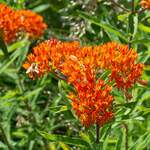 Asclepias tuberosa
 Lobelia cardinalis
Asclepias tuberosa
From $17.00
 Lobelia cardinalis
From $17.00