Product Details
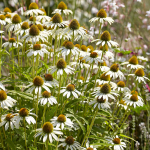
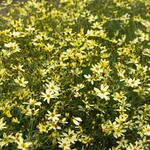
Eurybia divaricata 'Eastern Star' is a most valuable player in the shade garden. This North American native, commonly called a White Wood Aster, tolerates drought and shade (including full shade) and produces abundant clusters of ¾-inch white, Daisy-like flowers with golden or reddish centers that are a late-season food source for butterflies. The plant is easy to recognize with its stout, compact habit, heart-shaped, toothed foliage, gleaming mahogany stems, and, of course, masses of flowers in late summer and fall.
Although taxonomists have reclassified the 23 species (and one natural hybrid) once included in the genus Aster as Eurybia, the common name "Aster” is still widely used. Along with other reclassified North American genera such as Symphyotrichum and Doellingeria, Eurybia remains part of the large Aster family (Asteraceae), which also includes familiar plants like Sunflowers, Cosmos, Zinnias, and even Lettuce. With one exception from Eurasia, Eurybia species are herbaceous perennials native to North America and valued for their ecological importance, occurring across the continent in a range of habitats—from forests and woodland edges (often in rocky, shallow soils on slopes) to dry, sandy coastal areas, and dry to mesic prairies. Their Daisy-like, composite flowers, made up of ray and disc florets, are especially important for pollinators and wildlife. These tough, somewhat rhizomatous plants tolerate drought and other harsh conditions, making them excellent, low-maintenance choices for pollinator gardens and naturalized plantings, and while they are generally not favored by deer, occasional nibbling may occur.
For more information on growing and care, click Growing Guide.
Shipping
HOW PLANTS ARE SHIPPED
The size of the plants we ship has been selected to reduce the shock of transplanting. For some, this means a large, bareroot crown. Others cannot travel bareroot or transplant best if grown in containers. We ship these perennials and annuals in 1 pint pots, except as noted. We must point out that many perennials will not bloom the first year after planting, but will the following year, amply rewarding your patience. We ship bulbs as dormant, bare bulbs, sometimes with some wood shavings or moss. Shrubs, Roses, vines, and other woody plants may be shipped bareroot or in pots. The size of the pot is noted in the quick facts for each item.
WHEN WE SHIP
We ship our bulbs and plants at the right time for planting in your area, except as noted, with orders dispatched on a first-come, first-served basis by climate zone. We also ship a wide range of containers and planters, tools, supplies, fertilizers, garden wear, garden decor items, as well as indoor decorations like wreaths and dried bouquets when available. Estimated dates for shipping are indicated in the green Shipping Details box for each item. Please supply a street address for delivery. Kindly contact us with two weeks notice, if you'll be away at the expected time of delivery.
OUR GUARANTEE
We guarantee to ship plants that are in prime condition for growing. If your order is damaged or fails to meet your expectations, we will cheerfully replace or refund it. Please contact our Customer Service Department at 1-800-503-9624 or email us at [email protected]. Please include your order number or customer number when contacting us.
Reviews
There are no reviews yet. Be first to Write a Review.
Growing guide
Latin Name Pronunciation: yoor-rib' ee-uh
Eurybia species are almost exclusively North American native plants adapted to various habitats. The eastern woodland species, such as E. divaricata, grows in forests and woodland edges, often in rocky, shallow soil and on slopes where many other plants struggle. These tough, somewhat rhizomatous plants withstand drought and harsh conditions, freely self-sow, and are good, low-maintenance choices for pollinator gardens and for naturalizing in shady situations, forming a ground cover.
Light: Naturally grows in part shade to full shade, but some morning sun is desirable as well.
Soil: Plants require good drainage and are adaptable to a wide range of soil types and to average garden soil. Eurybia divaricata grows well in shallow, rocky soil with some organic content provided by leaf litter. Plants will not tolerate waterlogged soil. A slightly acidic pH is preferred, but not entirely necessary. Mulch with dried leaves, hardwood bark, or Pine bark chips until plants fill in.
Watering: Native to dry, open woodlands, once established this plant appreciates a drink during times of drought, which helps to promote flowering. Otherwise needs little or no supplemental water, except in extreme conditions. In situations with more sun, provide more moisture.
Fertilizer: A top-dressing of compost in spring is appreciated. Decomposed leaves are ideal; fertilizer is rarely necessary.
Pests/Diseases: Not often bothered by pests or diseases. Susceptible to root rot in waterlogged soil; possible powdery mildew if crowded—provide good air circulation.
Dividing/Transplanting: Divide or transplant in spring, preferably on a mild overcast day. Gently dig up the clump and carefully separate portions by hand or cut with a sharp knife or pruners. Replant and water well to promote establishment.
Companions: Pennsylvania sedge (Carex pensylvanica), Marginal Wood Fern (Dryopteris marginalis), Blue-stem Goldenrod (Solidago caesia), and Christmas Fern (Polystichum acrostichoides) are natural companions.
Continuing Care: Planted in a woodland garden or situation similar to its preferred habitat, this is the ultimate low-maintenance plant. Neat clumps of green, heart-shaped, basal foliage remain throughout the winter and should not be cut back. Small seeds are valuable food for songbirds and small mammals, so let dried bloom stems remain standing until spring, at which time they can be cut down to make way for new growth. Or, if you wish to recruit more plants, simply press seeds into bare soil in fall, or shake stems to release seeds on fluffy parachutes into the air. Eurybia divaricata and other woodland species depend on decomposing leaves, so you can even leave the leaves where they fall. These plants spread by rhizomes and can be dug and transplanted in spring.