Product Details
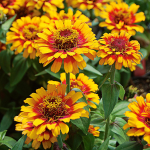
These carefree Marigolds operate like flower factories, producing brilliant orange 3" blooms tightly packed with ruffled petals. Tagetes erecta 'Giant Orange' is a lively presence in the mixed border and terrific for vases.
Although plants in the genus Tagetes are grown throughout the world, these roughly 50 annual and perennial species—including those commonly known as African or French Marigolds—are native to southwestern North America (primarily Mexico) as well as Central America and parts of South America. Like fellow members of the Sunflower family (Asteraceae), such as Daisies, Dahlias, Lettuce, and Dandelions, Tagetes species sport composite flowers attractive to pollinators. Most have Fern-like, aromatic foliage. Commonly called 'Marigold' in English, these flowers are centered at the heart of cultural celebrations in Asia and Latin America, where they go by numerous other names. Marigolds have long been cultivated for use as food coloring, in perfumery and herbal medicine, and valued for both pest-repellant and culinary properties. These cheerful, low-maintenance annuals always bring a smile, whether growing in the perennial, herb, or vegetable garden, a container, or displayed in a vase (they’re excellent, long-lasting cut flowers). Deer and rabbits fortunately do not share our enthusiasm for Marigolds.
For more information on growing and care, click Growing Guide.
Shipping
HOW PLANTS ARE SHIPPED
The size of the plants we ship has been selected to reduce the shock of transplanting. For some, this means a large, bareroot crown. Others cannot travel bareroot or transplant best if grown in containers. We ship these perennials and annuals in 1 pint pots, except as noted. We must point out that many perennials will not bloom the first year after planting, but will the following year, amply rewarding your patience. We ship bulbs as dormant, bare bulbs, sometimes with some wood shavings or moss. Shrubs, Roses, vines, and other woody plants may be shipped bareroot or in pots. The size of the pot is noted in the quick facts for each item.
WHEN WE SHIP
We ship our bulbs and plants at the right time for planting in your area, except as noted, with orders dispatched on a first-come, first-served basis by climate zone. We also ship a wide range of containers and planters, tools, supplies, fertilizers, garden wear, garden decor items, as well as indoor decorations like wreaths and dried bouquets when available. Estimated dates for shipping are indicated in the green Shipping Details box for each item. Please supply a street address for delivery. Kindly contact us with two weeks notice, if you'll be away at the expected time of delivery.
OUR GUARANTEE
We guarantee to ship plants that are in prime condition for growing. If your order is damaged or fails to meet your expectations, we will cheerfully replace or refund it. Please contact our Customer Service Department at 1-800-503-9624 or email us at [email protected]. Please include your order number or customer number when contacting us.
Reviews
Average Customer Rating:
 (4 Reviews)
Write a Review
(4 Reviews)
Write a Review
Sort by:
Bold and rarely seen elsewhere 
Betty Meron from NY
3 of 3 people found this review helpful. Do you? yes no Certified buyer

beautiful
A viewer from Minneapolis
6 of 6 people found this review helpful. Do you? yes no Certified buyer
Very happy
A viewer from Oklahoma
14 of 14 people found this review helpful. Do you? yes no Certified buyer
Growing guide
Latin Name Pronunciation: tah-jee' deez
Although plants in the genus Tagetes are grown throughout the world, they originate in southwestern North America. These cheerful, low-maintenance annuals always bring a smile, whether growing in the perennial, herb, or vegetable garden, a container, or displayed in a vase (they’re excellent, long-lasting cut flowers). Pollinators are attracted to their composite flowers, but deer and rabbits seem to be put off by the aromatic foliage.
Light: Marigolds require full sun.
Soil/Fertilizer: Plants will thrive in average, moderately fertile well-drained soil, with a slightly acidic to neutral pH. Should you choose to fertilize, select a slow-release granular formulation, preferably organic. Apply fertilizer with a light hand when plants are actively growing, and avoid getting it on the foliage. Overfertilized plants will grow lush foliage, fewer flowers, and become susceptible to root rot. Plants grown in containers, where nutrients wash out with more frequent watering, should be fed regularly with a water-soluble, low-nitrogen fertilizer, such as our All Bloom, according to directions.
Watering: Once established, Marigolds are quite resilient and tolerant of drought. With low- to-medium water needs, plants benefit from thorough watering at their base during spells of especially hot, dry weather; avoid overhead irrigation.
Pests/Diseases: Fungal foliage diseases may occur if plants are crowded or grown in a humid environment without good air circulation.
Care: We encourage you to pinch growing tips as your plants begin actively growing, to encourage branching. Deadhead flowers as they finish blooming to promote more blooms. The more you cut flowers for indoor arrangements, the more plants will branch out and bloom.
Companions: Set tall Marigold varieties into the garden with equally sun-loving and vibrant Black-eyed Susans, maroon-flowered Dahlias, and perennials with dark foliage, or surround them with the feathery lightness of Ammi visnaga ‘Green Mist’ or Daucus carota ‘Dara.’ Shorter Marigolds look great with silvery Senecios and contrasting blue-flowered Ageratum, Angelonia, and Salvia farinacea ‘Victoria Blue.’
For information on planting and care of annuals, click here.