Product Details
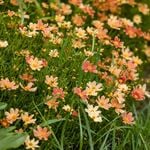
Among Coreopsis verticillata, 'Moonbeam' is a real standout. Its pale yellow flowers are borne in great abundance above delicate, needlelike foliage and seem to blend well with practically every color we've tried. Flowers heavily from June through August, with repeat bloom till frost. 'Moonbeam' is one of those rare plants that can't be used badly. It makes a superb front-of-the-border plant but can also provide summer color in the rock garden or light up a foundation planting that is in danger of provoking yawns among passers-by. Superb with the blue racemes of Adenophora. It's one of the great perennials.
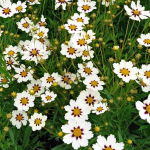
A genus of Daisy-like plants, Coreopsis is excellent for the border. Most species are native to the southeastern United States and Mexico. They are not the least fussy about soil but require full sun. Cut stems back after the first flush of flowers fade to promote a repeat bloom.
For more information on the growing and care of Coreopsis, click Growing Guide.
Shipping
Shipping
HOW PLANTS ARE SHIPPED
The size of the plants we ship has been selected to reduce the shock of transplanting. For some, this means a large, bareroot crown. Others cannot travel bareroot or transplant best if grown in containers. We ship these perennials and annuals in 1 pint pots, except as noted. We must point out that many perennials will not bloom the first year after planting, but will the following year, amply rewarding your patience. We ship bulbs as dormant, bare bulbs, sometimes with some wood shavings or moss. Shrubs, Roses, vines, and other woody plants may be shipped bareroot or in pots. The size of the pot is noted in the quick facts for each item.
WHEN WE SHIP
We ship our bulbs and plants at the right time for planting in your area, except as noted, with orders dispatched on a first-come, first-served basis by climate zone. We also ship a wide range of containers and planters, tools, supplies, fertilizers, garden wear, garden decor items, as well as indoor decorations like wreaths and dried bouquets when available. Estimated dates for shipping are indicated in the green Shipping Details box for each item. Please supply a street address for delivery. Kindly contact us with two weeks notice, if you'll be away at the expected time of delivery.
OUR GUARANTEE
We guarantee to ship plants that are in prime condition for growing. If your order is damaged or fails to meet your expectations, we will cheerfully replace or refund it. Please contact our Customer Service Department at 1-800-503-9624 or email us at [email protected]. Please include your order number or customer number when contacting us.
Reviews
Reviews
Average Customer Rating:
 (18 Reviews)
Write a Review
(18 Reviews)
Write a Review
Sort by:
Jul 26, 2023
So many hundreds of blooms!
So many hundreds of blooms! 
A viewer from Berkshires, Massachusetts
I love my coreopsis! I bought is part of a planned garden and this is its third year. It gets fuller by the year (surprised that’s even possible). The yellow flowers spark a lot of joy.
285 of 286 people found this review helpful. Do you? yes no Certified buyer
May 11, 2021
Worth the purchase
Worth the purchase 
A viewer from Long Island ny
Just purchased #3 coreopsis moonbeam. Plant material arrived in excellent condition. As an experienced gardener, I must admit I too can can find this plant temperamental, but a real beauty nonetheless. Give it a try.
May 24, 2020
Disappointed
Disappointed 
A viewer from Piermont, New York
2 years in a row I brought Coreopsis Verticillata. The first year they were purchased with a planned garden. They never came up. I rebought again and I only see a few leaves peeping out. I did not realize they were guaranteed for the first year
13 of 279 people found this review helpful. Do you? yes no Certified buyer
Aug 26, 2019
Great plant if it grows
Great plant if it grows
A viewer from Central Mass.
One star for these plants - 5 stars, or more for 'Moonbeam.'
In May, I received an order of 3 bare-root Coreopsis, 3 bare-root Monarda, plus 4 additional plants in pots. All were planted immediately to augment those already in a newly planted small garden. Only 1 each of Coreopsis and Monarda survived. The rest of the bare roots barely took hold before giving up the ghost. All the other plants (~ 18) are thriving.
Very disappointing, and a lesson for me to avoid buying by mail plants that I can find locally, well established in pots.
In May, I received an order of 3 bare-root Coreopsis, 3 bare-root Monarda, plus 4 additional plants in pots. All were planted immediately to augment those already in a newly planted small garden. Only 1 each of Coreopsis and Monarda survived. The rest of the bare roots barely took hold before giving up the ghost. All the other plants (~ 18) are thriving.
Very disappointing, and a lesson for me to avoid buying by mail plants that I can find locally, well established in pots.
Response from White Flower Farm —
White Flower Farm,
6 years ago
(08/29/19 01:59PM)
I am sorry some of the bareroot plants received this Spring have not grown as expected. As all perennial plant material is guaranteed for a full year, I will be contacting you via email regarding compensation.
Sincerely,
Cathy
133 of 282 people found this review helpful. Do you? yes no Certified buyer
Next Page
1-5 of18
Growing guide
Growing guide
Print Grow Guide
Latin Name Pronunciation: ko-ree-op'sis
Merry daisies in shades of yellow and pink have made Coreopsis mainstays of the summer border. Newer colors include white with burgundy and salmon. Masses of flowers are produced for long periods, especially if plants are consistently deadheaded. These drought-tolerant perennials offer up cheerful blooms excellent for cutting and are of easy culture. There are varieties suitable for the front, middle, and back of the border, and as native Americans, they are right at home in wildflower gardens and meadows.
Light/Watering: Full sun brings out the best in Coreopsis, especially in well-drained soils. Water during drought, but Coreopsis is quite drought-tolerant once established.
Fertilizer/Soil and pH: Coreopsis is not fussy about soil, and will bloom exuberantly under a variety of conditions. Well-drained soils are best, especially in winter. Coreopsis rosea prefers an evenly moist soil (in which it may run a bit wild), although it is not a requirement. Fertilize lightly once in spring with a balanced granular formula; too much fertilizer will result in spindly growth.
Pests/Diseases: Healthy, vigorous plants under good culture are rarely bothered by insects; wash off light infestations of aphids with a forceful water spray. Diseases are also rare, especially in well-drained soils. If soils are too wet, the crowns may rot.
Companions: Butterfly delphinium (Delphinium grandiflorum) or other short Delphiniums are natural complements to yellow Coreopsis. Alliums, Daylilies, and Coneflowers are also lovely in combination with these bright daisies.
Reflowering: Daily deadheading, while onerous, will reward the gardener with almost continuous bloom. To achieve an attractive plant and possible rebloom in autumn, shear plants back by a few inches as flowering slows down in late July.
Dividing/Transplanting: Divide plants every three years in spring or early fall to maintain vigor. Please note that Coreopsis 'Moonbeam' will arrive as a tangle of roots and stems that defies attempts to distinguish top from bottom. Simply dig a wide, shallow hole and set the spidery thing inside horizontally, covering with an inch of soil. Gravity will prevail, and the plant will send roots down and shoots up.
End-of-Season Care: Do not prune back all the way for the winter, as stems left standing will protect the crowns. 'Moonbeam' will benefit from a mulch of salt hay or evergreen boughs.
Calendar of Care
Early Spring: Apply a light application of granular 10-10-10 fertilizer or side-dress with compost and organic amendments when new growth appears. Water newly planted Coreopsis regularly if spring rains are sporadic. Divide or transplant now if desired.
Summer: Deadhead daily for prolonged bloom. Shear plants back by ¼ to ½ to encourage more attractive form and possible reblooming in autumn.
Fall: Plants may be divided or transplanted now if needed. Do not prune all the way back—leave stems at 6–8″ to protect crowns through winter. Mulch 'Moonbeam' with salt hay or evergreen boughs.
Related Items